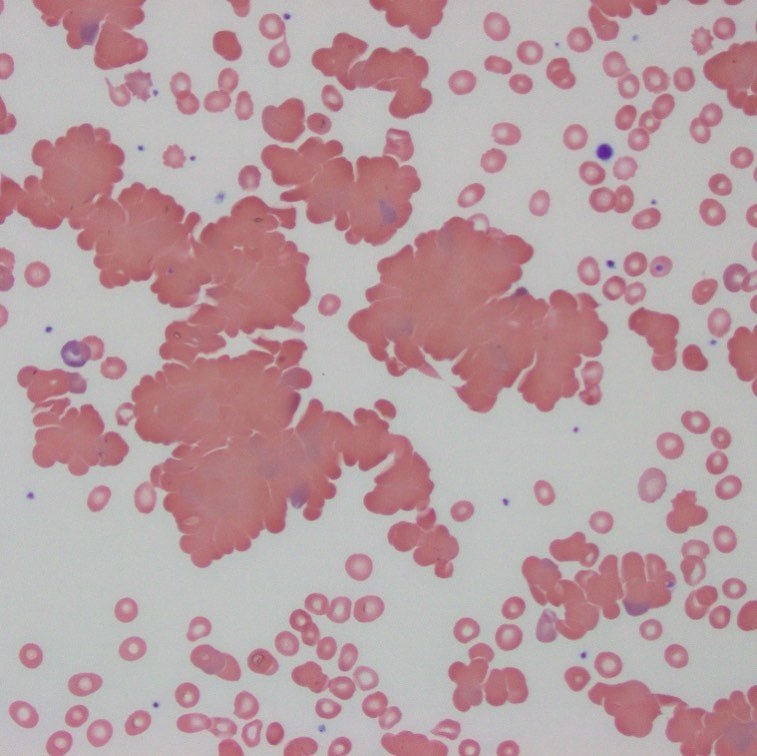
On the photograph is a blood smear with erythrocyte agglutination due to IgM in cold agglutinin disease (CAIHA - cold autoimmune hemolytic anemia). IgM is usually against the I antigen (also known as “big I”) on erythrocytes in adults and is associated with mycoplasma infection. It can also be observed in lymphoma when the antibodies are monoclonal. IgM against the i antigen on erythrocytes in children (“little i”) and is associated with EBV infectious mononucleosis. If monoclonal, it can also be due to lymphoma. Lymphoma is much less likely in children. Source: inst: pathnuggets You can read more about cold AIHA in our article: www.leukoformula.com/post/cold-hemolytic-anemia
Erythrocyte Agglutination in Cold Hemolytic Anemia
Blood smear morphology in cold autoimmune hemolytic anemia (CAIHA). Mechanisms of erythrocyte agglutination by IgM antibodies to I and i antigens.