

Clinical Case: Suspected Abuse or a Hidden Cause of Bleeding?
In hematology practice, cases sometimes arise where social context is closely intertwined with diagnostic investigation. We present a case review of an 85-year-old female patient with Alzheimer’s disease, residing in a nursing home.
✅ Anamnesis and Complaints: The patient was admitted with complaints of unexplained extensive hematomas (up to 20 cm in diameter) and recent oral bleeding. Relatives suspected the facility staff of physical abuse. The history revealed no prior hemostasis problems (including five successful deliveries).
✅ Primary Laboratory Parameters: The results of a standard coagulation profile and complete blood count were within normal limits:
- Prothrombin time: 12 s
- Activated partial thromboplastin time (aPTT): 26 s
- Thrombin time: 14 s
- Fibrinogen by Clauss: 4.6 g/L (slightly elevated)
- Platelets: 350 x 10⁹/L
✅ Diagnostic Investigation: Normal aPTT and prothrombin time values ruled out acquired hemophilia. Acquired von Willebrand disease was also excluded after further investigation (von Willebrand factor antigen levels, its activity, and factor VIII were normal).
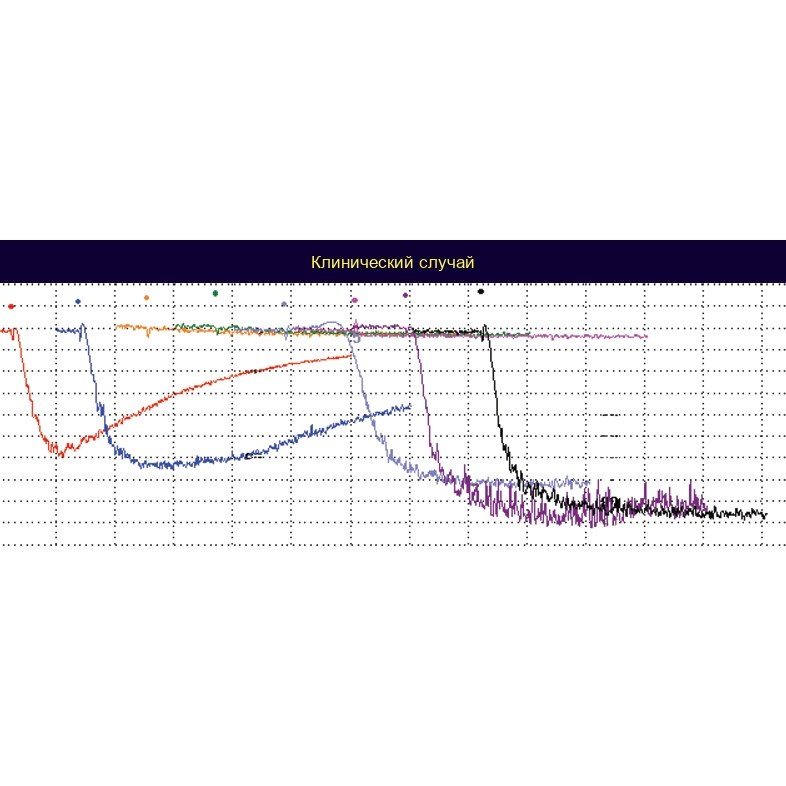
✅ Platelet Aggregometry (see photo): The key to the puzzle was the assessment of platelet function. The study revealed:
- Complete absence of aggregation in response to arachidonic acid.
- Significant reduction in response to adenosine diphosphate (ADP) and adrenaline.
- Preserved (though somewhat altered) reaction to collagen.
✅ Diagnosis and Resolution: Such a laboratory picture is characteristic of acquired platelet dysfunction caused by aspirin or other non-steroidal anti-inflammatory drugs.
During further investigation, it was discovered that another resident of the nursing home “shared” his aspirin with the patient to help her cope with back pain. This caused the aggregation defect, leading to a pronounced hemorrhagic syndrome.
This case reminds us of the importance of thoroughly analyzing platelet function even with normal platelet counts and a standard coagulogram, as well as the necessity of a detailed medication history.


