

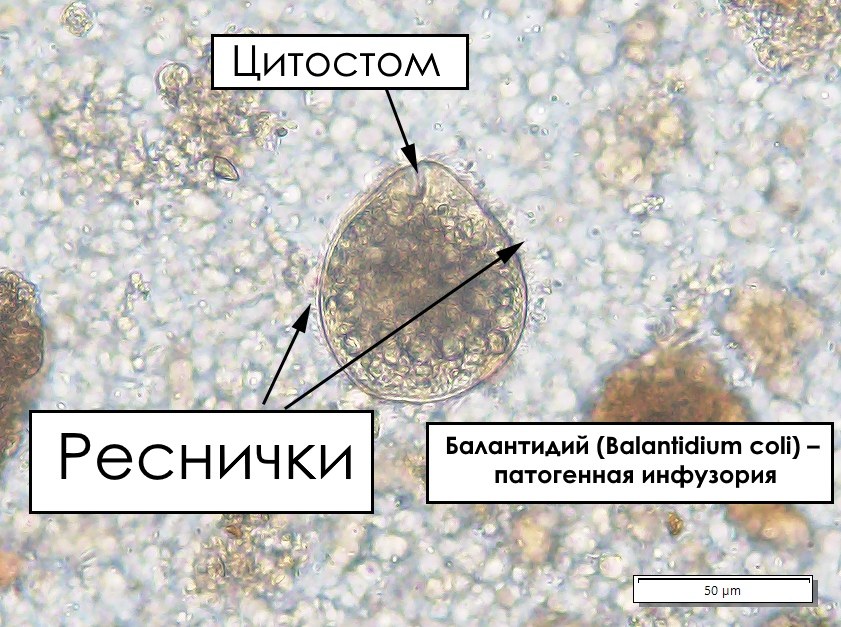
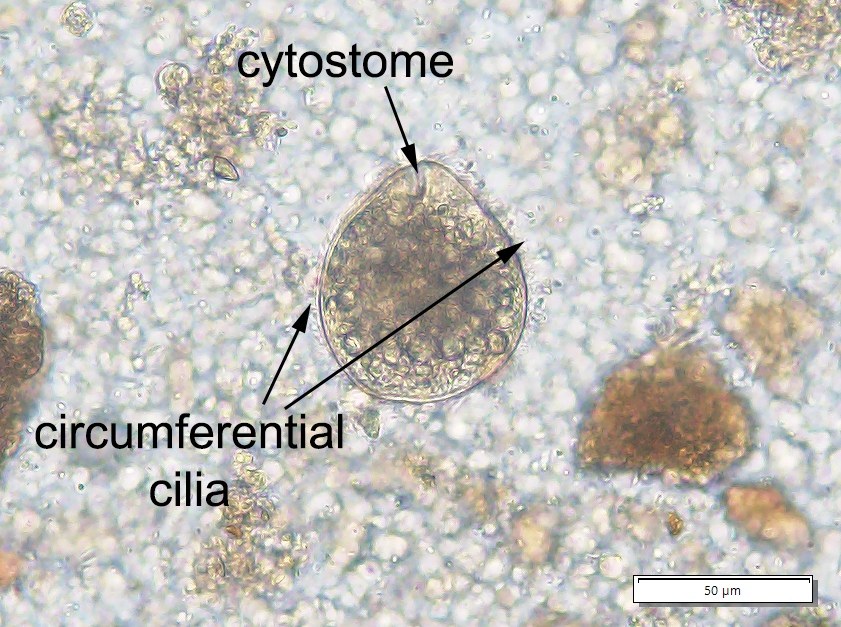
🐍 Answer to the parasitology exercise. Balantioides coli (formerly Balantidium coli, also known as Neobalantidium coli) is the largest pathogenic protozoan parasite of humans and the only pathogenic ciliate. It exists in two forms: cysts (resistant form) and trophozoites (active form). It is often associated with infection through contaminated food or water, especially near pigs, which are the main reservoir.
This protozoan parasite is truly impressive in its size and ability to cause balantidiasis, manifesting as diarrhea, colitis, and less commonly, complications such as abscesses.
IN THE PICTURE: ✅ Cytostome – this is the cell mouth through which Balantidium ingests food particles. ✅ Circumferential cilia – cilia that cover the body of the ciliate and provide movement and food capture.


