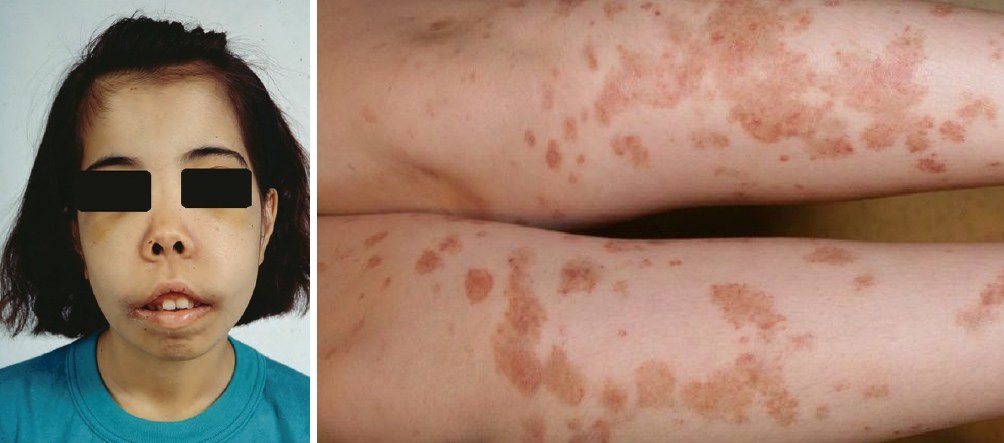
Beta-thalassemia is a congenital hemolytic anemia characterized by reduced synthesis of beta-polypeptide chains of hemoglobin. Major beta-thalassemia manifests at 1 to 2 years of age with symptoms of severe anemia and bone marrow hyperactivity. Upon examination, icterus of the skin is visible. Due to increased destruction of red blood cells, hemosiderin is formed and accumulates in tissues. Hemosiderosis manifests as spots of various sizes and shapes, ranging in color from yellow to brown or black. Excessive bone marrow proliferation causes thickening of the skull bones and malar prominences. The face acquires mongoloid features.
Major Beta-Thalassemia: External Signs and Symptoms
External manifestations of major beta-thalassemia: facial bone deformities, cutaneous hemosiderosis in severe hemolytic anemia and iron overload.