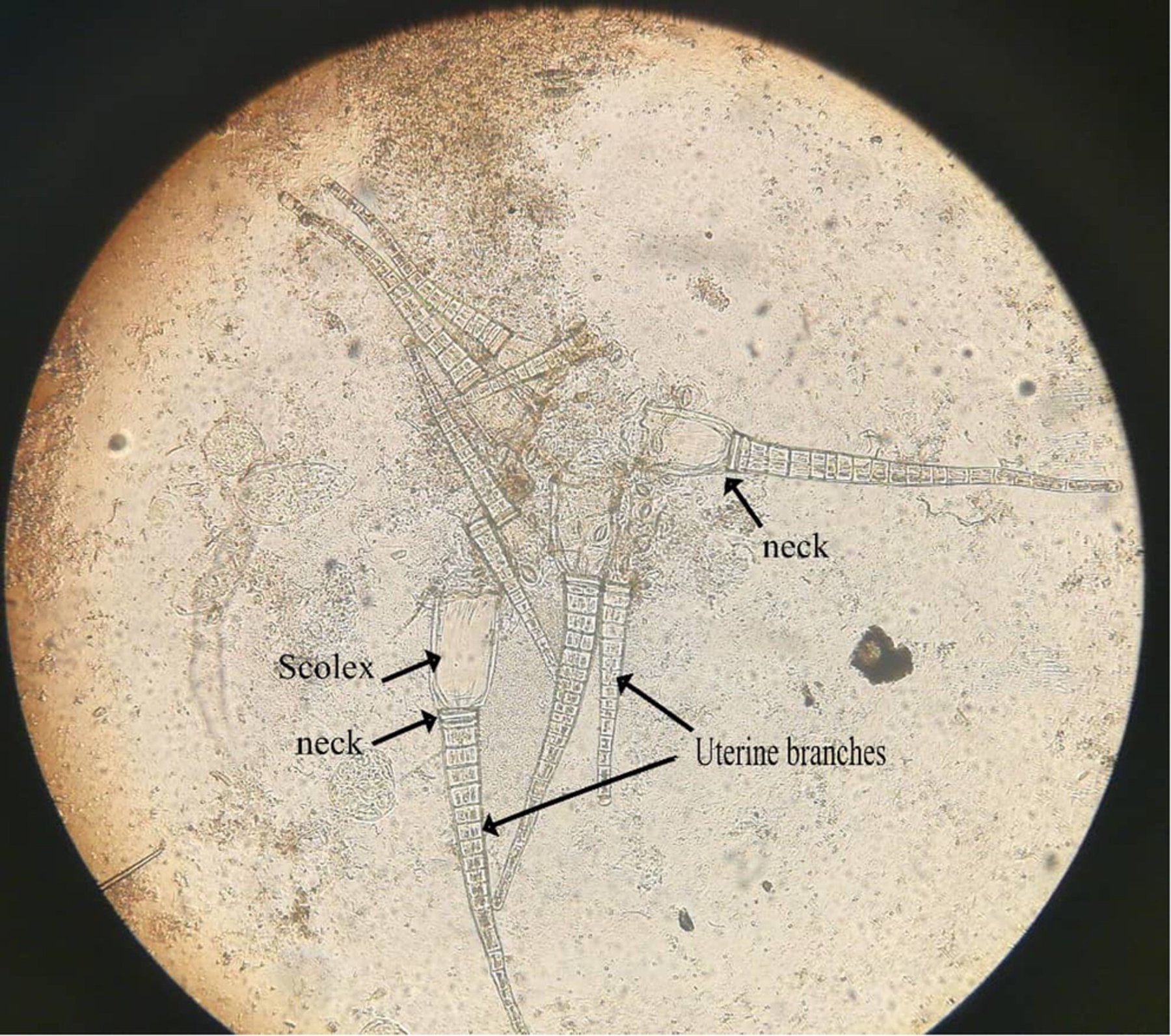
⚠MYSTERIOUS INTESTINAL FLUKE. CLINICAL CASE. A 12-year-old girl presented to the hospital with chronic diarrhea four to five times a day for more than 1 year. She experienced post-meal pain. She appeared pale and underweight (body mass index 14.9). 🧪Laboratory tests. 🩸Complete blood count showed a normal white blood cell count of 4.5 thousand/μL, and anemia with Hb 90 g/L. Eosinophil and IgE levels were not determined. A coprogram was ordered. The liquid stool contained large particles, macroscopically visible as undigested food. Two separate methods available in the local laboratory were performed: preparation with normal saline and the formal-ether concentration method. 🔬In the saline preparation, nine tapeworm segments with a scolex and neck were observed under low power magnification (photo below). The helminth species was not identified by microscopy, and the material was sent for genetic testing. No parasite eggs were found using the formal-ether concentration method, but there were many starch cells and an overgrowth of yeast. 💊The patient was treated with 400 mg of mebendazole and a repeat dose after 1 week. She returned for follow-up after 1 month; there were no segments or eggs, she looked well, and tonic agents for anemia were recommended. 💊Therapy with a multivitamin syrup was started after worm eradication, and local inexpensive African Cajanus cajan (Adssia) seeds were recommended for daily consumption. She was advised to avoid undercooked meat and practice daily hand hygiene to prevent future reinfection. Source: Gaffer, AA. Rare tapeworm segments case report and review of literature. Clin Case Rep. 2023
Tapeworm Diagnosis in Stool: A Clinical Case
A clinical case of a rare tapeworm identified by microscopy of a native stool sample in a child with chronic diarrhea and anemia.