

Clinical Case: 29-year-old male with fever and chills after travel to Uganda
History: A 29-year-old African American male presented to the emergency department with complaints of fever, chills, and night sweats for 3 days. Symptoms appeared 4 weeks after returning from Uganda. The patient denied diarrhea, vomiting, cough, or contact with sick individuals. There was no history of immunosuppression or chronic diseases.
Laboratory Data:
- CBC: anemia, thrombocytopenia.
- Thin blood smear (Giemsa stain):
- Reduced platelet count.
- Polymorphic erythrocytes: acanthocytes, schistocytes, bite cells.
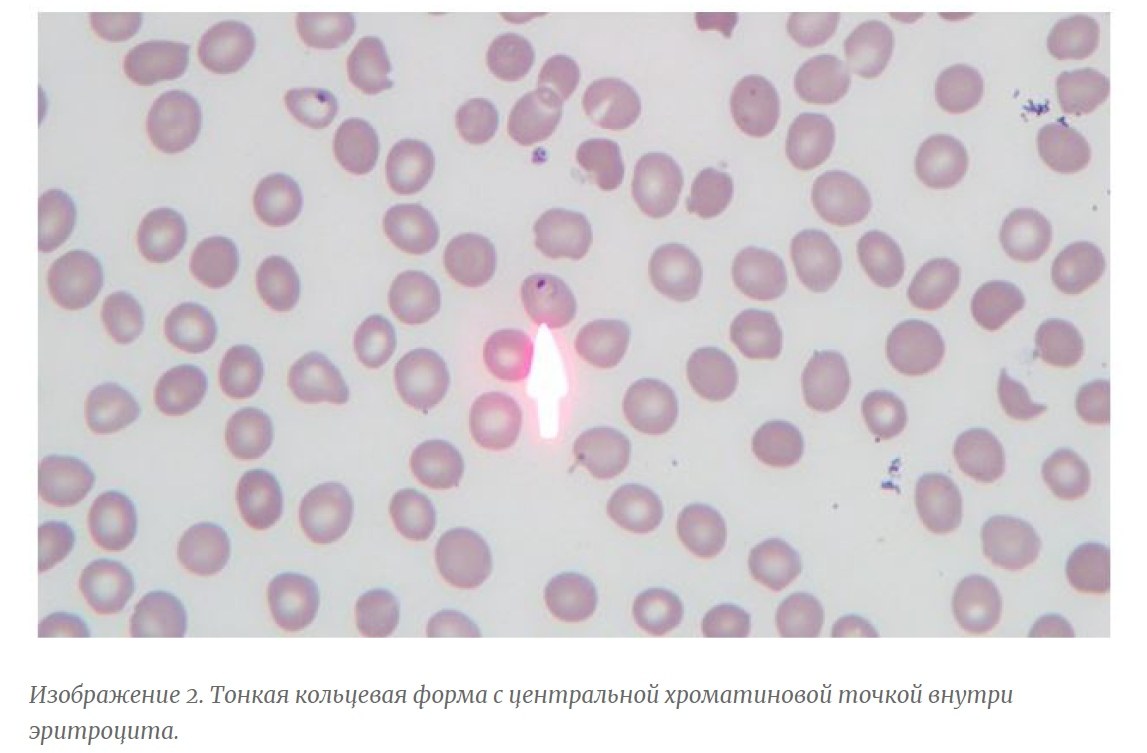
- Thin ring forms within erythrocytes with a central chromatin dot or two dots resembling “headphones”.
- Absence of extracellular parasitic forms.
- Thick smear: confirmed the same ring structures.
Differential Diagnosis:
- Babesia spp. (rare in Africa, pleomorphic rings, possible “Maltese cross”).
- Plasmodium spp. (endemic to Uganda, monomorphic rings).
Diagnosis: Malaria caused by Plasmodium falciparum (confirmed by PCR). Given the geographical history and parasite morphology, P. falciparum is the most likely causative agent.
Discussion:
- P. falciparum is the main species of malaria in Africa, capable of infecting up to 50% of erythrocytes, causing severe anemia and thrombocytopenia.
- Complications: cerebral malaria (due to erythrocyte agglutination), acute renal failure.
- Treatment: artemisinin-based combination therapy (ACT), management of complications.
Authors:
- Jamaal Rehman, MD (Pathology Resident, University of Chicago).
- Erin McElvania, PhD (Director of Clinical Microbiology, NorthShore University Health System).
Key Takeaways:
- Malaria should be ruled out in patients with fever and a history of travel to endemic regions.
- P. falciparum requires urgent treatment due to the risk of life-threatening complications.
- Parasite morphology in a blood smear is a key diagnostic method.
💎 Find more useful microbiology materials in our LAB-TESTS library. A link with access to the library is automatically sent to you via private message after paying for a VK Donut Labformula subscription.


