

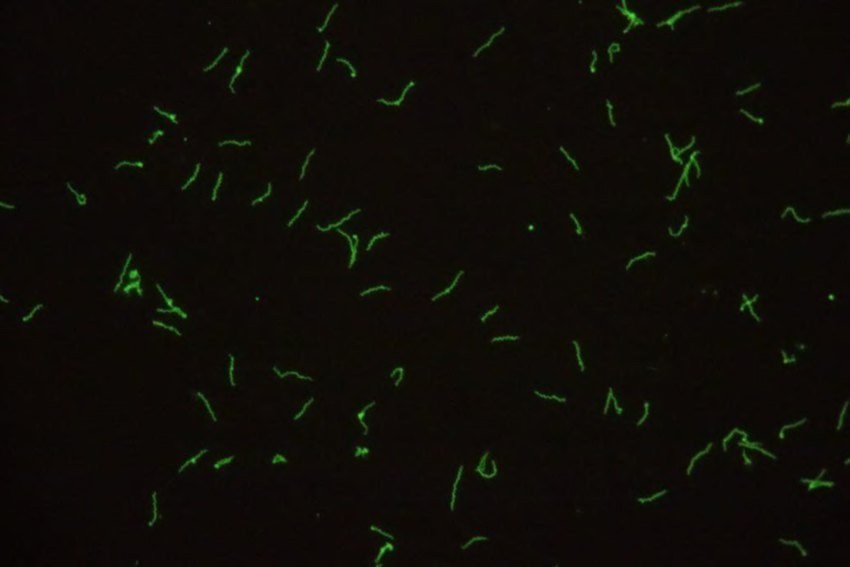
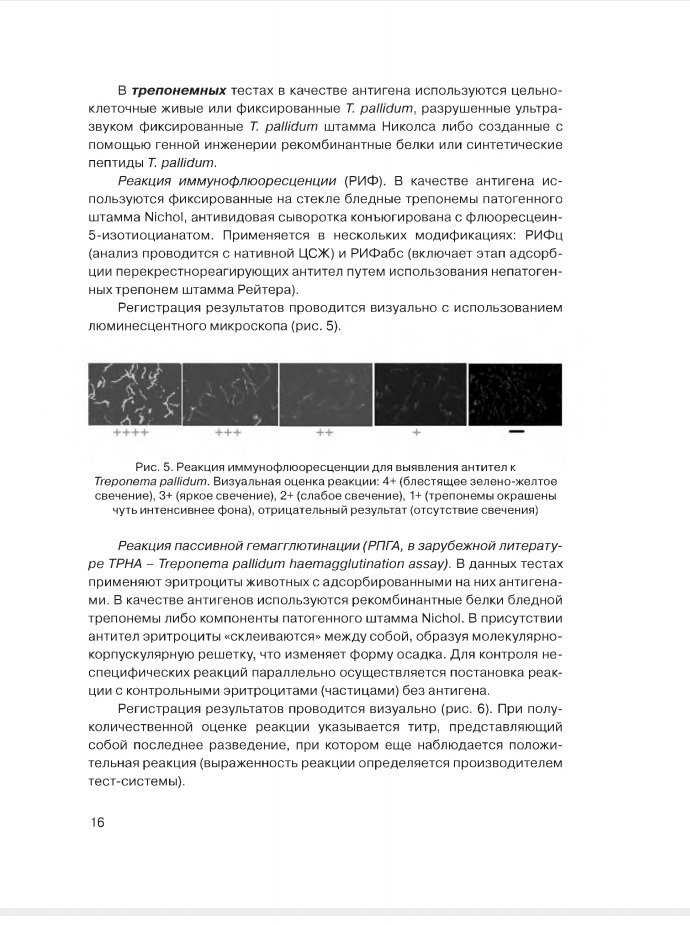
Detection of T. pallidum antibodies in cerebrospinal fluid (CSF) using the immunofluorescence assay (IFA).
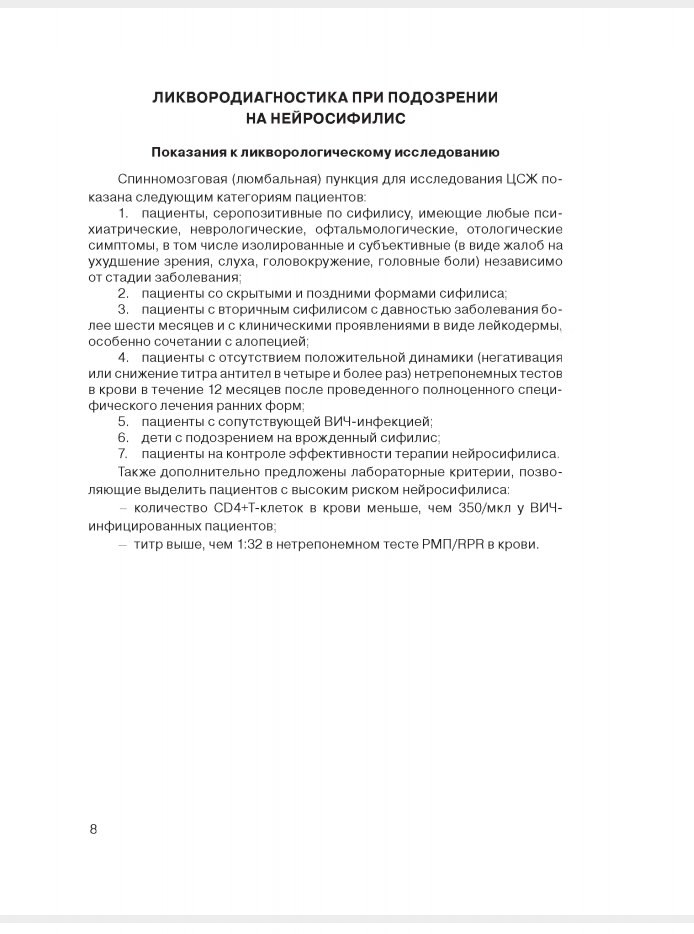
Treponemal tests (such as IFA) have high sensitivity (90-100%) but are not sufficiently specific and can be positive in forms of syphilis not accompanied by nervous system involvement. The presence of treponeme-specific antibodies in CSF is recognized as a necessary but insufficient condition for confirming a diagnosis of “neurosyphilis,” as these antibodies may be a consequence of passive diffusion from the systemic bloodstream due to their high concentration there.
Based on the high sensitivity of treponemal tests, it has been proposed to use their negative results as a criterion for excluding neurosyphilis.
Nevertheless, a diagnosis of neurosyphilis may be established despite negative treponemal test results in cases where clinical manifestations are typical for neurosyphilis, other possible causes have been excluded, and the presumed inflammatory focus is located remotely from the CSF-containing spaces.
Overall, for the correct establishment/exclusion of a diagnosis of “neurosyphilis,” a comprehensive interpretation of all results from CSF and serological studies is necessary, with mandatory correlation with anamnestic data and the patient’s clinical symptoms.
Source: CSF Diagnostics of Neurosyphilis: A Guide for Physicians / N. V. Kungurov, N. K. Levchik, M. V. Ponomareva, N. V. Zilberberg, V. I. Surganova, N. A. Gerasimova; SBEI SO “UrRIDVI”. - Yekaterinburg: SV-96, 2018. - 28 p.
🙏 Material kindly provided by medical laboratory technician Dmitry Emelyanov.


