

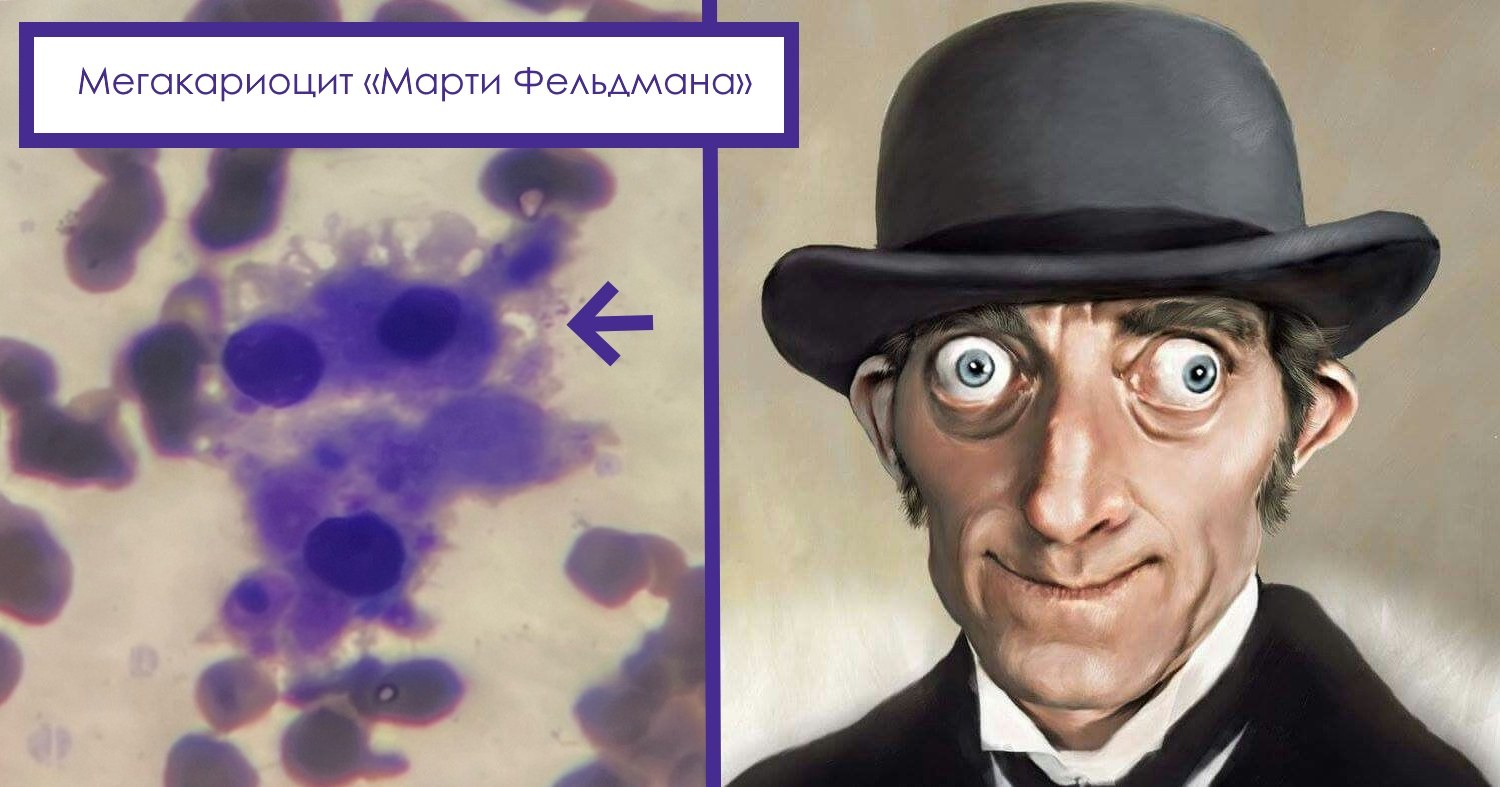
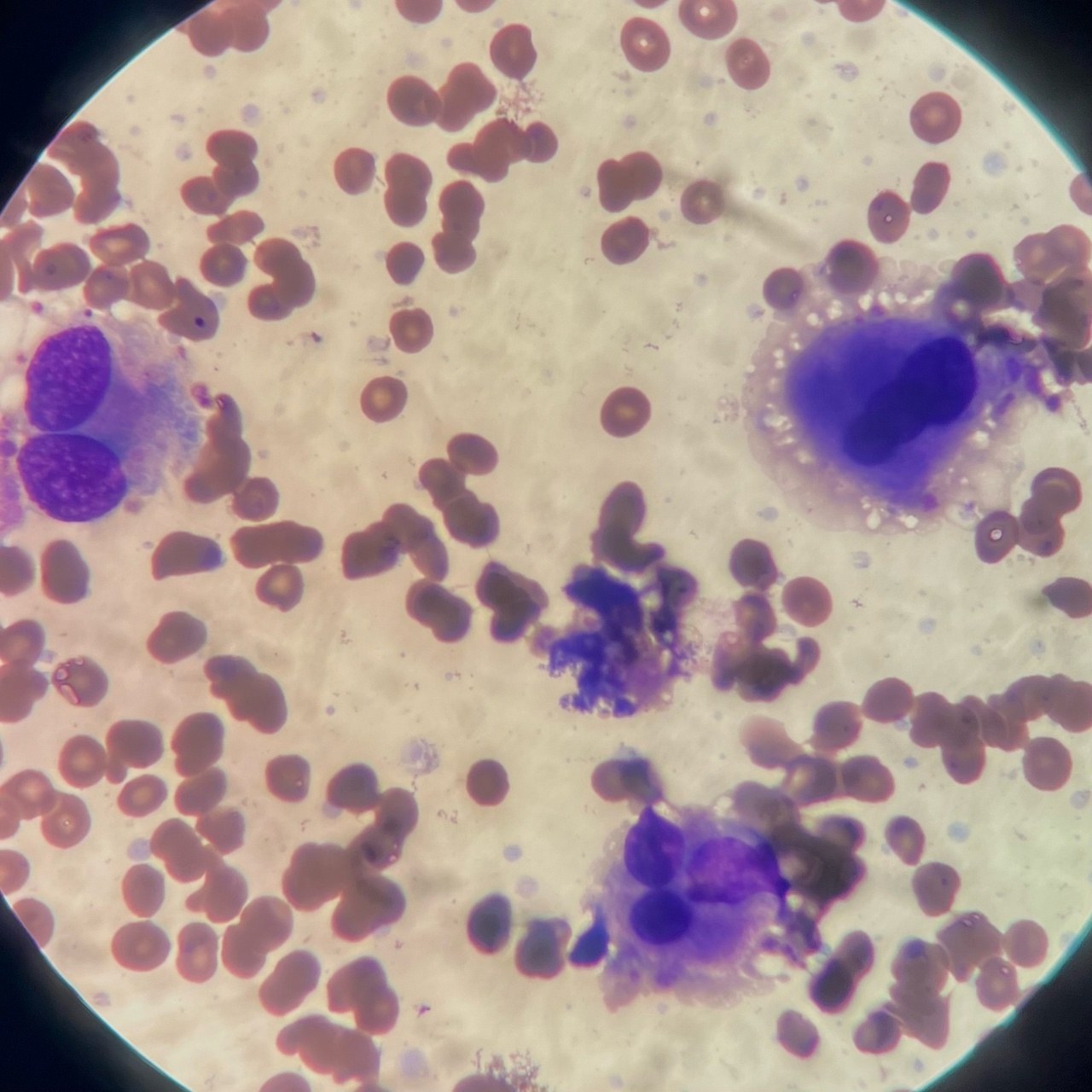
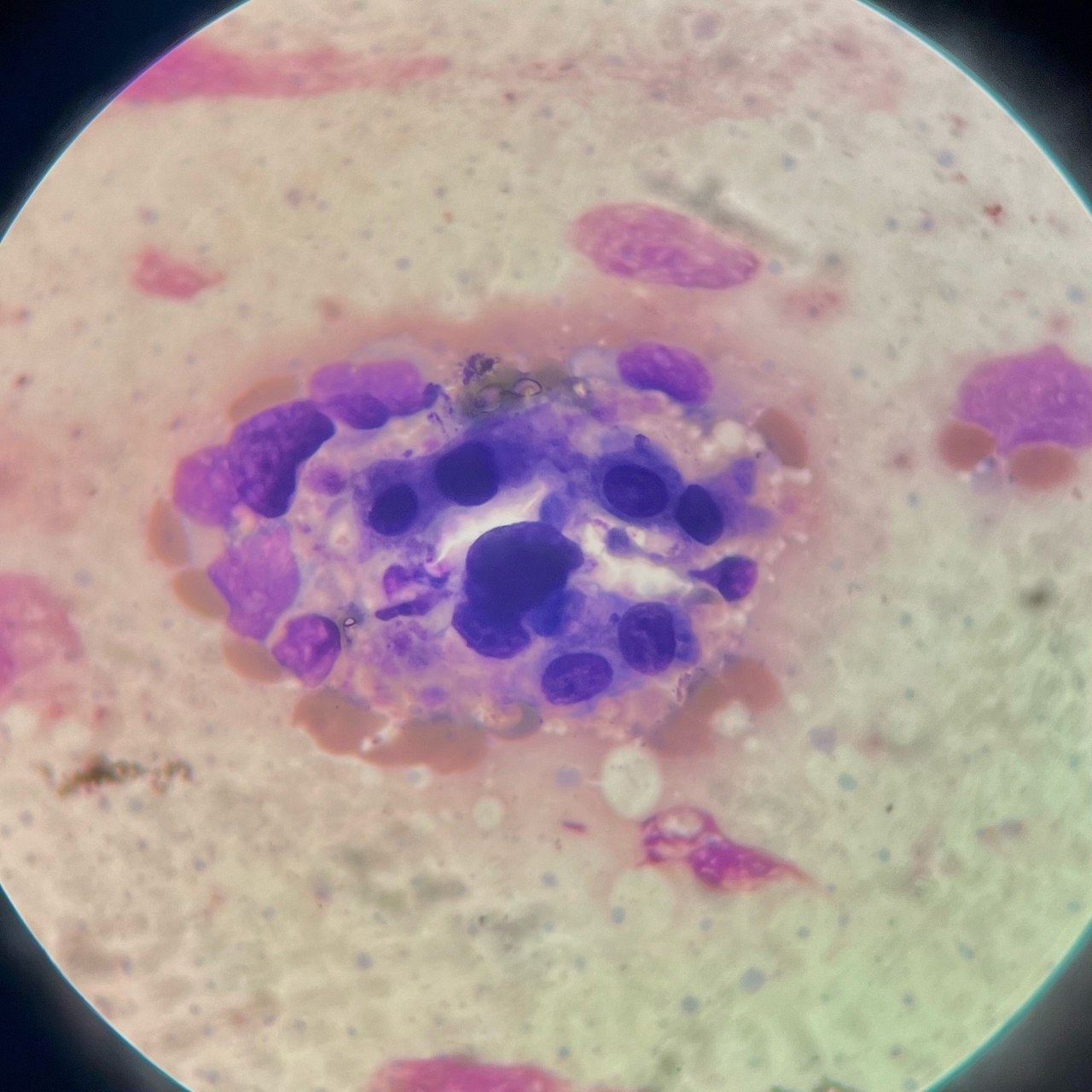
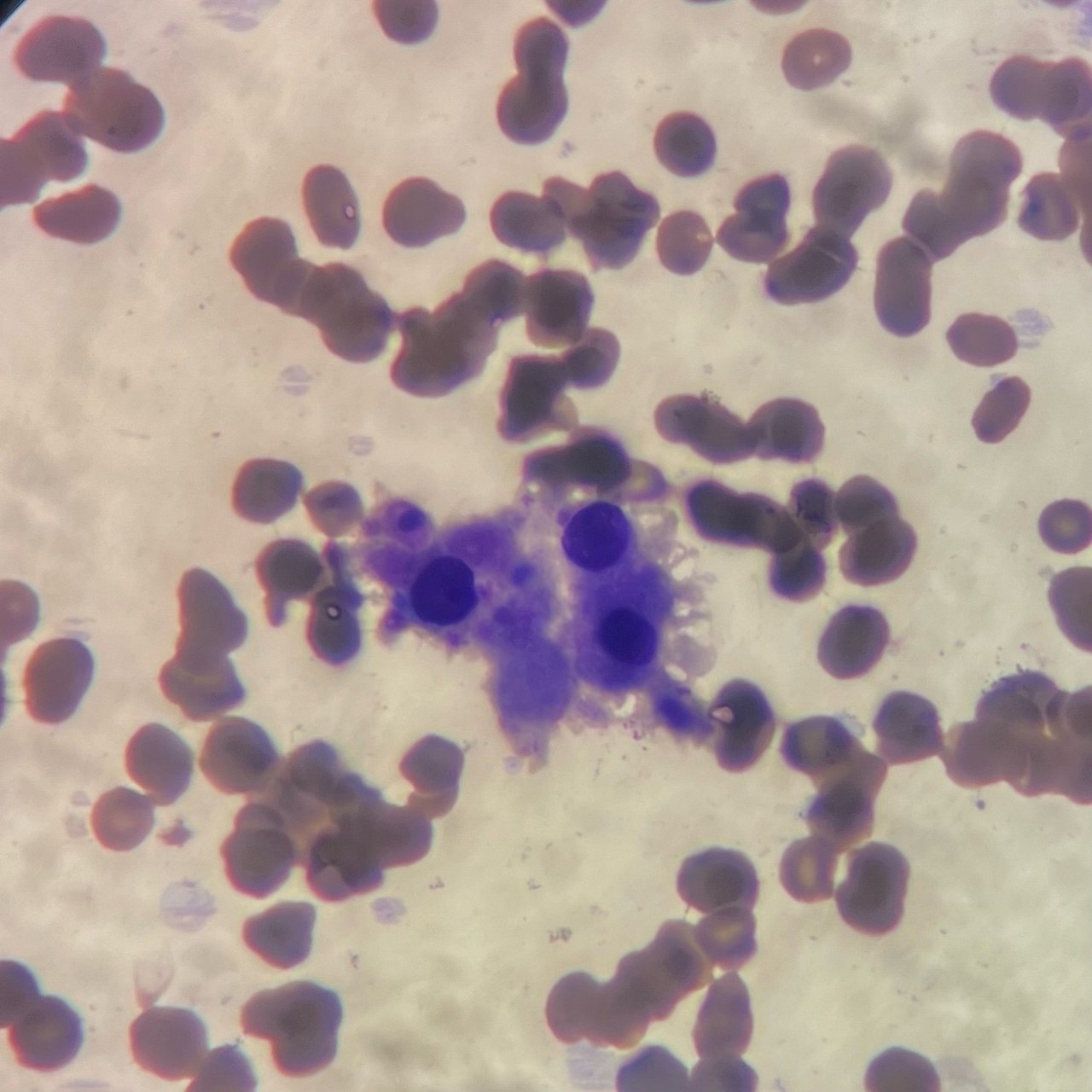
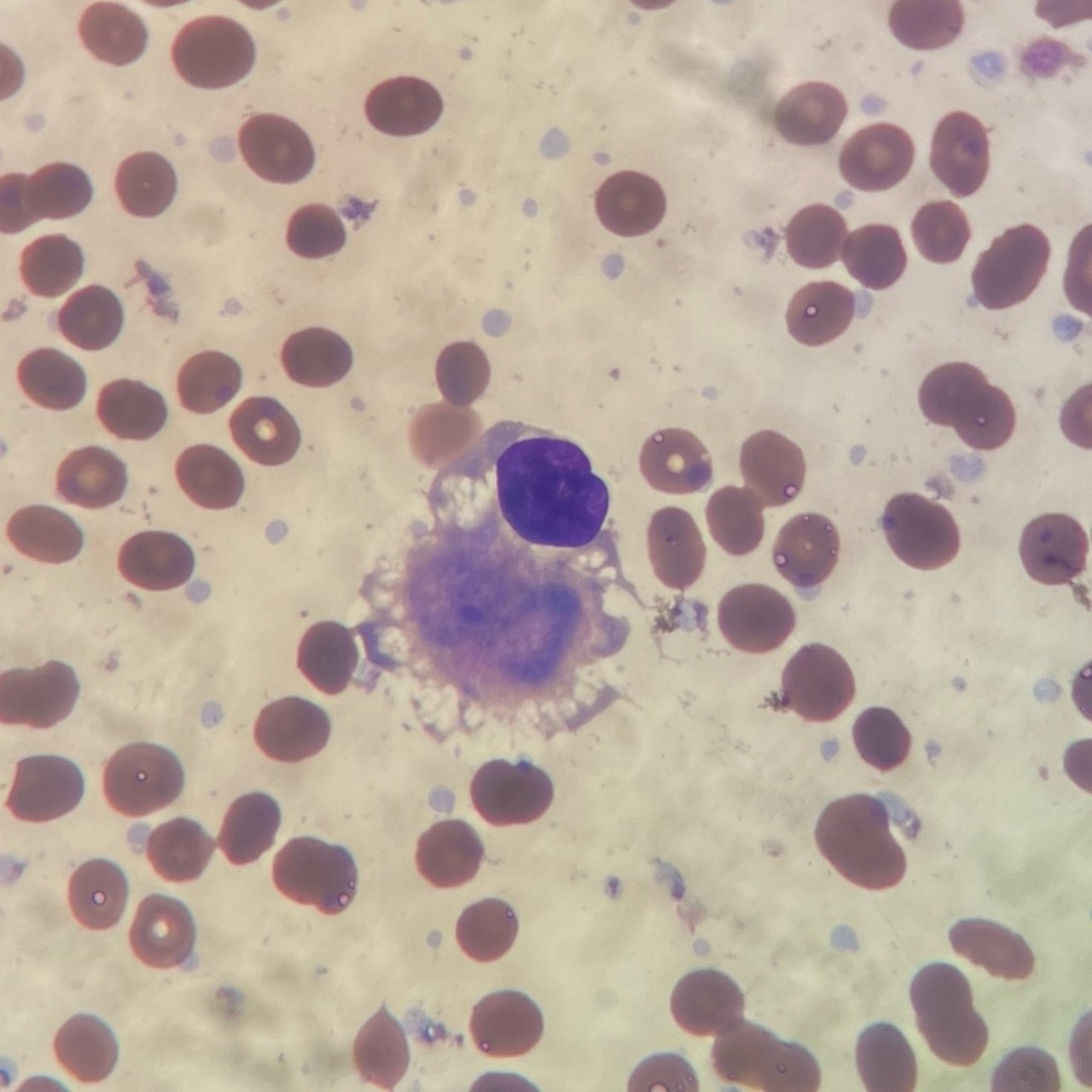
👀 “Marty Feldman” megakaryocytes in an 18-year-old male.
🦴 Bone marrow is hypocellular. Megakaryocytes are present in sufficient numbers in smears, almost all with signs of dyspoiesis: mono- and multinucleated microforms. Platelets are present in small numbers. Signs of dysplasia are also pronounced in the granulocytic and erythroid lineages. Repeat puncture with cytogenetics is planned.
❗ Presumptive diagnosis: MDS with excess blasts.
🙏 Clinical case kindly provided by laboratory physician Yulia Kaliberda, Yekaterinburg.
👉 Reference information: ✅ Megakaryocytes, known as “Marty Feldman megakaryocytes,” got their name due to the unusual shape of their nucleus, which outwardly resembles the gaze of actor Marty Feldman with his characteristic bulging eyes. This phenomenon is most often associated with atypical cell structure and can be observed in patients with various hematological pathologies, for example, in some forms of myeloproliferative diseases.
✅ This name is used as a visual metaphor to emphasize the pronounced nuclear deformation characteristic of these megakaryocytes. Normally, megakaryocytes are large cells found in the bone marrow and are responsible for platelet formation. Their nuclei are usually multilobated, but in the case of “Marty Feldman megakaryocytes,” extreme changes in nuclear shape are observed, making them noticeable under the microscope.
✅ These changes can be caused by impaired cell maturation or the effect of pathological factors on the bone marrow.


