

🐈 Aelurostrongylosis in a cat.
✅ Owners reported the pet coughing for 2 months.
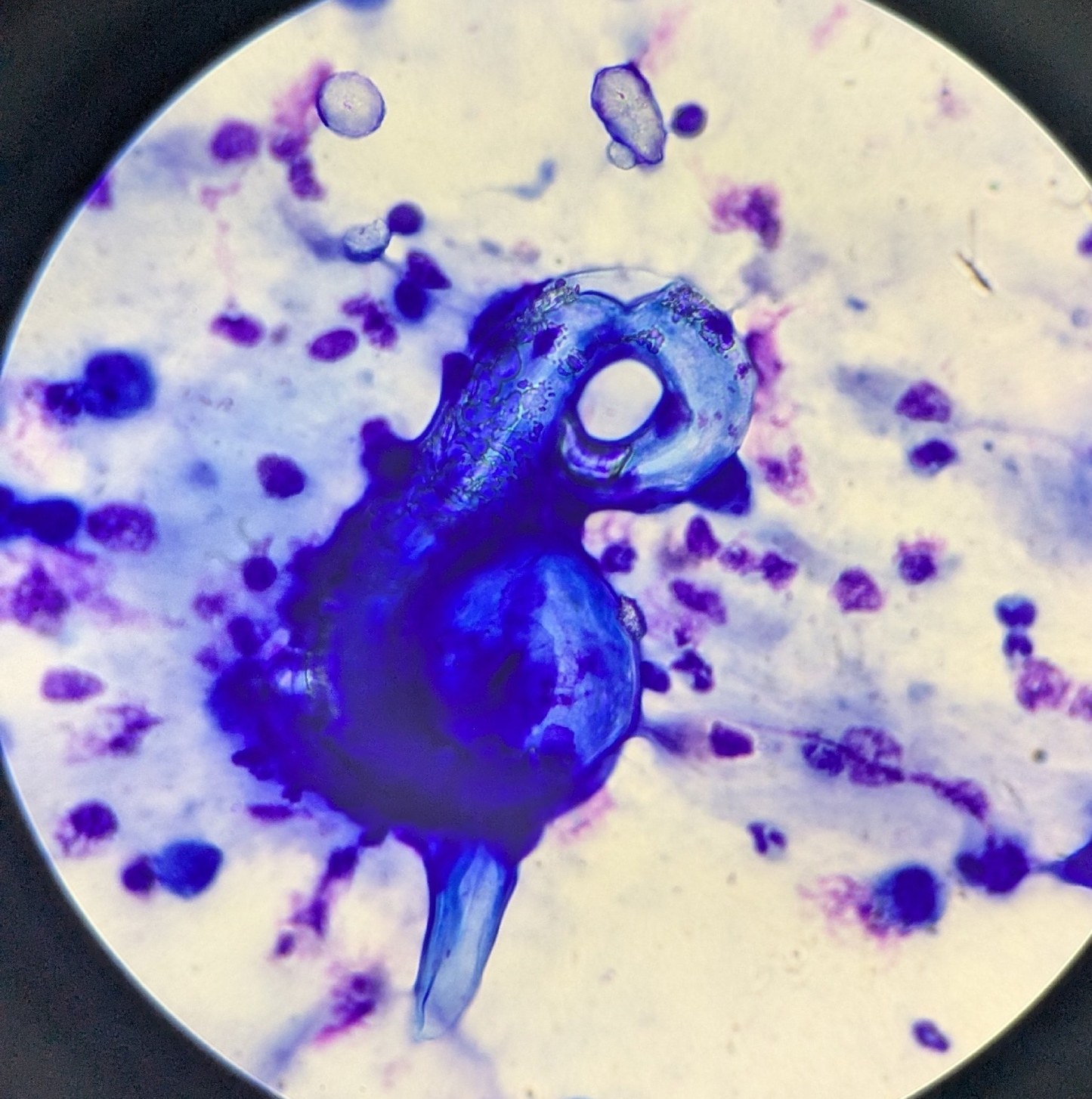
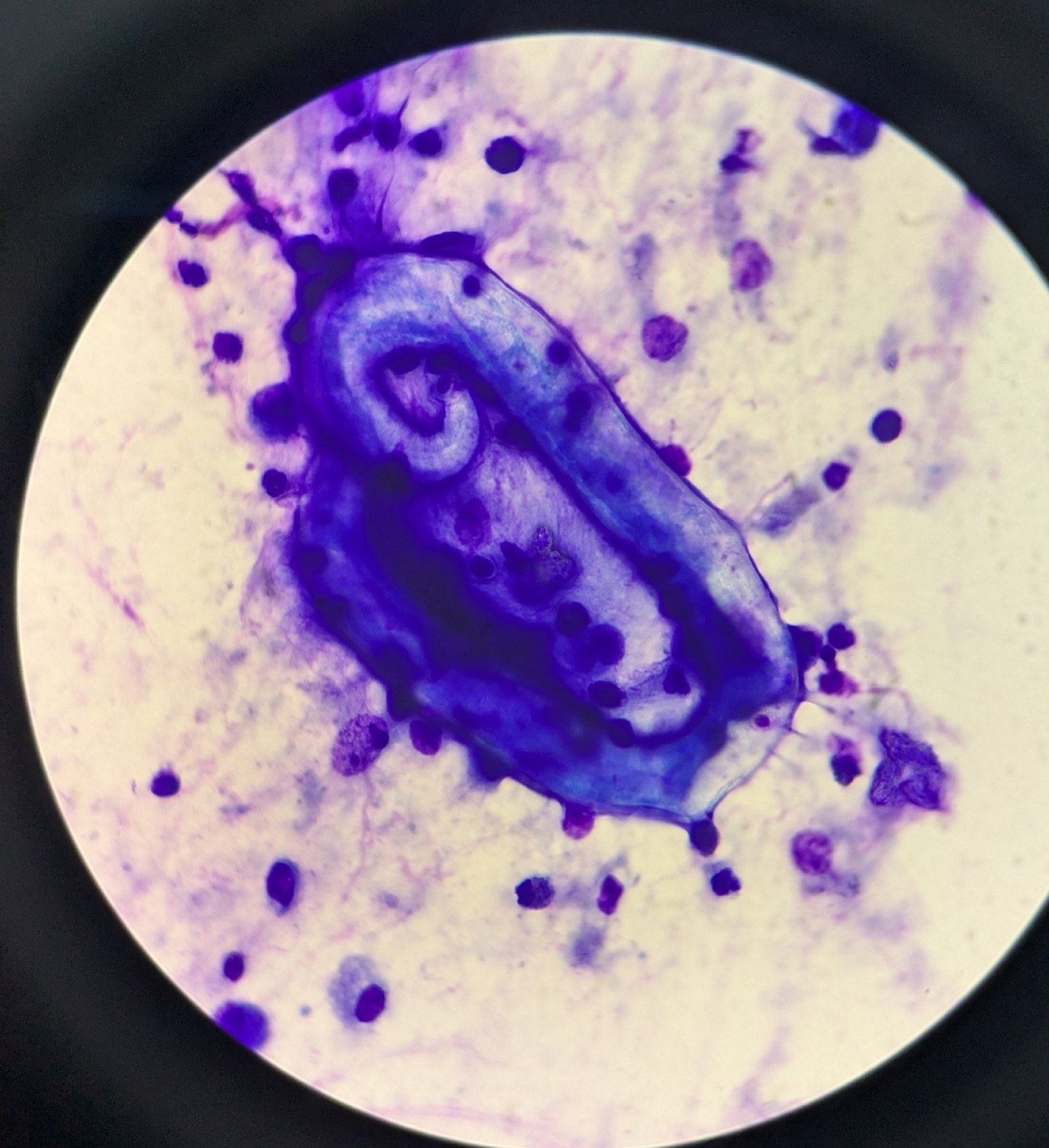
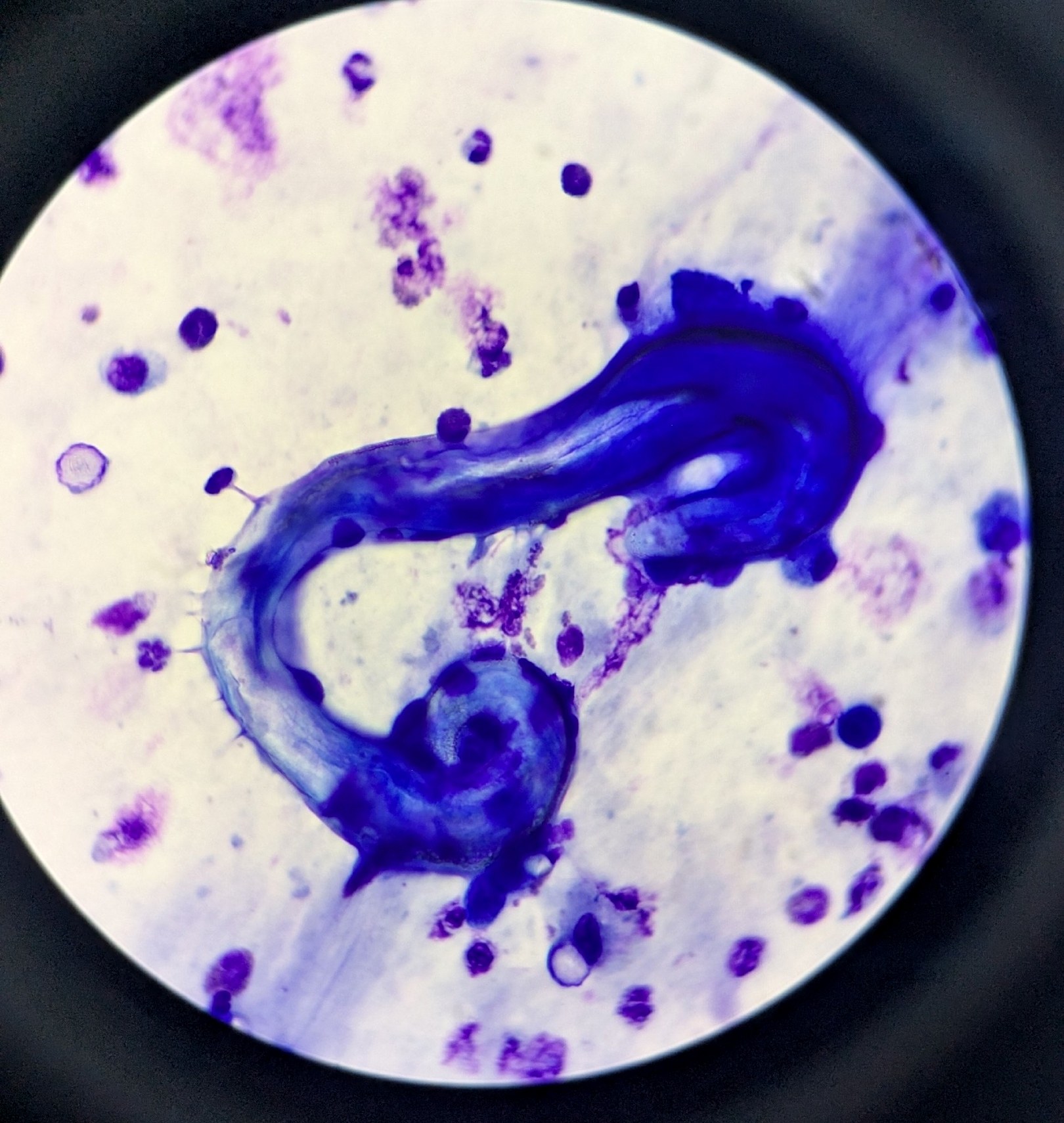
🔬 Bronchoalveolar lavage cytology of a 4-month-old mixed-breed cat (images 1-3). Picture of eosinophilic inflammation (over 70% eosinophils). Helminthic invasion detected, likely Aelurostrongylus abstrusus.
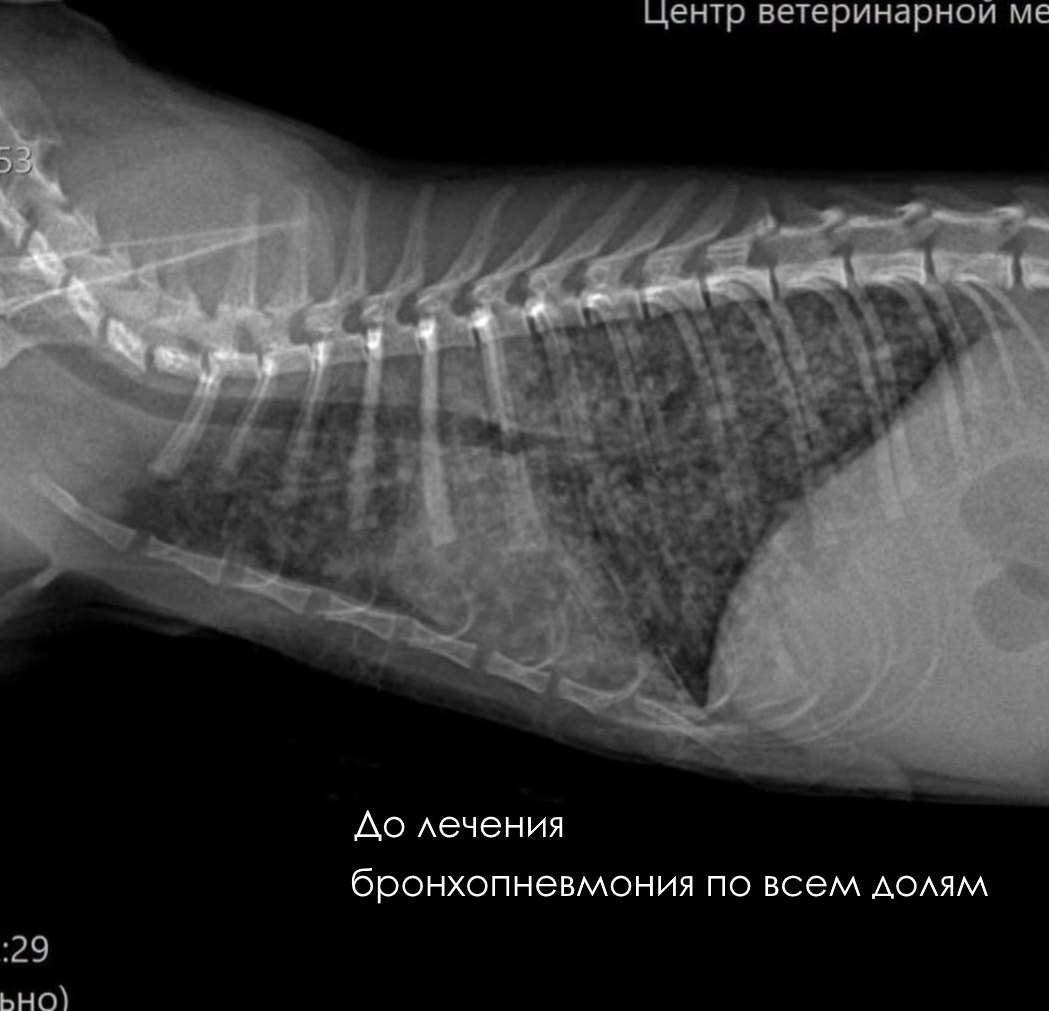
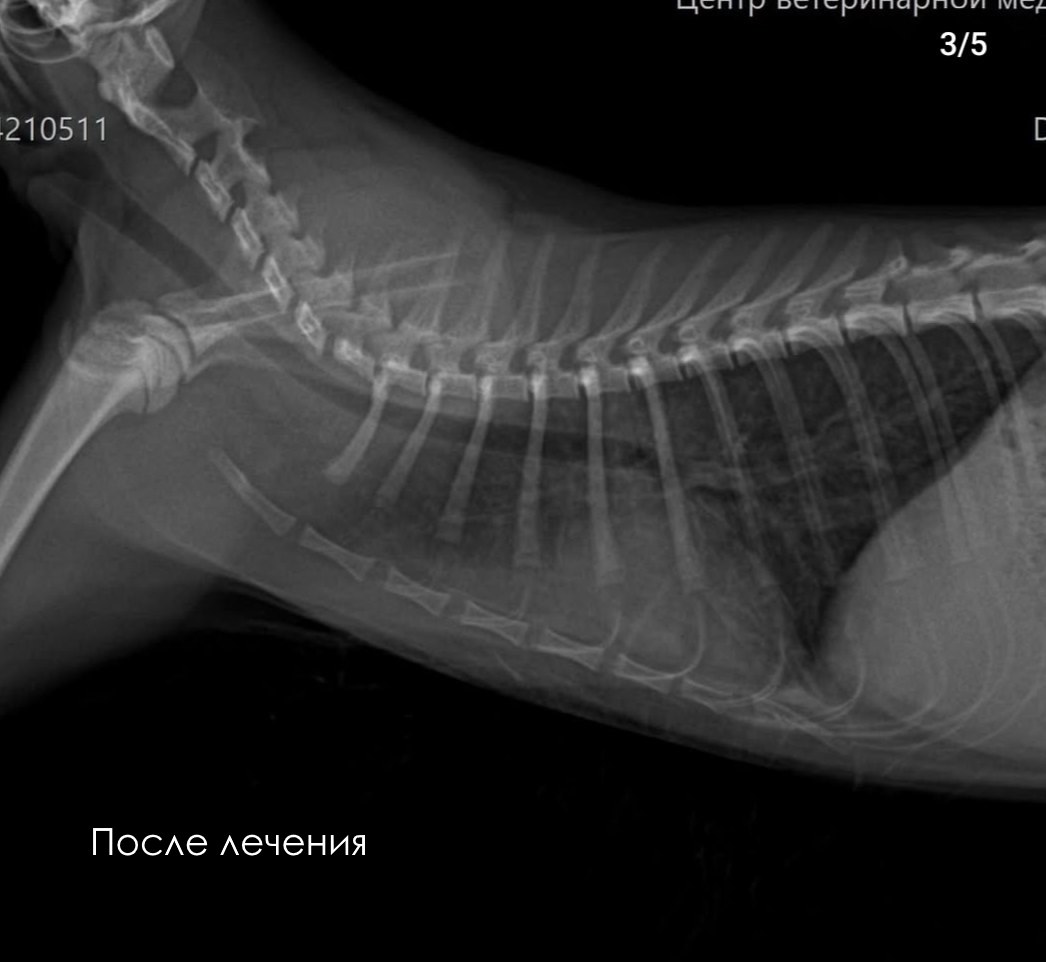
X-RAY (images 4-5) First image before treatment. Signs of bronchopneumonia in all lung lobes. We can only speak of pneumonia, as the parasite itself is not visible. Second X-ray image – after treatment with Febtal.
🙏 Case kindly provided by veterinary laboratory diagnostics specialist, cytologist Angelina Zueva, Vetera Clinic, Tula.
📖 Reference Information Aelurostrongylosis is a parasitic disease caused by the nematode Aelurostrongylus abstrusus. Adult worms live in the lungs of cats, causing coughing, sneezing, wheezing, and dyspnea 😿. Larvae are shed in feces, infecting snails, slugs, and small animals that cats consume 🐌➡🐭.
In Europe, the disease is common among domestic and wild cats 🐾, while in Russia, infection has only been recorded in large predators, specifically Amur tigers 🐅.
The risk of infection is higher in cats with outdoor access 🌿. The disease can be asymptomatic or lead to serious complications, especially in weakened animals.
Take care of your pets! 🏥🐾


