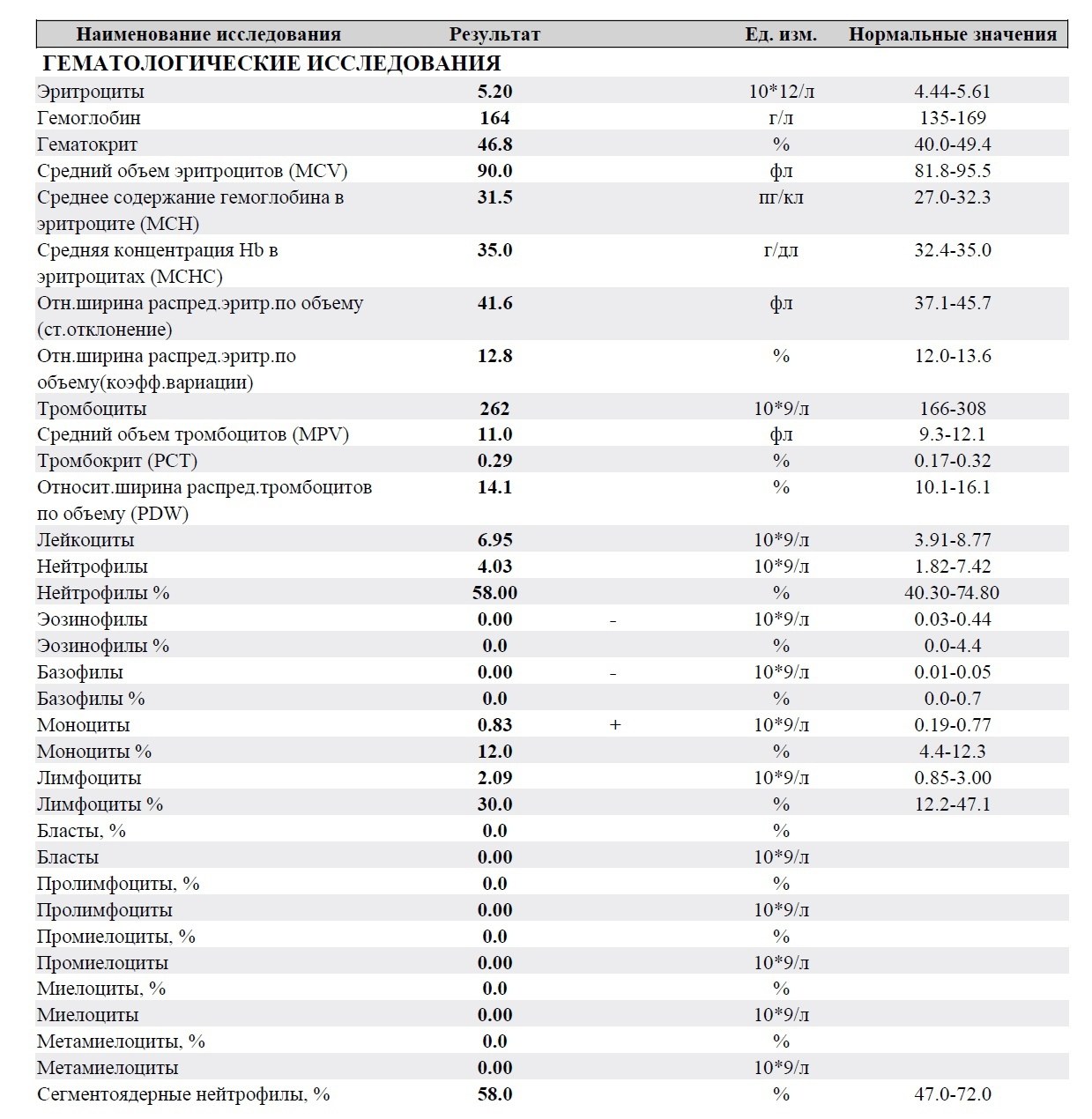
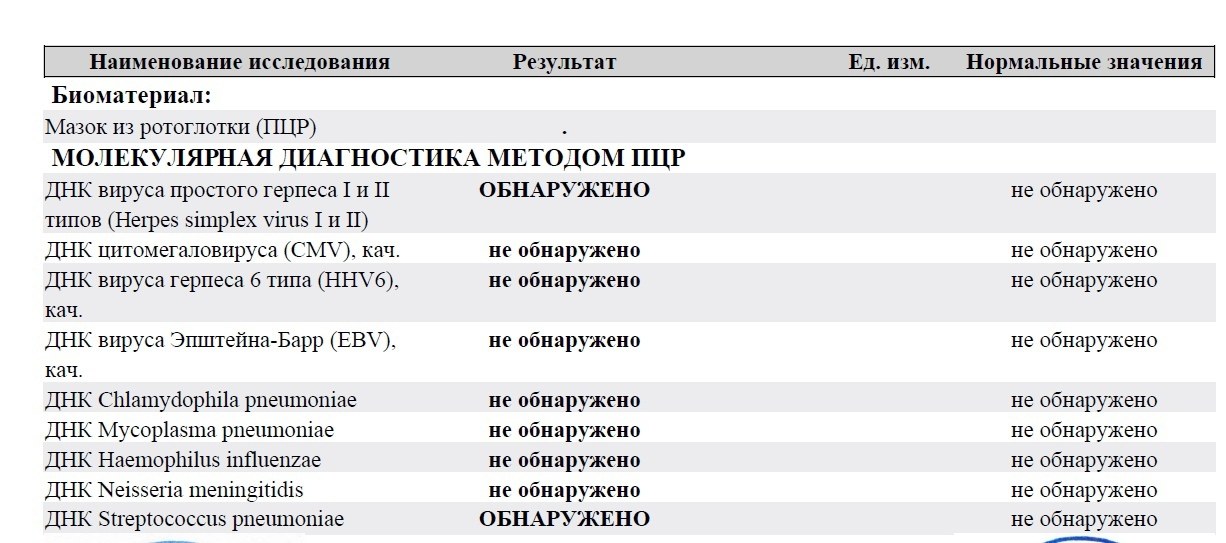
EOSINOPENIA - A DECREASE IN THE NUMBER OF EOSINOPHILS IN THE BLOOD. Audio consultation. Male, 29 years old. Complaints: oral rash - aphthous stomatitis, lymphadenitis, herpetic eruptions. First week of illness, temperature up to 40 C. Third week - subfebrile temperature 37 C. After antibiotic therapy. LABORATORY DATA (3rd week of illness): What is notable in the CBC is only eosinopenia, and slight monocytosis (photo below). ESR = 45 mm/h (normal up to 15 mm/h). CRP = 8.6 mg/L (normal 0-5 mg/L). In the CBC, eosinopenia - 0.0% (photo below). In the oropharyngeal swab for PCR: DNA of herpes simplex virus type I and II DETECTED, DNA of streptococcus pneumoniae DETECTED (photo below). CLINICAL SIGNIFICANCE OF EOSINOPENIA. From this clinical case, we noted that eosinopenia can sometimes be almost the sole marker of an inflammatory reaction in a complete blood count. In the future, we plan to publish a unique article on the clinical significance of decreased eosinophils in the blood. Please put a 👍 in the comments if you would like to read the publication on our website soon. In the meantime, let’s highlight the main rules for interpreting this deviation: Interpretation from the book by Kishkun A.A. - Clinical Evaluation of Laboratory Test Results, 2006 is given below: Eosinopenia — a decrease in eosinophil count (< 0.05*10^9/L) — is in most cases due to increased adrenocortical activity, which leads to the retention of eosinophils in the bone marrow. Eosinopenia is especially characteristic of the initial phase of an infectious-toxic process. A decrease in the number of eosinophils in the postoperative period indicates a severe condition of the patient. According to the msdmanuals, the number of eosinophils in the blood may decrease in Cushing’s syndrome, blood infections (sepsis), and during corticosteroid treatment.
Eosinopenia in Complete Blood Count: Clinical Significance
A clinical case of eosinopenia in acute infection: causes of decreased eosinophils in the blood and the diagnostic value of the indicator as a marker of inflammation.