

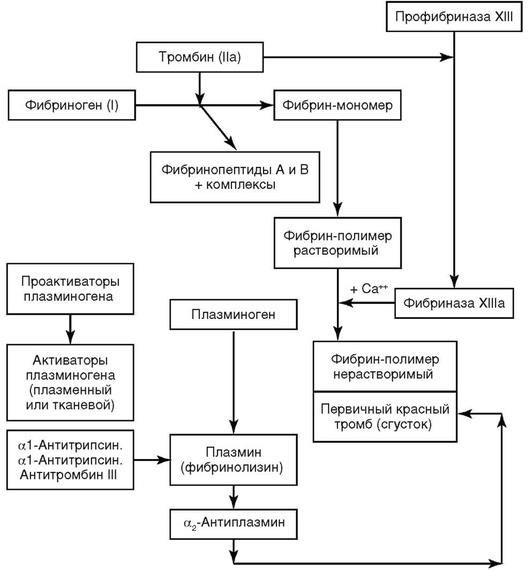
The third phase of blood coagulation is fibrin formation (diagram in the photo). After fibrin stabilization, which, together with blood cells, forms the primary red thrombus, two main processes of the post-coagulation phase begin: spontaneous fibrinolysis and retraction, ultimately leading to the formation of a hemostatically complete definitive thrombus. Normally, these two processes occur in parallel. Physiological spontaneous fibrinolysis and retraction contribute to the compaction of the thrombus and its hemostatic functions. The plasmin (fibrinolytic) system and fibrinase (factor XIIIa) actively participate in this process. Spontaneous (natural) fibrinolysis reflects a complex reaction between the components of the body’s plasmin system and fibrin. The plasmin system consists of four main components: plasminogen, plasmin (fibrinolysin), activators of fibrinolysis proenzymes, and its inhibitors. Disruptions in the balance of plasmin system components lead to pathological activation of fibrinolysis.
In clinical practice, the study of the hemostasis system pursues the following goals:
- diagnosis of disorders in the hemostasis system;
- determining the permissibility of surgical intervention for identified disorders in the hemostasis system;
- monitoring treatment with direct and indirect anticoagulants, as well as thrombolytic therapy.


