

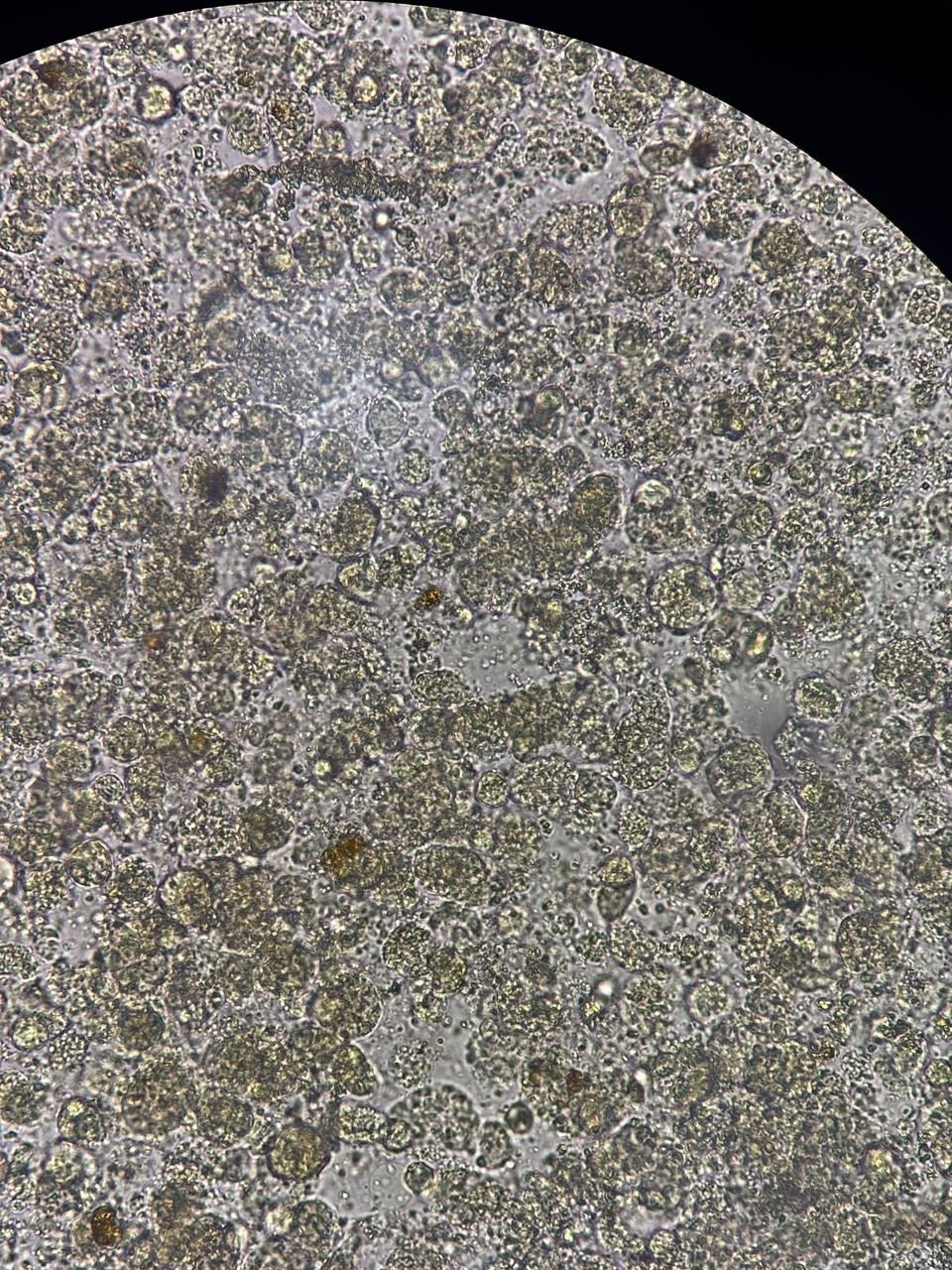
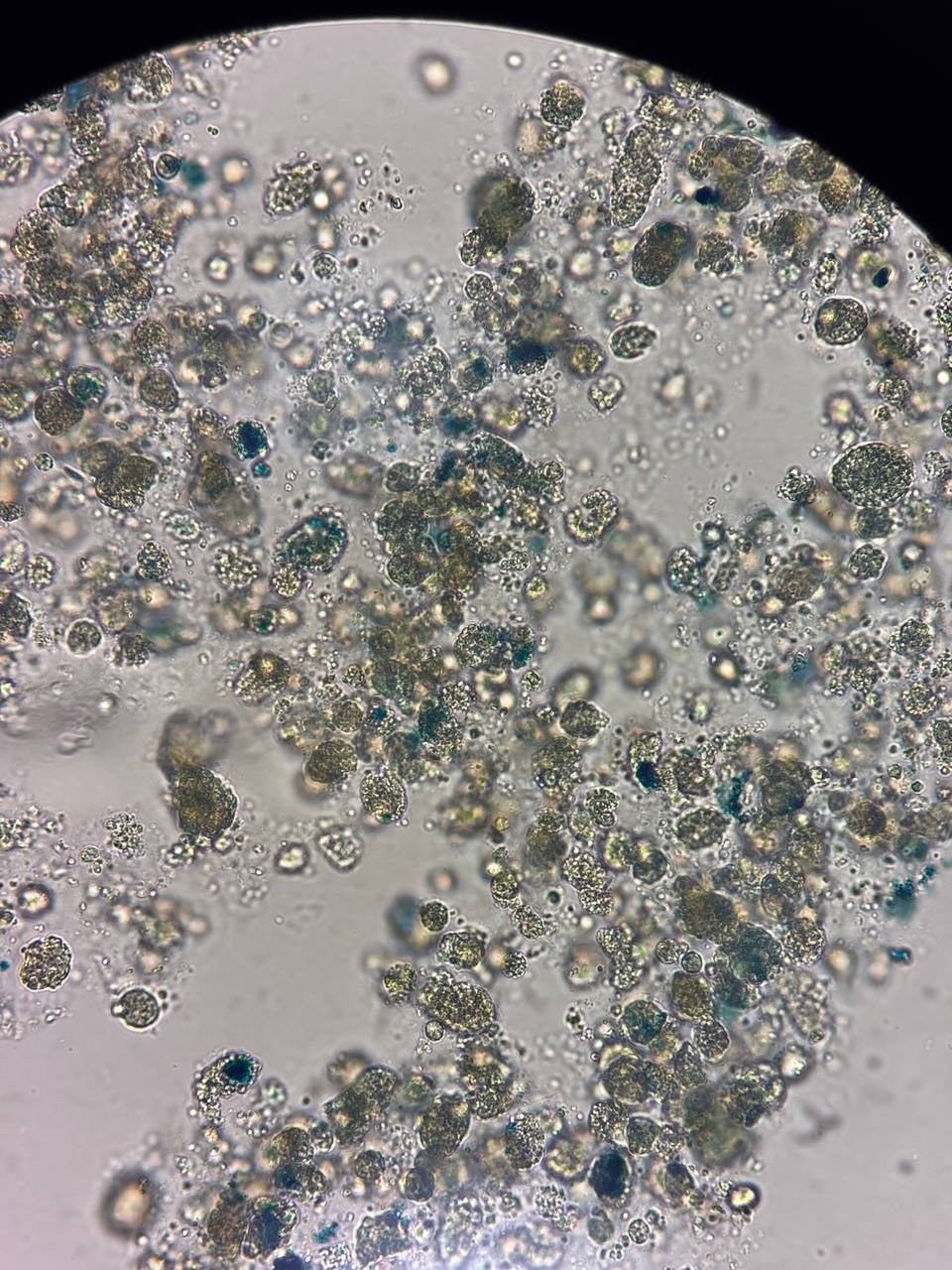
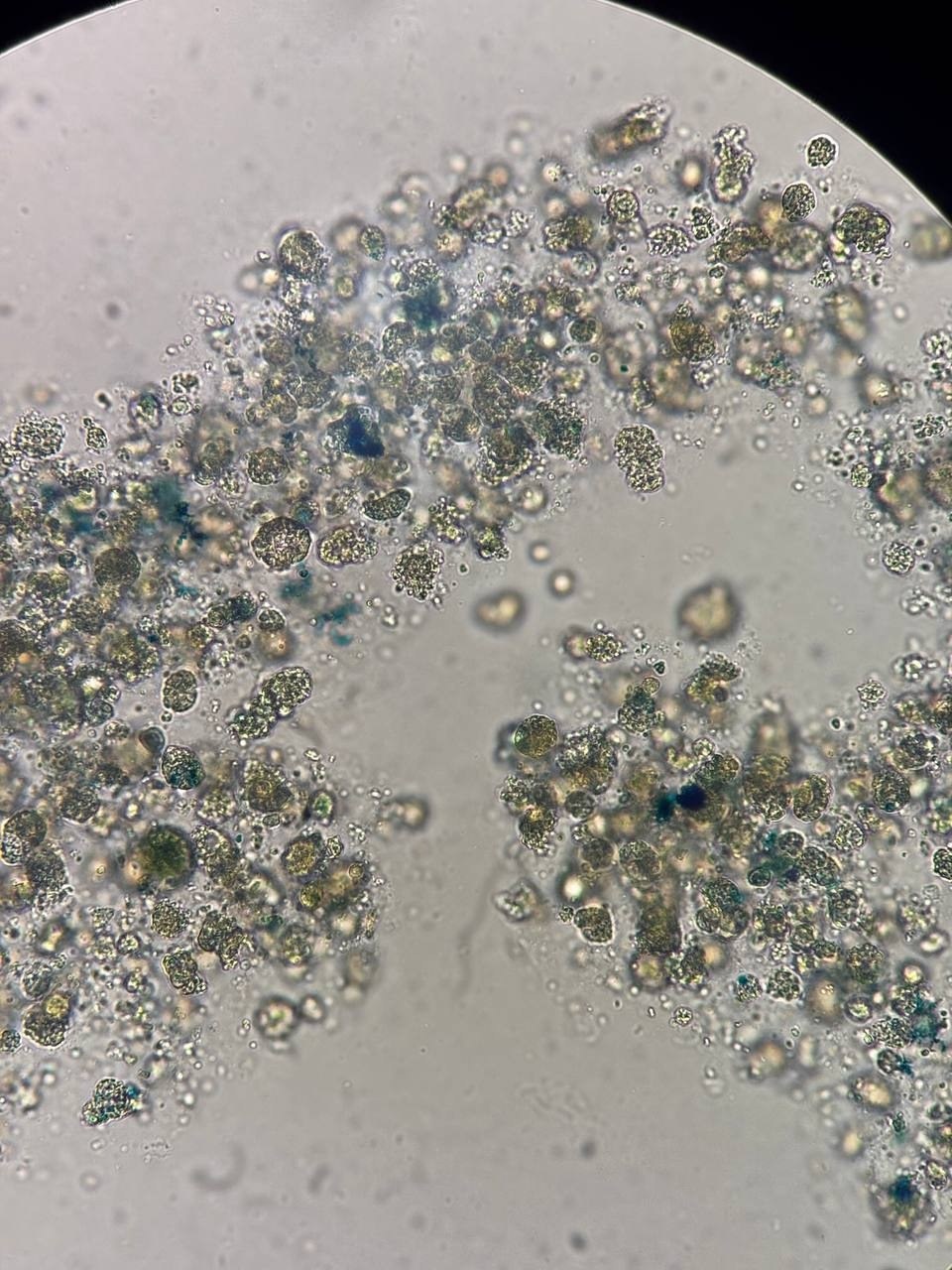
Microscopy of urine sediment. Hemosiderin.
The presence of hemosiderin in urine is a result of blood cell destruction, where hemoglobin is released from erythrocytes into the bloodstream beyond the binding capacity of haptoglobin. Proximal tubular cells are damaged, slough off along with hemosiderin, and are excreted in the urine, giving it a brownish color. Hemosiderinuria is usually observed three to four days after the onset of hemolytic conditions. Hemosiderin can remain in the urine for several weeks. Hemosiderinuria is a better marker of intravascular hemolysis than hemoglobinuria. Hemosiderin is not observed in the urine of healthy individuals. Hemosiderin is readily soluble in acids. Perls’ reaction, or the Prussian blue reaction, is specific for hemosiderin.
🙏 Photos and description were kindly provided by biologist Anna Feditskaya, Lugansk


