

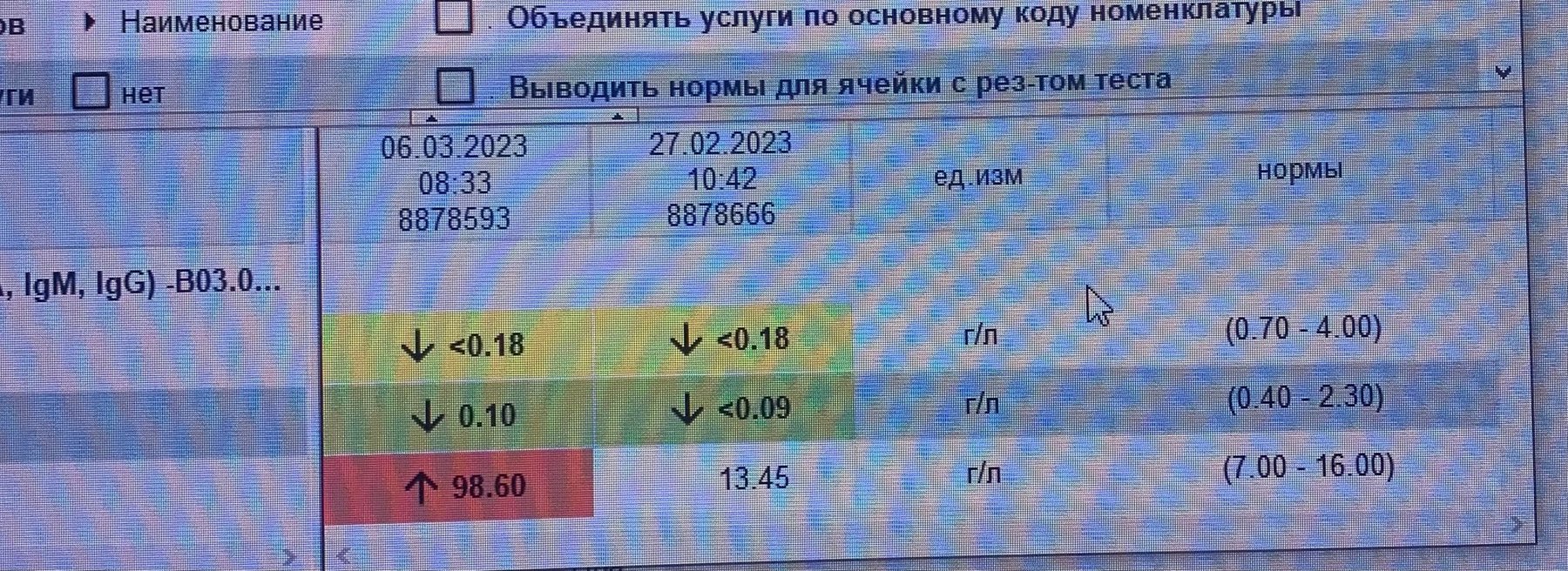
❗Falsely normal IgG in a patient with IgG myeloma. ✅A 60-year-old male patient with a classic laboratory pattern suspicious for multiple myeloma: hemoglobin 66 g/L, ESR 100 mm/hour, total protein 160 g/L. Plasma cells constituted 62% in the bone marrow aspirate. Thus, the diagnosis of multiple myeloma is beyond doubt. Markedly expressed hyperproteinemia is noteworthy, however, the laboratory authorizes the following results for total immunoglobulins: 👉IgG 13.45 g/L; 👉IgA 0.18 g/L; 👉IgM 0.09 g/L.
❓A natural question arises: what then causes such hyperproteinemia?!
⚠This “discordance” can be found in two cases:
- The patient has a rare variant of myeloma (e.g., IgE, IgD)
- A laboratory error called the hook effect.
✅It should be noted that IgD and IgE myelomas are never highly secreting and do not lead to such significant hyperproteinemia. Thus, the second option (laboratory error) is most likely. After a call to the laboratory, the hook effect was eliminated, and the analysis was re-authorized. 👉Clinical case kindly provided by: Kononov Oleg Alexandrovich, hematologist at Pavlov First Saint Petersburg State Medical University, Saint Petersburg.


