

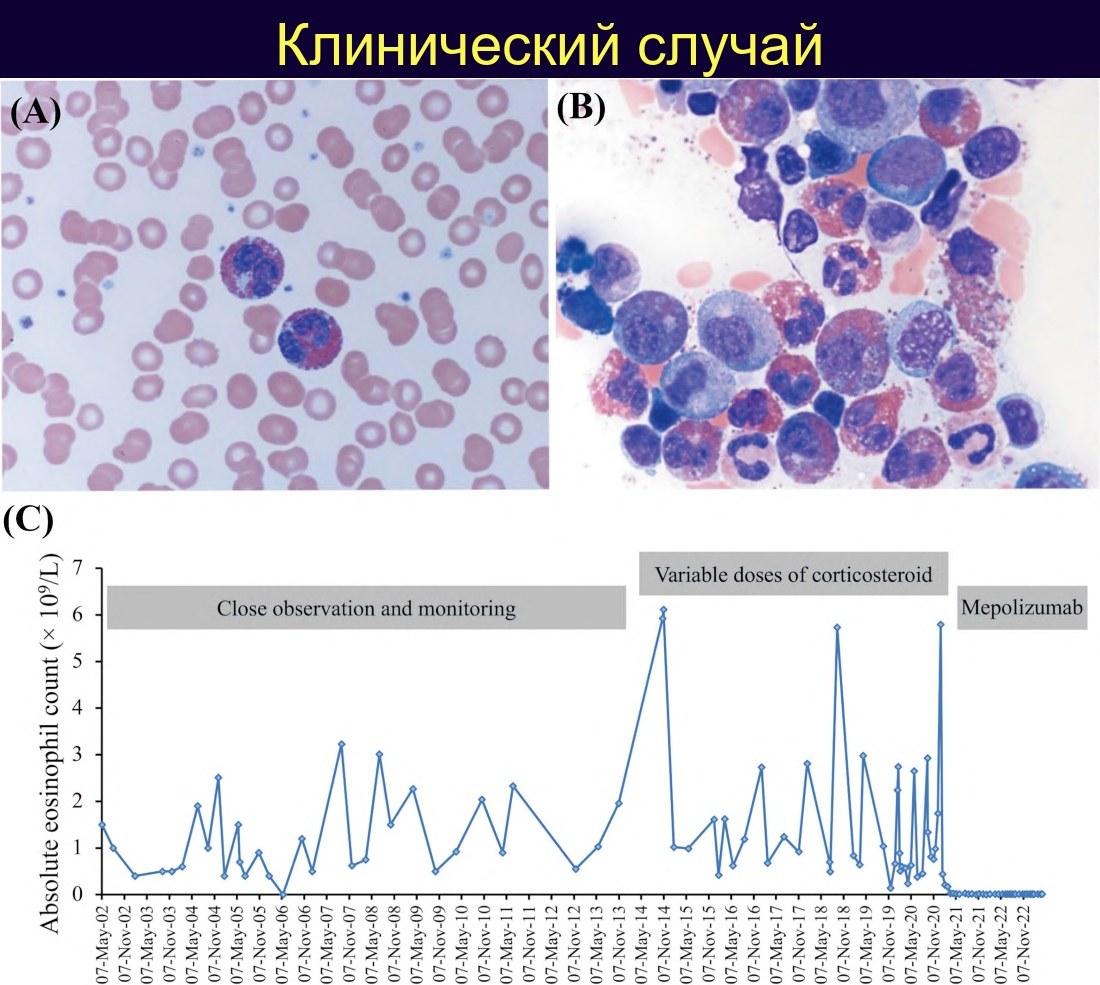
Clinical case: hypereosinophilia in a patient with a long history
Medical history: A 71-year-old woman with hypereosinophilia (absolute eosinophil count — AEC > 1.5 × 10⁹/L) for 10 years. Initially, she complained of vomiting, diarrhea, and an eczematous rash. Endoscopy revealed gastritis with mild eosinophilic infiltration. Later, asthma developed.
Diagnosis:
- Secondary causes (parasites, allergies, autoimmune diseases) were excluded.
- Bone marrow: eosinophilia (35%), without signs of malignancy.
- Molecular tests (FISH for PDGFRA/B, TCR) — negative.
- Diagnosis: idiopathic hypereosinophilic syndrome (HES).
Treatment:
- Corticosteroids provided temporary relief, but relapse occurred upon dose reduction.
- The monoclonal antibody mepolizumab (anti-IL-5) led to sustained normalization of AEC and resolution of symptoms.
Key points:
- HES is a diagnosis of exclusion. It is important to rule out secondary and clonal causes.
- Main affected organs: skin, GI tract, lungs, heart (risk of fibrosis and thromboembolism).
- In addition to corticosteroids, targeted therapy (anti-IL-5) is effective.


