

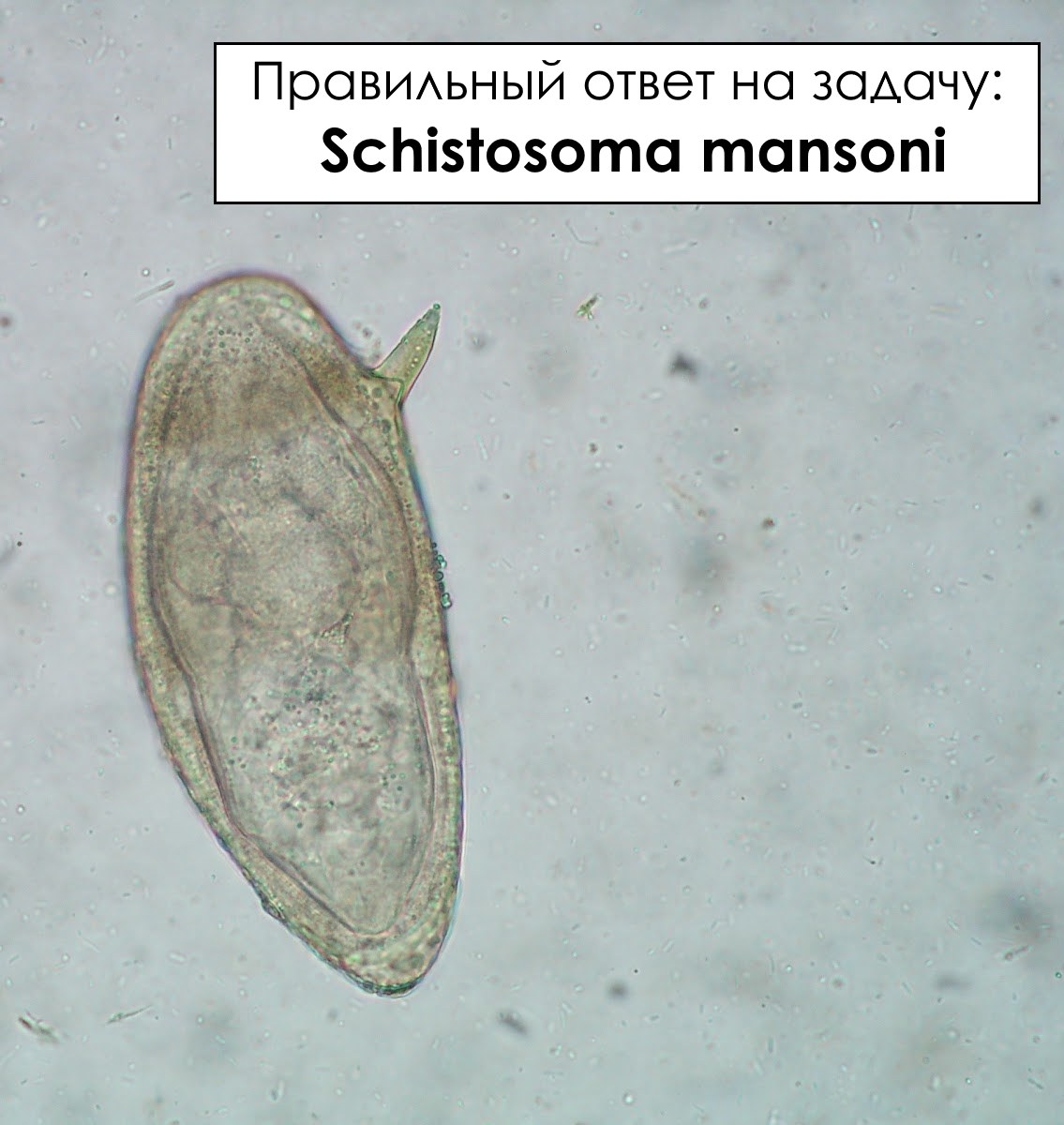
🐍Answer to the parasitology video quiz Schistosoma mansoni. Intestinal schistosomiasis. Microscopic examination revealed an oval egg with a “lateral spine”.
Sometimes it may be necessary to tap the coverslip to move the eggs; the lateral spine may not be visible if the egg is turned on its side.
In very light or chronic infections, eggs may be difficult to detect in stool; therefore, multiple stool examinations may be required, and biopsy and/or immunological tests for antigen or antibodies help diagnose the infection in these patients.
Schistosoma mansoni is not found in Russian water bodies. This parasite is common in tropical and subtropical regions, such as Africa, South America, and the Caribbean. Its life cycle requires freshwater mollusks of the genus Biomphalaria, which are not found in Russia.
In rare cases, schistosomiasis can manifest as neuroschistosomiasis (seizures, paralysis) due to ectopic eggs (usually associated with S. japonicum). Interesting facts:
- Schistosoma is an ancient enemy. Schistosoma eggs have been found in 3000-year-old Egyptian mummies!
- A “sticky” pair: the female worm can live in the gynecophoric canal of the male. Did you know that these are lifelong “hugs”?
- “Secret agent”: these parasites cover themselves with human proteins to hide from the immune system.
💎 Look for more useful materials on parasitology in our LAB-TESTS library. The link with access to the library is automatically sent to you via private message after paying for a VK donut Labformula subscription.


