

🧪 Urine Examination. Clarithromycin Crystalluria.
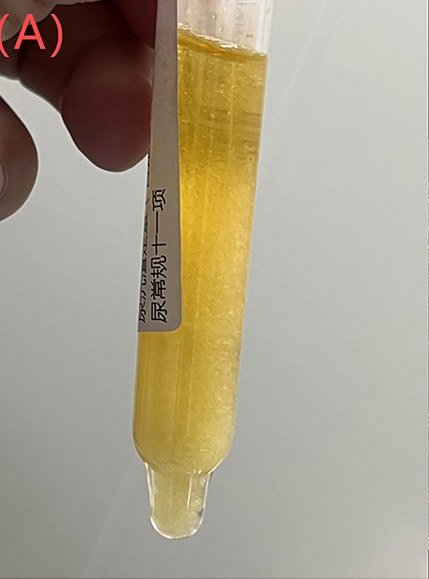
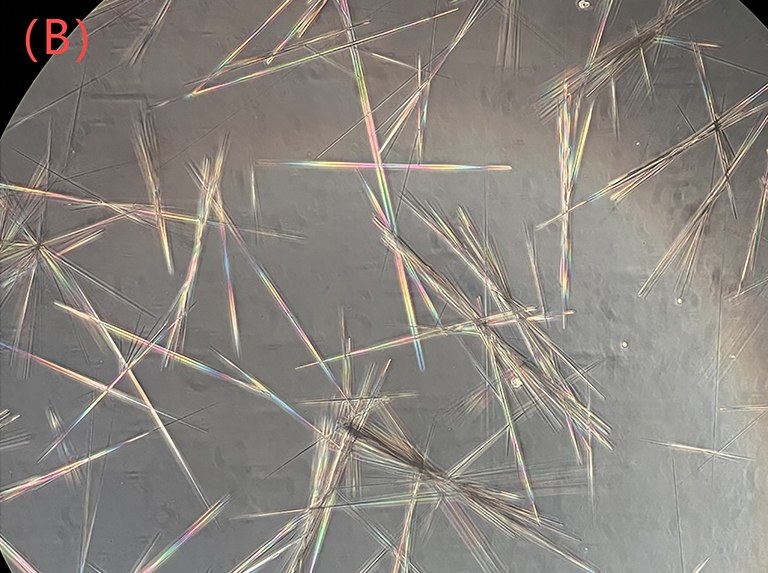
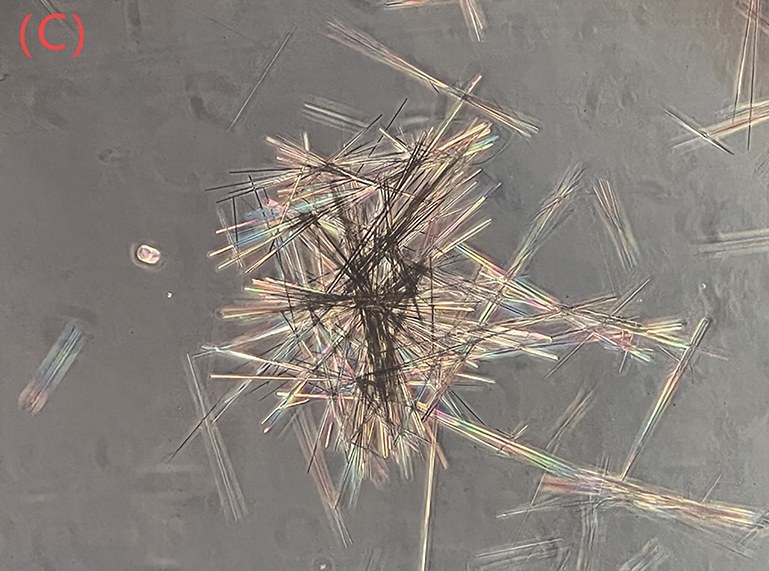
⚠ A 26-year-old man presented to the clinic for consultation regarding cloudy urine, which he had since morning. The day before the visit to another clinic, he received a single intravenous dose of clarithromycin (500 mg) for a rounded growth near the glans penis, and we found that the growth was pearly penile papules, which do not require treatment. Urinalysis revealed turbidity (Figure A), the presence of red blood cells and some white blood cells, pH 6.5, specific gravity 1.044, and multiple crystals that looked like needles (Figures B and C).
💊 Reports of clarithromycin-induced crystalluria are rare, but antibiotic-related crystalluria has been reported previously. Crystalluria was present in 8.2% of nearly 10,000 routine urine samples; most of these “typical” crystals were mainly calcium oxalate and uric acid, and one in three “atypical” crystals due to drug use was caused by antibiotics. Several antibiotics can cause transient crystalluria, including sulfadiazine, amoxicillin, ampicillin, nitrofurantoin, quinolones, and ciproxin. Risk factors include drug overdose, dehydration, hypoalbuminemia, and low or high urine pH. After discontinuation, crystalluria usually resolves within 1–5 days, hematuria within three days, and acute kidney injury within 3–17 days. In this patient, clarithromycin-induced crystalluria was suspected, and the only drug used, clarithromycin, was discontinued. Three days later, macroscopic crystalluria disappeared, and urinalysis results remained normal until day 10 of follow-up.
Source: Zhao, Weihua and Zhang, Tongyan. “Clarithromycin crystalluria” Journal of Laboratory Medicine, vol. 49, no. 1, 2025, pp. 59-60.


