

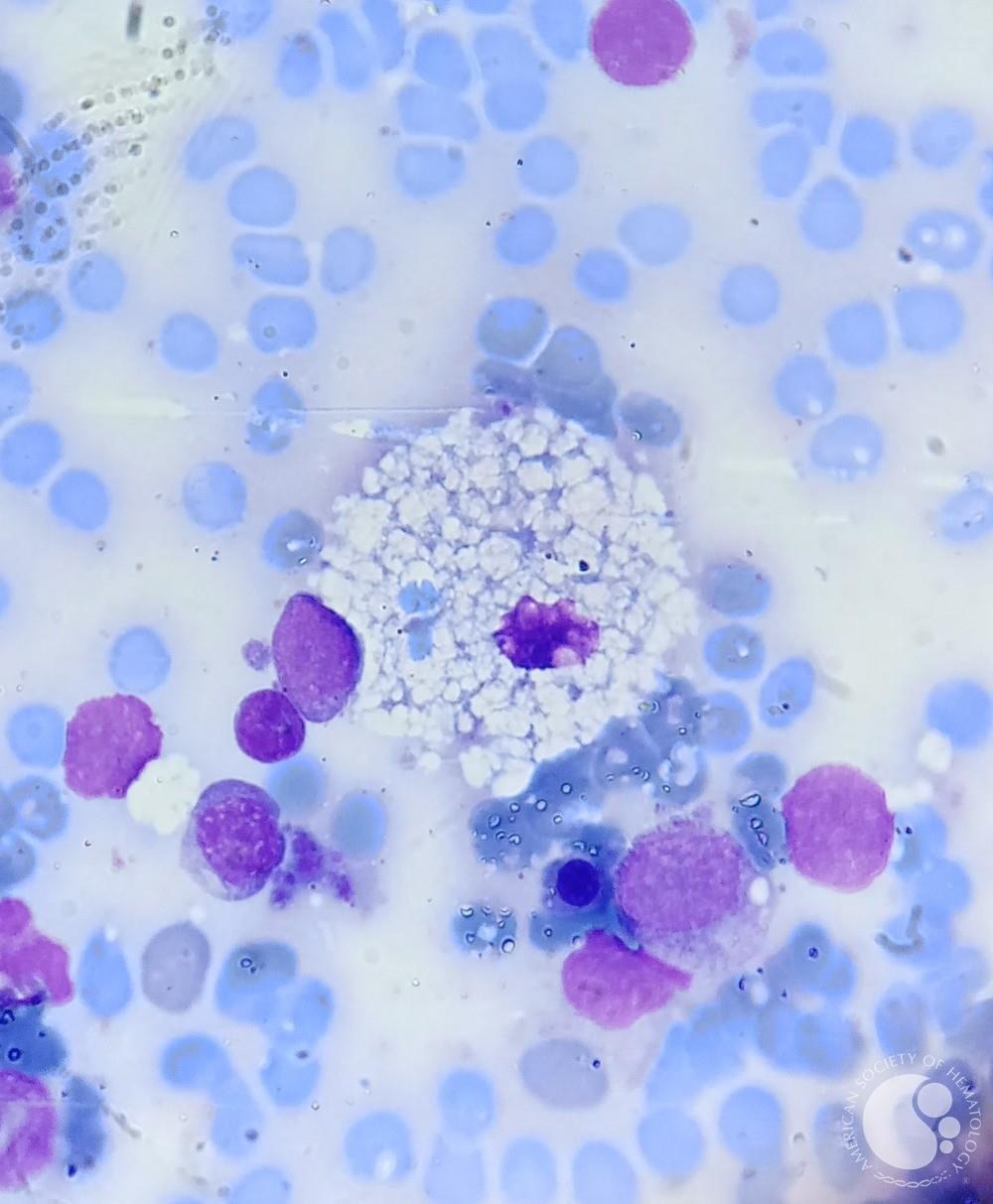
🔬 Niemann-Pick Cells
Niemann-Pick disease belongs to the category of genetic metabolic disorders known as lipid storage diseases. This condition is characterized as a sphingolipidosis caused by insufficient sphingomyelinase activity, leading to the accumulation of sphingomyelin in reticuloendothelial cells.
Morphologically, Niemann-Pick cells range from 20 to 100 µm in diameter and contain numerous well-defined small vacuoles in their cytoplasm, giving them a foamy, mulberry-like, or soap-bubble appearance (due to sphingomyelin accumulation in the cytoplasm).
There are three common forms of the disease:
- Type A
- Type B
- Type C
Niemann-Pick disease types A and B are caused by mutations in the SMPD1 gene. This condition is often referred to as acid sphingomyelinase deficiency.
Type A — recognized as the most severe manifestation — begins in infancy. Manifestations include hepatomegaly, significant neurological impairment, and progressive nerve degeneration. Currently, there is no therapeutic intervention. Most affected children do not survive beyond a few years of life.
Type B — sometimes called juvenile-onset Niemann-Pick disease — typically begins in late childhood. Manifestations include neuropathic pain, difficulty with movement, visual impairment, and hepatosplenomegaly. Most individuals with type B reach adulthood; however, liver and lung problems tend to gradually worsen.
Niemann-Pick disease type C is a genetic disorder caused by mutations in the NPC1 and NPC2 genes. These mutations hinder the body’s ability to synthesize essential proteins required for the transport and utilization of cholesterol and various lipids within cellular structures. This metabolic dysfunction leads to excessive cholesterol deposition in the liver and spleen, as well as abnormal accumulation of other lipids in nerve tissues. This deterioration manifests in impairments related to eye movements, walking, swallowing, auditory processing, and cognitive function. Source: ASH Image Bank for Hematology.
🩸 Find a large database of photos with descriptions in our Library of Blood and Bone Marrow Mysteries. The library volume is over 80 gigabytes! 💎 The link with access to the library is automatically sent to you via private message after paying for a VK Donut Leukformula subscription.


