

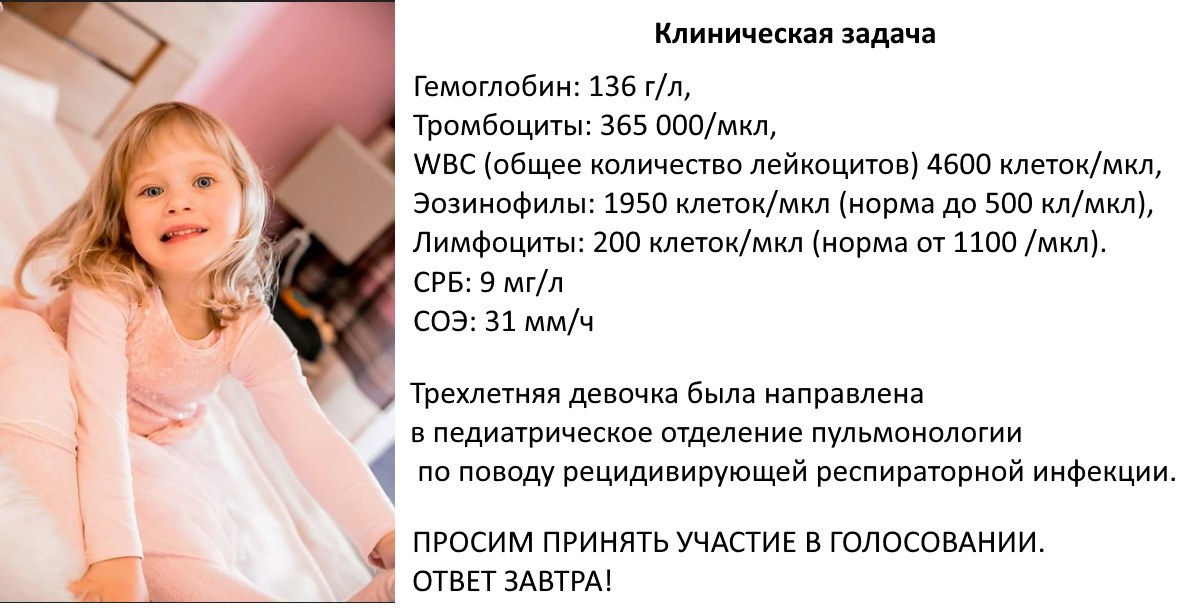
RECURRENT RESPIRATORY INFECTIONS. LYMPHOPENIA AND HYPEREOSINOPHILIA. 👉🏻A three-year-old girl was referred to the pediatric pulmonology department due to recurrent respiratory infections. Laboratory tests showed: ❗lymphopenia and hypereosinophilia: Hemoglobin: 136 g/L Platelets: 365,000/µL, WBC (total white blood cell count) 4600 cells/µL, Eosinophils: 1950 cells/µL (normal up to 500 cells/µL) Lymphocytes: 200 cells/µL (normal from 1100/µL), All lymphocyte subpopulations were deficient, with almost absent naive T-cells (recent thymic emigrants (RTE): CD45+RA+CD31+ = 19/µL). ❗with a moderate increase in inflammation markers: CRP: 9 mg/L ESR: 31 mm/h ❗Immunoglobulin levels showed hypogammaglobulinemia with elevated IgE: (IgG: 228 mg/dL, IgA: 21 mg/dL, IgM: 10 mg/dL, IgE: 170 IU/mL).
👉🏻 ANAMNESIS. The patient was an only child, born to non-consanguineous parents of European descent. The patient’s history included eczema from the first month of life. From the second year of life, the patient developed recurrent respiratory infections, characterized by productive cough and fever, requiring treatment with oral penicillin-class antibiotics. In one year alone, there were sixteen episodes, and in two cases, the patient was hospitalized in a local hospital with a diagnosis of pneumonia and received intravenous antibiotic therapy. 👉🏻EXAMINATION. The patient had a good general appearance, and her weight and height were at the 25th percentile. Mild eczema was noted on her thighs and back. Chest auscultation revealed bilateral rhonchi.
❗The correct answer will be provided tomorrow. Please participate in the poll!


