

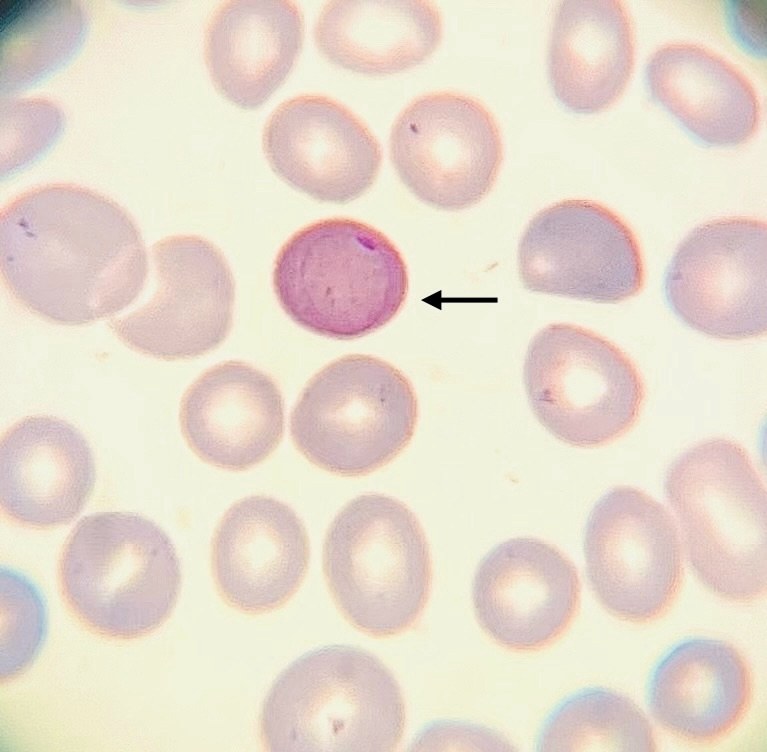
🔬 Cabot ring in an erythrocyte. Bone marrow.
🙏 Photo kindly provided by biologist Alina Kudryashova, Sterlitamak
REFERENCE INFORMATION: Cabot rings are thin, thread-like structures with a reddish-purple color, shaped like a loop or the figure 8, very rarely found inside erythrocytes. These are remnants of mitotic spindle microtubules, indicating a disruption in the normal process of erythroid cell formation. They are detected in megaloblastic (pernicious) anemia, lead intoxication, hematological diseases with impaired erythropoiesis, and other severe anemias. They were first described in 1903 by American physician Richard Clarke Cabot. The finding itself is not a disease but serves as a valuable cytological marker of hematopoietic pathology.


