

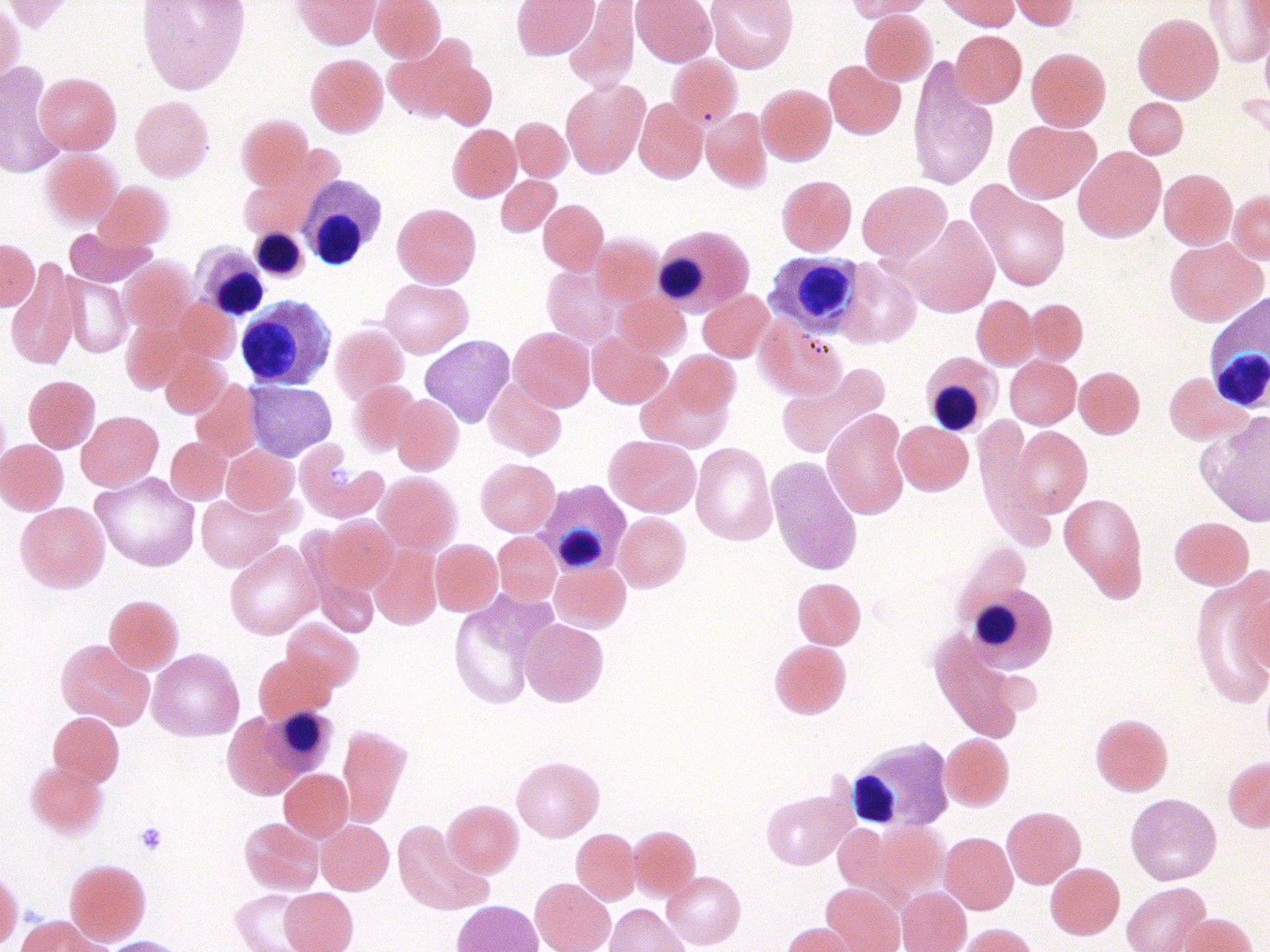
Normoblasts in a peripheral blood smear. In what cases is WBC recalculation required?
Normoblasts (nucleated red blood cells) are precursors to red blood cells that typically mature in the bone marrow and do not enter the peripheral blood. However, in cases of increased red blood cell production (e.g., in hemolytic anemia), as well as in a number of oncohematological diseases, a significant number of normoblasts are often found in the peripheral blood smear. Their presence can significantly distort the results of standard automated white blood cell (WBC) counts: analyzers may incorrectly identify normoblasts as leukocytes and inflate the final count.
To obtain accurate data, WBC correction is performed in such cases. The critical threshold is usually considered to be more than 5 normoblasts per 100 leukocytes. If the number of normoblasts exceeds this limit, leukocytes are manually recalculated using the formula: Corrected WBC = (Measured WBC) × (100 / (100 + number of normoblasts per 100 leukocytes)). This allows for the exclusion of nucleated red blood cells from the total leukocyte count.
Clarifying the true WBC level is important for accurate diagnosis and patient monitoring, as incorrect interpretation can lead to wrong therapeutic decisions. Modern analyzers often have a built-in normoblast recognition function, but in its absence, or if there are doubts about the results, correction is mandatory.


