

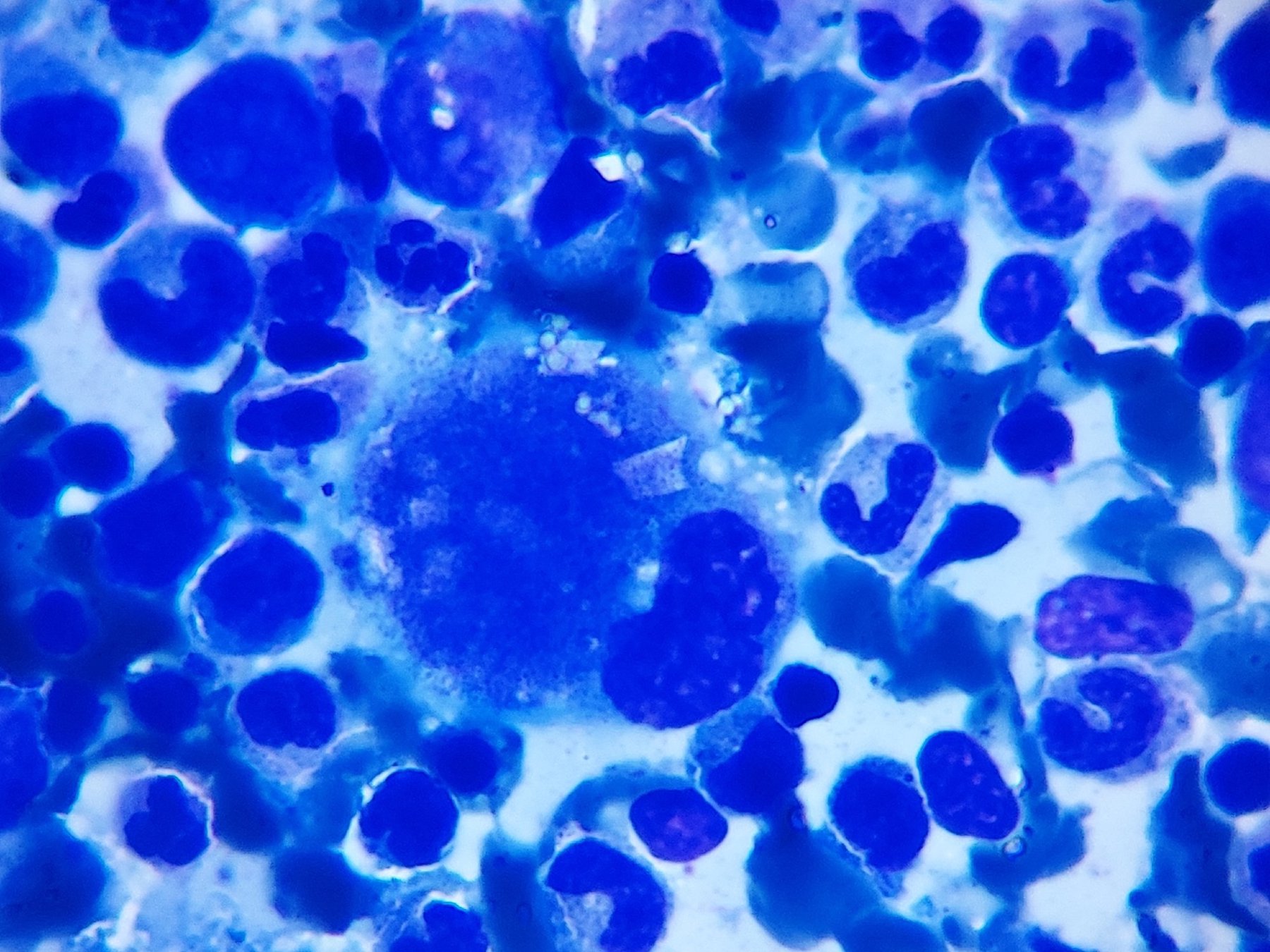
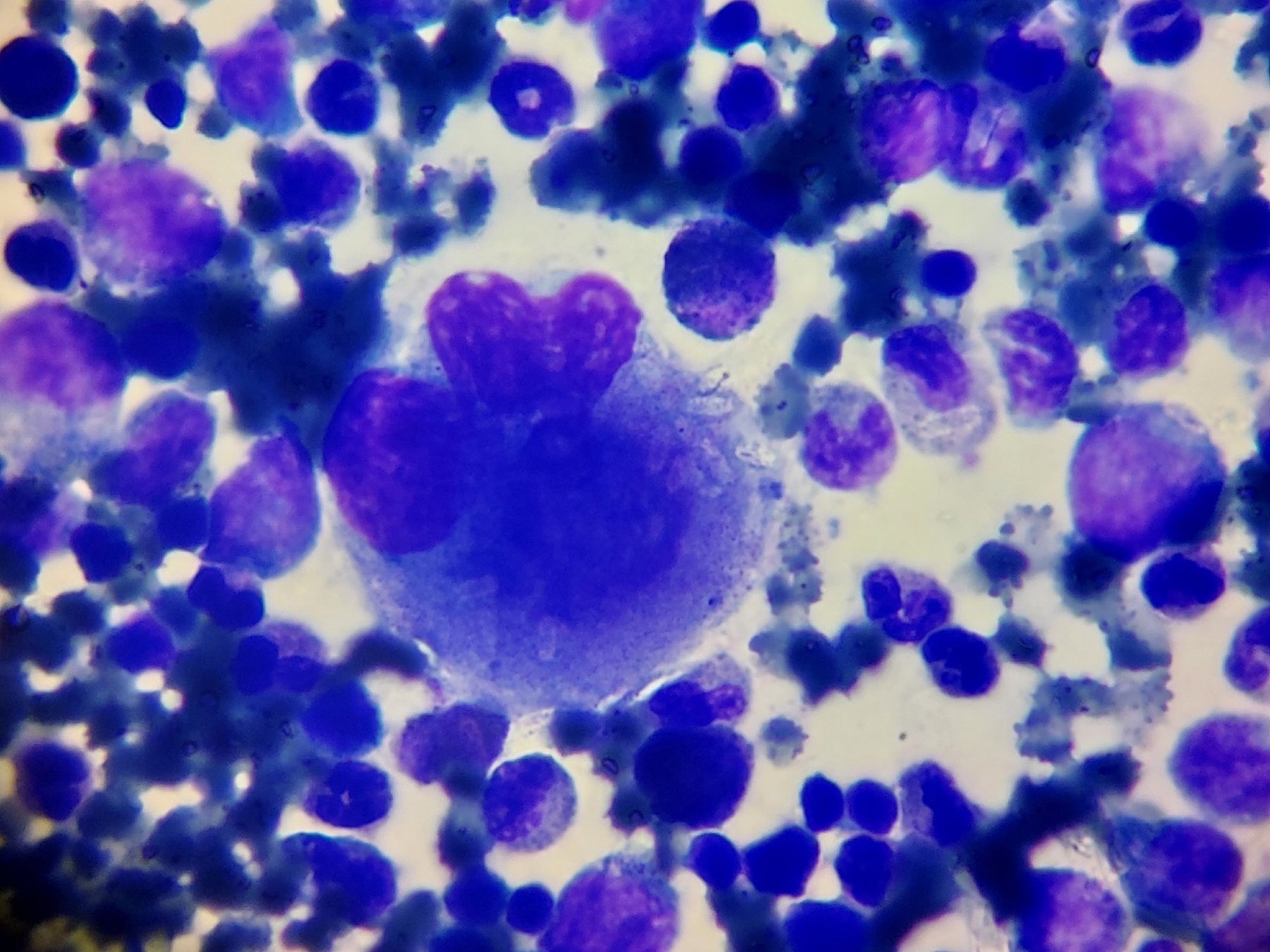
Crystals within megakaryocytes are a rather rare phenomenon. Their formation is associated with the accumulation of protein or other substrates inside the cell.
Types of crystals:
- Protein crystals. Most often, these are monoclonal immunoglobulins, which can accumulate in disorders of protein synthesis.
- Granule-associated crystals. Crystal-like structures are sometimes found in the α- or δ-granules of platelets, which form from megakaryocytes.
Crystals in pathological conditions. In a number of hematopoietic disorders, for example, in myeloma processes or certain variants of leukemias, crystalline proteins can accumulate in megakaryocytes. The exact mechanism of their formation remains unclear.
Clinical case. A 2-year-old child. No leukemia, no myeloma cells detected. In peripheral blood, against the background of a viral infection (ARVI) and a history of pneumonia: Hb — 103 g/L, leukocytes — 11.2 × 10⁹/L, platelets — 78 × 10⁹/L. Due to thrombocytopenia, a trephine biopsy / bone marrow examination was performed (microscopy images of the aspirate are attached).
Colleagues, I would be grateful for your opinion and possible interpretations.
🙏 Material for publication was kindly provided by Zebiniso Kholmuradova, morphologist, 🇺🇿 Uzbekistan, Kashkadarya Multidisciplinary Children’s Medical Center.


