

AGRANULOCYTOSIS LIKELY OF PHARMACOLOGICAL ORIGIN
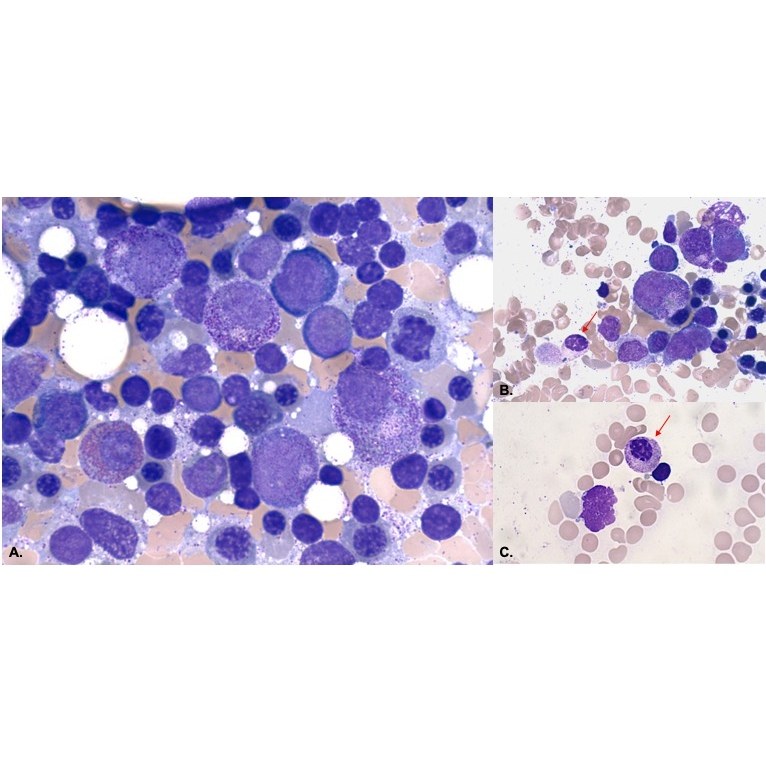
Bone marrow aspirate showing a decrease in the granulocytic lineage and maturation arrest at the promyelocyte stage (image A). The presence of individual mature neutrophils with pseudo-Pelger-Huët homozygous type hyposegmentation (red arrows) and hypercondensed chromatin, without other dysplastic features, is noted (images B and C).
Clinical information: A 64-year-old woman with a history of nodal marginal zone lymphoma, stage IV (bone marrow infiltration), diagnosed in March 2023 and currently in complete remission, on chronic trimethoprim/sulfamethoxazole therapy. Bone marrow aspiration was performed in the context of severe neutropenia and febrile syndrome with a focus in the respiratory tract.
Biological information: Analytically, severe neutropenia is present with other peripheral blood parameters within normal limits (hemoglobin 120 g/L, platelets 140x109 /L, leukocytes 0.95x10⁹ /L, neutrophils 0.25x10⁹ /L). Differential count under the microscope: segmented 26.7%, lymphocytes 56.3%, monocytes 10.7%, eosinophils 6.1%, and basophils 0.2%. Bone marrow aspiration showed a decrease in the granulocytic lineage (13%) and maturation arrest at the promyelocyte stage, 7% monocytes, 24% lymphocytes, and 56% erythropoiesis; without signs of infiltration by the underlying lymphoma. Histological examination confirmed a slightly hypocellular bone core with maturation arrest in the granulocytic lineage. All of this is consistent with agranulocytosis of possible pharmacological origin (trimethoprim/sulfamethoxazole). The drug was discontinued, and G-CSF treatment was initiated, initially daily, and currently twice weekly, maintaining neutrophil levels > 1 x 10⁹ /L.
Sample type: Bone Marrow Staining type: May Grünwald-Giemsa Author/s: Hernández Arriaza MA, Galván Platas S, Maortua Langdon G, Mendoza Martínez A Workplace: Hematology and Hemotherapy Service. La Paz University Hospital. Madrid, Spain


