

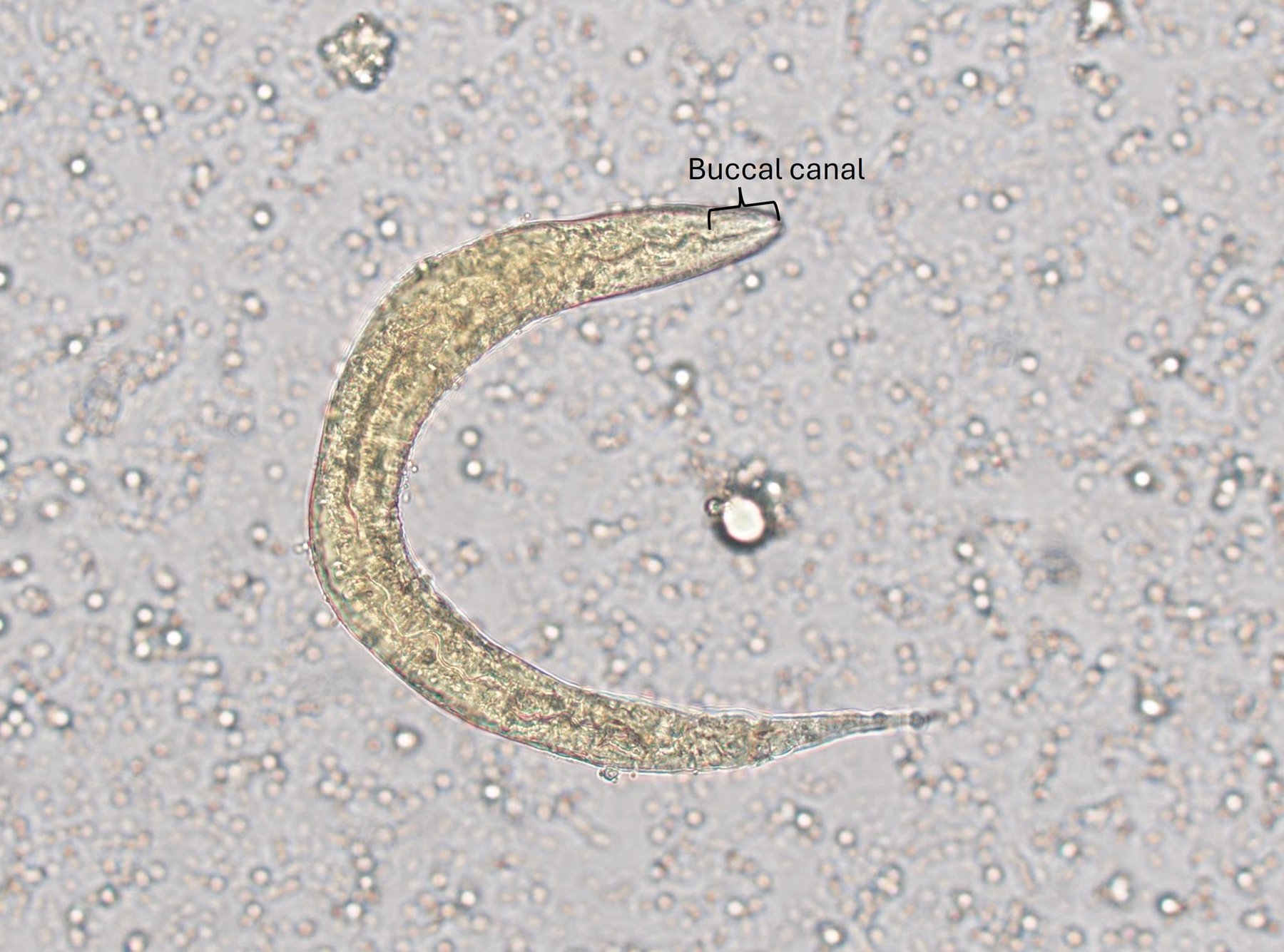
⚠ Answer to the parasitology problem 👉 hookworm rhabditiform larvae (L1)
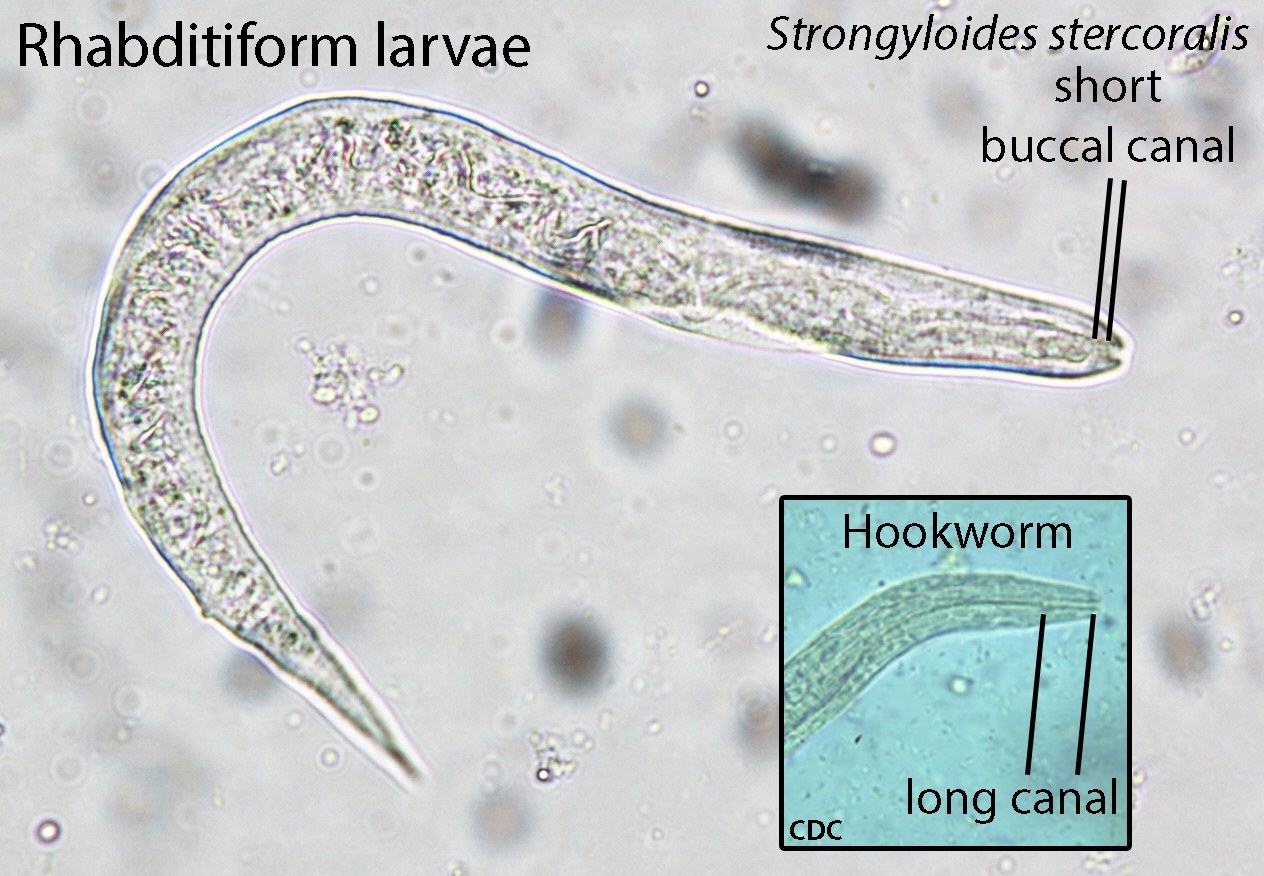
✅ Many of you wondered if these were Strongyloides stercoralis larvae, as this parasite is most commonly present in stool with L1 larvae. In comparison, hookworm larvae are rarely found in stool, and only when a long period passes between sample collection and placement in fixative (as in this case). Fortunately, L1 hookworm larvae can be distinguished from L1 S. stercoralis larvae by several morphological features:
✅ Hookworm larvae (Ancylostoma duodenale and Necator americanus) have a long oral cavity and an inconspicuous genital primordium.
✅ S. stercoralis larvae have a short oral cavity and a conspicuous genital primordium. (Imagine S trongyloides = short) Note the long oral cavity in this case:
✅ Although I tried to give you some diagnostic clues (freshly obtained, without preservative, and larvae were no longer motile upon examination), this was definitely a challenging case!
💡 In the images below: Hookworm - translates to hookworm; long - long; short - short.


