

📢Correct answer to the parasitology problem. 👉🔬Strongyloides stercoralis is a species of parasitic roundworm from the Strongyloididae family, which causes strongyloidiasis in humans.
✅This is an excellent teaching case from both a clinical and microbiological perspective. ✅The clinical picture is classic for Strongyloides with eosinophilic “asthma” (likely Loeffler’s syndrome due to filariform larvae leaving the intestine and migrating to the lungs), immunosuppressant use (which reduces the host’s ability to control the infection), and recurrent gram-negative bacteremia.
✅Gram-negative bacteria attach to the larvae as they autoinfect, entering the bloodstream from the intestine, creating a new cycle. This is why patients with this parasite often experience recurrent bacteremia and/or meningitis.
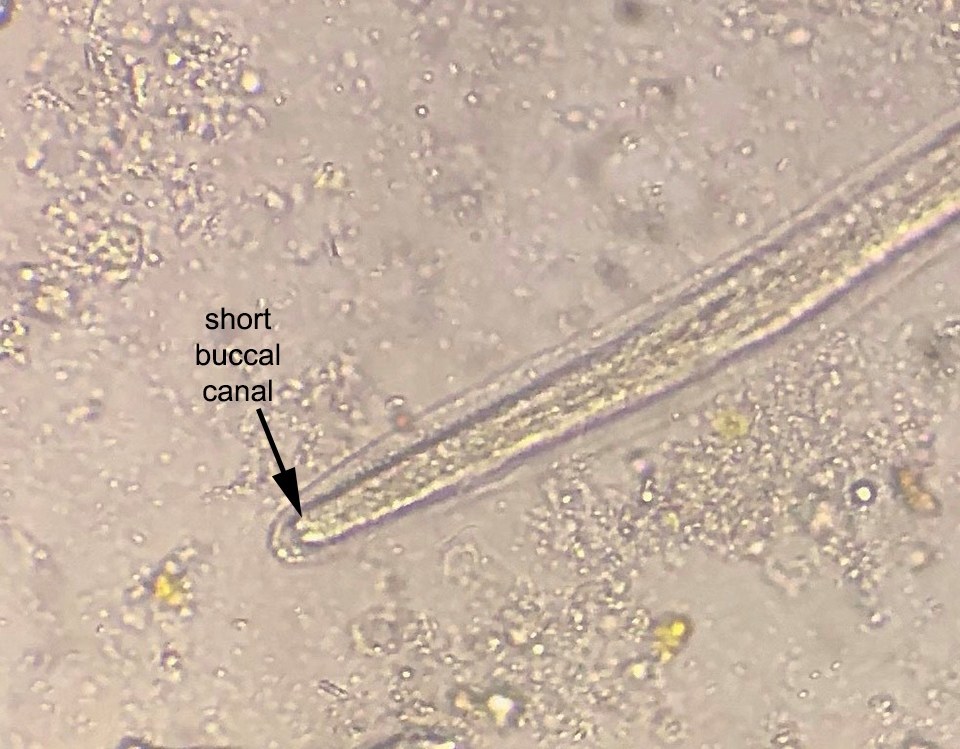
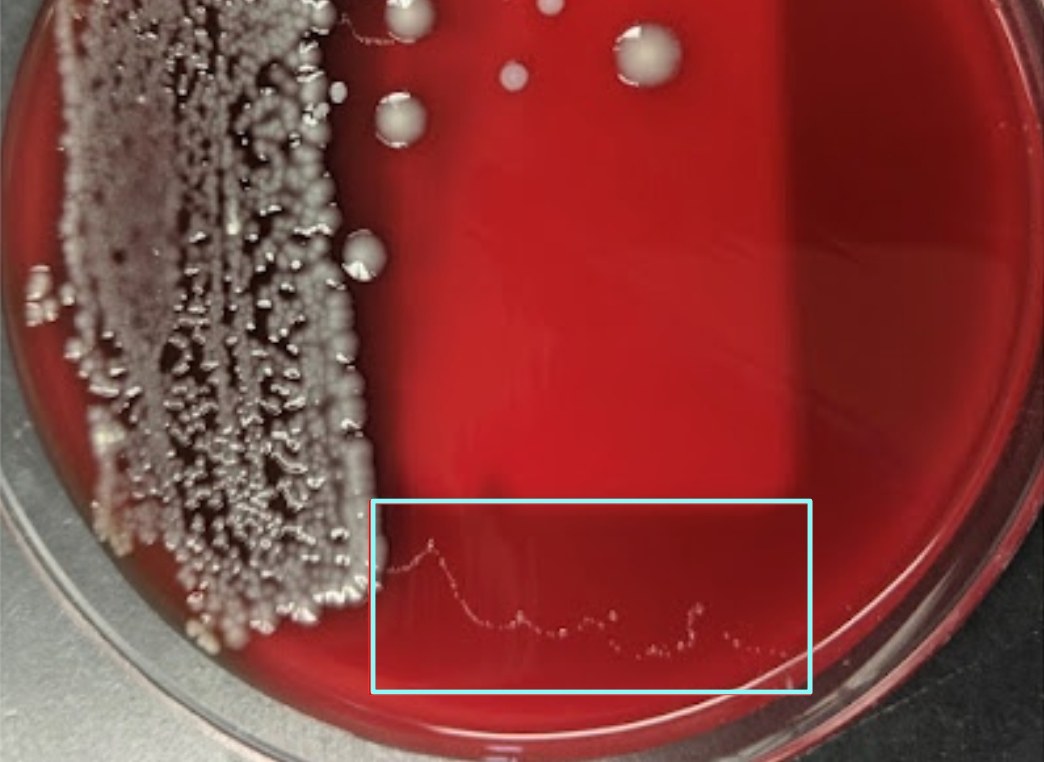
✅Numerous rhabditiform (L1) larvae are present in the stool. Filariform (L3) larvae are also found, although they were not isolated in this case. Rhabditiform (L1) larvae of S. stercoralis have a short buccal capsule, which distinguishes them from L1 nematode larvae (which have a long buccal capsule). Hookworm L1 larvae can sometimes be seen in stool samples if the sample is not collected in a fixative and is left for some time before examination. Therefore, the ability to differentiate between hookworm and S. stercoralis L1 larvae can be important. In this case, the short buccal capsule is clearly visible, confirming that it is S. stercoralis (see image below). ✅The bacterial trail of a migrating larva on a blood agar plate is another classic microbiological finding (image 2 in the carousel).
🏆In this clinical case, the observant Dr. Goi Chen decided to order a stool examination for parasites based on clinical data of eosinophilic “asthma” and gram-negative bacteremia in a clinical setting!


