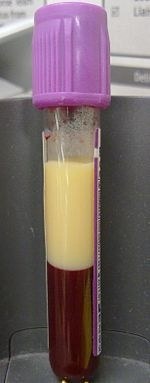
LIPEMIA (CHYLOSIS) AND COMPLETE BLOOD COUNT. When a patient’s MCHC value is 375 g/L or more, most often this can be cold agglutination or chylosis. Lipemic samples contain high levels of triglycerides, consisting of chylomicrons and very low-density lipoprotein particles, which in turn cause turbidity. This turbidity interferes with light scattering and absorption, leading to a falsely increased hemoglobin determination. When it is established that a patient’s sample is lipemic, it is important to notify the treating physician to determine if the patient can be placed on a diet, followed by a blood test several hours later. But what if obtaining complete blood count results is critically important to get as soon as possible? The method of plasma replacement in the tube can be applied. PLASMA REPLACEMENT TECHNIQUE: The EDTA tube is centrifuged, and the plasma is carefully removed without disturbing the leukocyte layer. An equal volume of physiological saline is replaced with the removed plasma. The tube is mixed and sent to the hematology analyzer. The results report should include an indication of lipemia and how the sample was modified. Disadvantages of the method: an inexperienced laboratory assistant may add more saline than plasma removed from the tube. We recommend reading a new article on examples of samples with increased MCHC on the American Laboratory Medicine doctors’ blog: https://labmedicineblog.com/2021/04/27/follow-the-indicies-its-not-always-cold/
Lipemia in CBC: False MCHC and Plasma Replacement
How lipemia (chylosis) inflates hemoglobin and MCHC levels in a complete blood count. A method for correcting results using plasma replacement with saline solution.