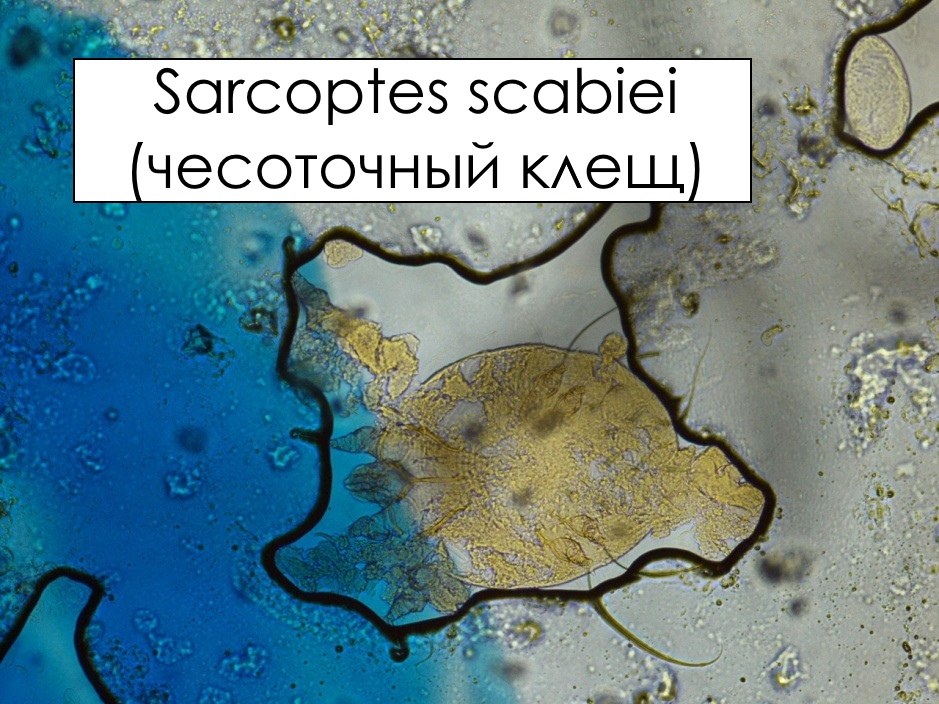
❗Correct answer to the parasitology problem: Sarcoptes scabiei (scabies mite). ✅ It is extremely important to collect an appropriate sample for organism identification. For a skin scrape, a fresh, unruptured papule on the skin should be selected. Using a scalpel covered in mineral oil, the papule should be vigorously scraped, and the scrape transferred to a microscope slide. ✅ Female mites are 330-450 µm long; males are slightly smaller – 200–240 µm. Eggs have a thin shell and are approximately 150 x 100 microns in size. Fecal pellets can also be seen in scrape samples. ✅ Sarcoptes scabiei is transmitted by direct contact. The pregnant female mite burrows into the epidermis, leaving a trail of 40 eggs. The burrowing process is enhanced by the presence of suckers and specialized cutting surfaces on the organism. Larvae hatch after 3-4 days, leave the burrow, and mature in hair follicles. The typical patient presentation is severe itching, often in skin folds, with possible secondary bacterial infection due to scratching and excoriations. 💎 Find more useful materials on stool examination in our LAB-TESTS library. The link with access to the library is automatically sent to you via private message after paying for a VK donut Labformula subscription.
Microscopy of Skin Scrape for Scabies: Sarcoptes scabiei
Technique for skin scraping and microscopic identification of Sarcoptes scabiei scabies mite. Morphology of the parasite, sizes of females, males, and eggs.