

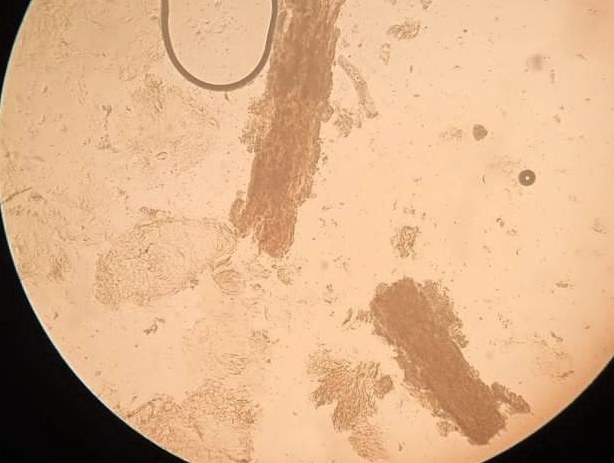
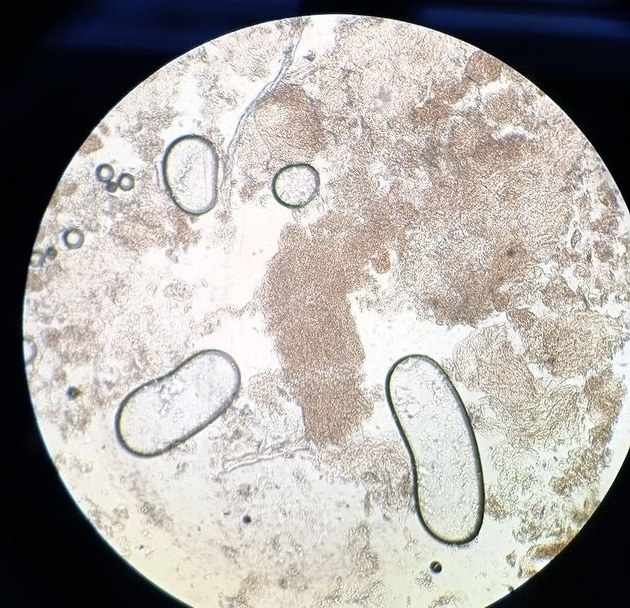
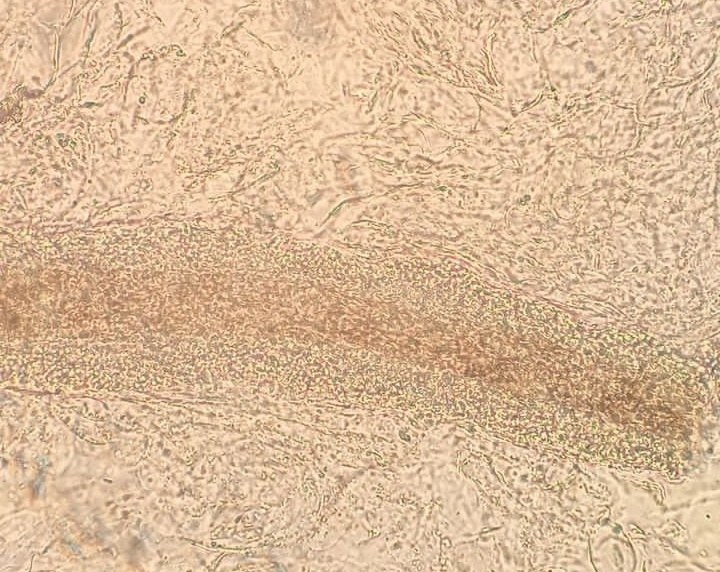
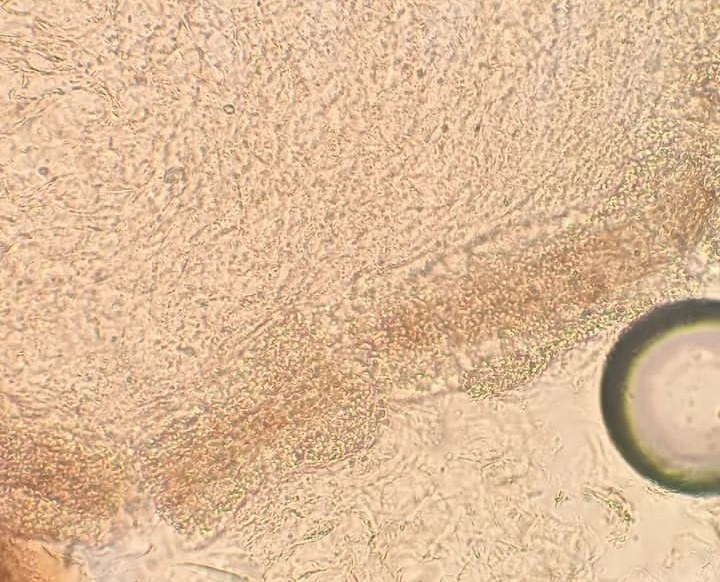
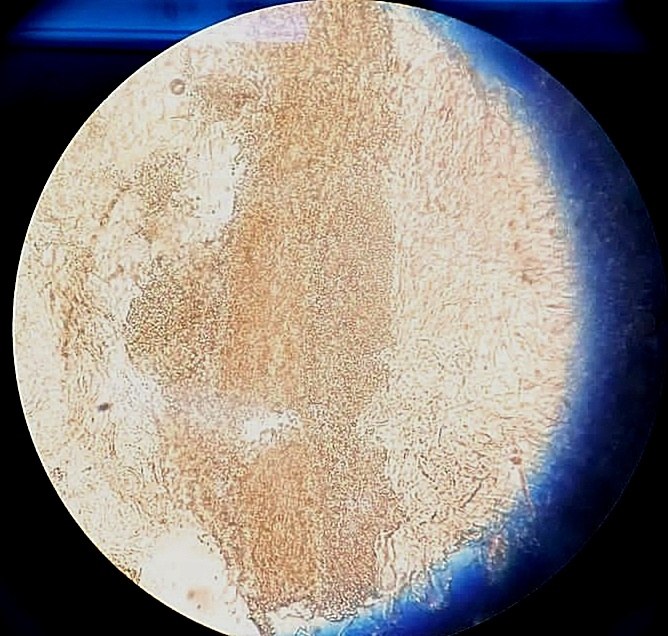
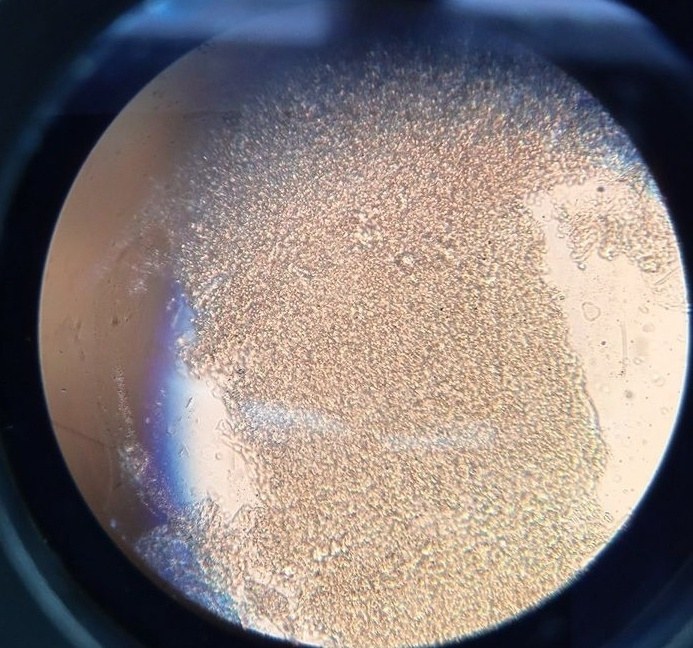
Microsporia (Microsporum). Hair, KOH 20%. 🔬 A genus of fungi causing dermatophytosis of the scalp. Photo 1,2 - magnification x100 Photo 3,4,5,6 - magnification x400
🙏 Images kindly provided by medical laboratory technician Dmitry Emelyanov.
👉 Tinea capitis, also known as ringworm of the scalp or microsporia of the head, is a fungal infection of the scalp caused by dermatophytes. Dermatophytes are fungi that affect keratinized tissues such as skin, hair, and nails. The disease is more common in children but can also occur in adults.
❗Main causative agents: ✅ Trichophyton — one of the most common types of fungi causing tinea. ✅ Microsporum — the second common type of fungi, most often responsible for microsporia.
Symptoms of tinea capitis: ✅ Appearance of round or oval patches of alopecia with brittle hair. ✅ Redness and scaling of the skin in the affected areas. ✅ Severe itching in the head area. ✅ In more severe cases, suppuration and the formation of inflammatory nodules may occur, which can spread to adjacent tissues.
Routes of infection: ✅ Direct contact with an infected person. ✅ Contact with infected animals, especially cats and dogs. ✅ Use of contaminated items such as combs, headwear, or towels.
Diagnosis is based on clinical manifestations and confirmed by laboratory methods: ✅ Microscopy of hair samples. ✅ Culture for identification of the causative agent species. ✅ Sometimes Wood’s lamp examination is used, which can detect some types of fungi.
💎 Find more useful materials on mycology in our LAB-TESTS library. The link to access the library is automatically sent to you via private message after paying for a VK donut Labformula subscription.


