

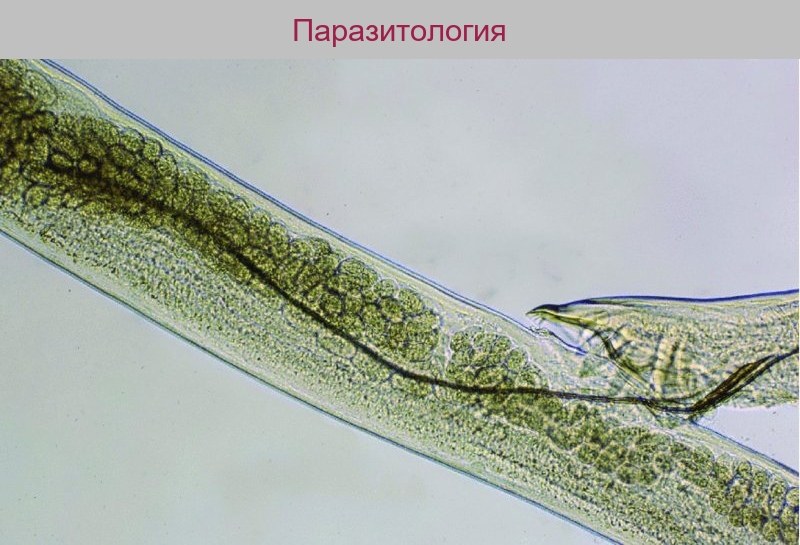
The male bursate nematode (right) uses its bursa (copulatory bursa) to grasp the female (positioned diagonally).
Male non-bursate nematodes assume a mating posture, using sensory papillae near their cloaca for precise alignment. Some of them are aided in this process by the presence of caudal alae, which function as a miniature bursa.
Source: Dennis Jacobs - Principles of Veterinary Parasitology, 2016.


