

Hereditary Pyropoikilocytosis
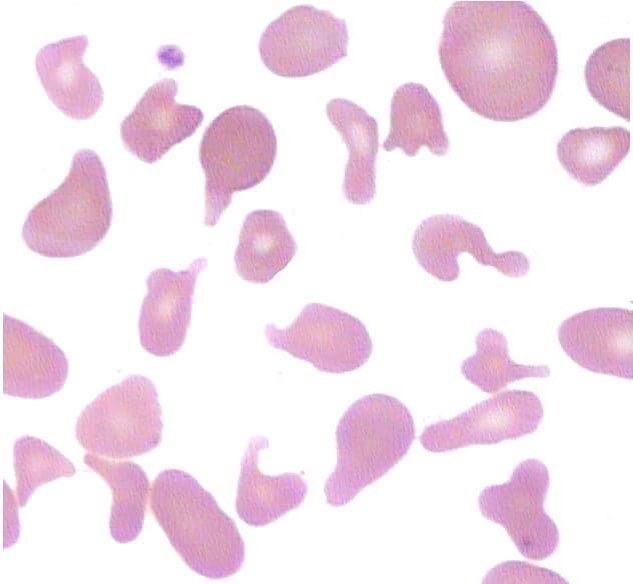
In peripheral blood, there is marked anisocytosis and significant non-specific poikilocytosis with the presence of bizarre erythrocyte forms.
Hereditary pyropoikilocytosis is a hemolytic anemia caused by a partial deficiency of the erythrocyte membrane protein spectrin. The disease can manifest as neonatal anemia with hyperbilirubinemia and jaundice. This severe form of anemia is more common among Caucasian, Negroid, and Arab populations.
The term “pyropoikilocytosis” is associated with increased erythrocyte fragmentation when heated in vitro at lower temperatures compared to normal erythrocytes. Some researchers describe the morphological changes of erythrocytes, comparing them to sparks from a bonfire.
🔬 Source: from the archive of Brazilian hematology specialist Marcio Melo


