

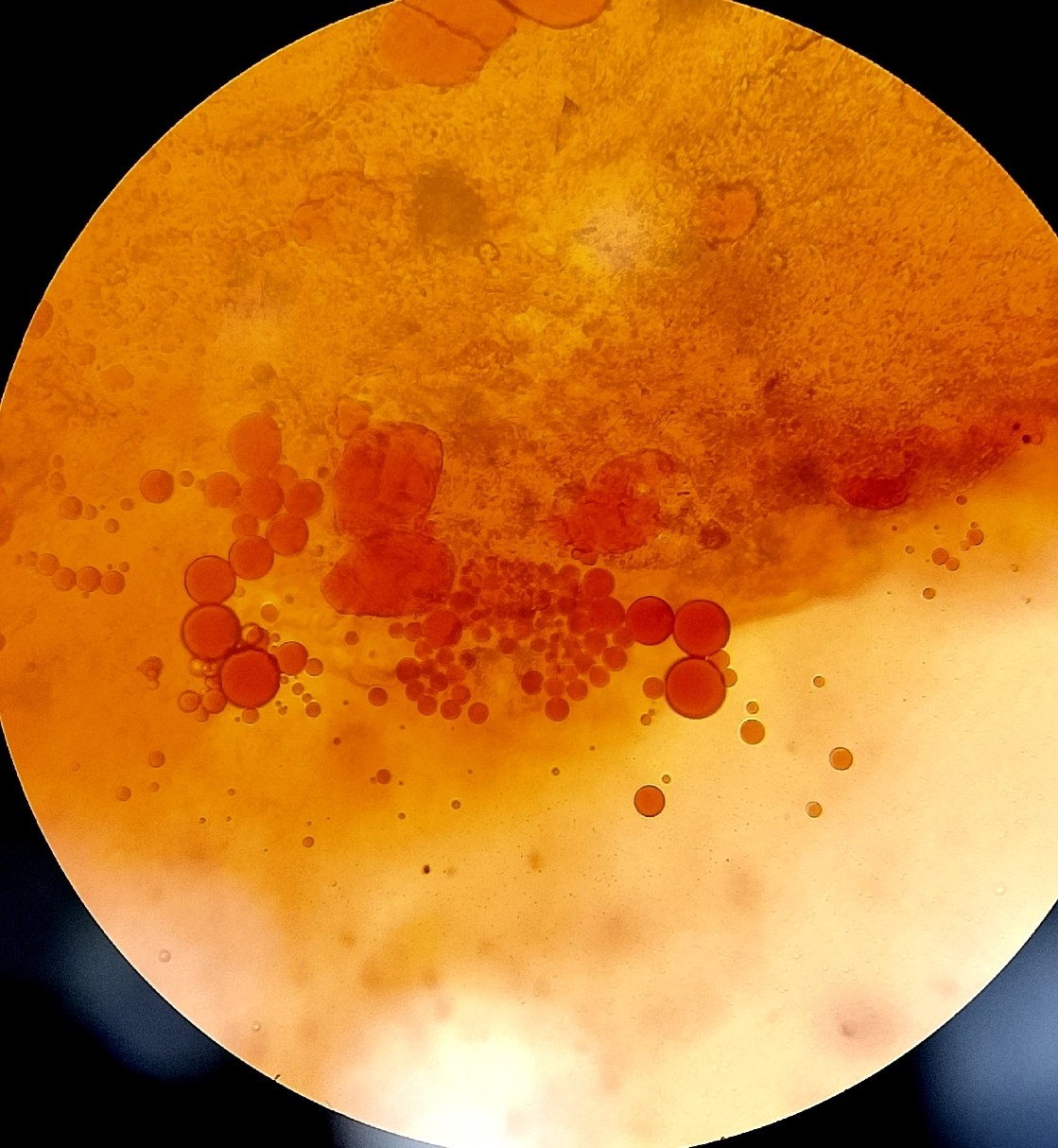
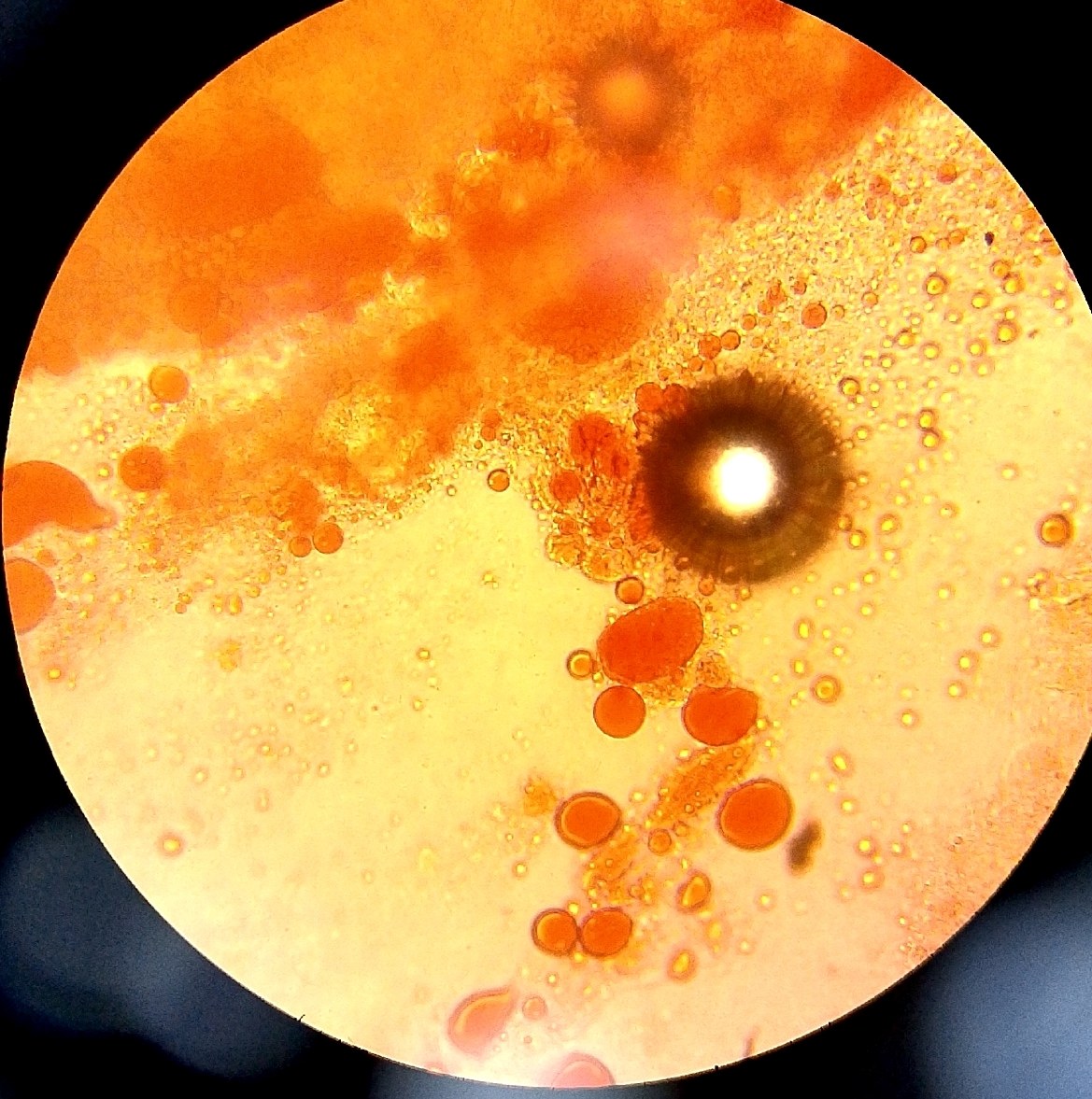
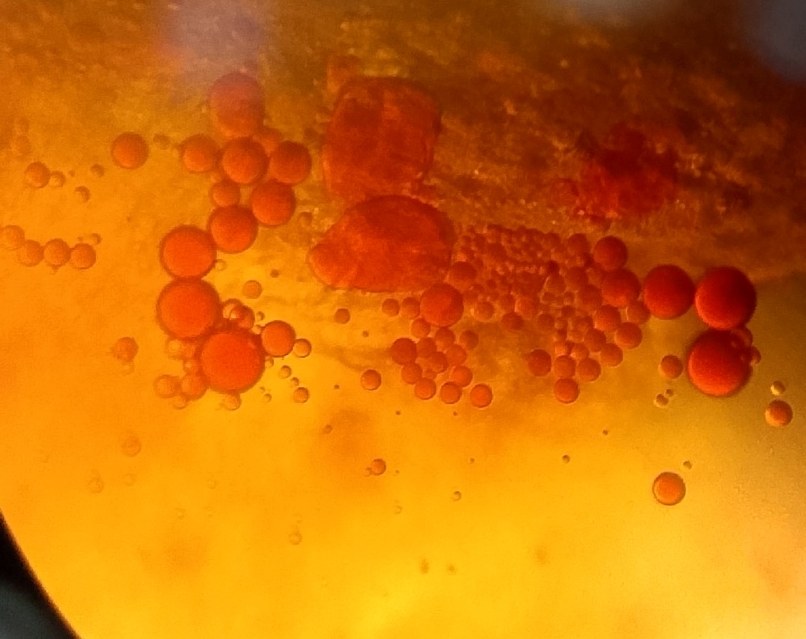
🔬 Neutral fat. Stool sample, Sudan stained. Magnification 400×. 🙏 Images kindly provided by laboratory assistant Alina Semenova KDC Krasnoyarsk.
Reference Information. The microscopic slide shows a stool sample stained with Sudan III, a dye used to detect neutral fats. Characteristic orange-red droplets and inclusions are visible, indicating the presence of neutral fats in the sample.
Interpretation: The detection of neutral fats in stool may indicate impaired fat digestion and absorption processes in the gastrointestinal tract. This can be associated with pathologies of the pancreas (e.g., pancreatitis), liver, biliary tract, or intestines (e.g., malabsorption syndrome).
Reference Information: Neutral fats are triglycerides bound to fatty acids, which are the main energy source for the body. Normally, they are almost completely broken down and absorbed in the small intestine.
Sudan dyes (Sudan III, Sudan IV) are lipophilic dyes used for staining lipids. They bind well to neutral fats, giving them a bright color.
Steatorrhea is a condition in which an excessive amount of fat is found in the stool. This can be a sign of pancreatic, liver, or intestinal diseases.
Recommendations: If neutral fats are found in the stool, additional tests are recommended, such as analysis of pancreatic enzyme activity, abdominal ultrasound, and consultation with a gastroenterologist to clarify the diagnosis and prescribe treatment.


