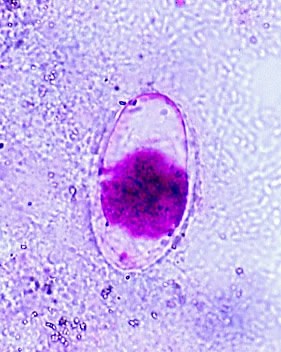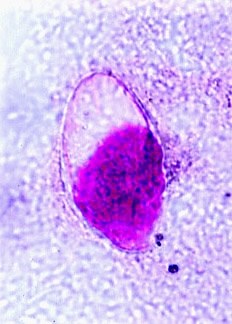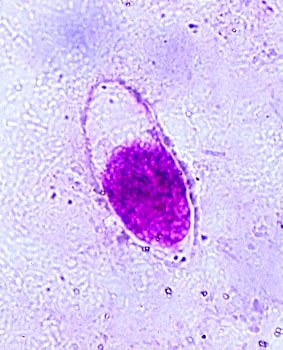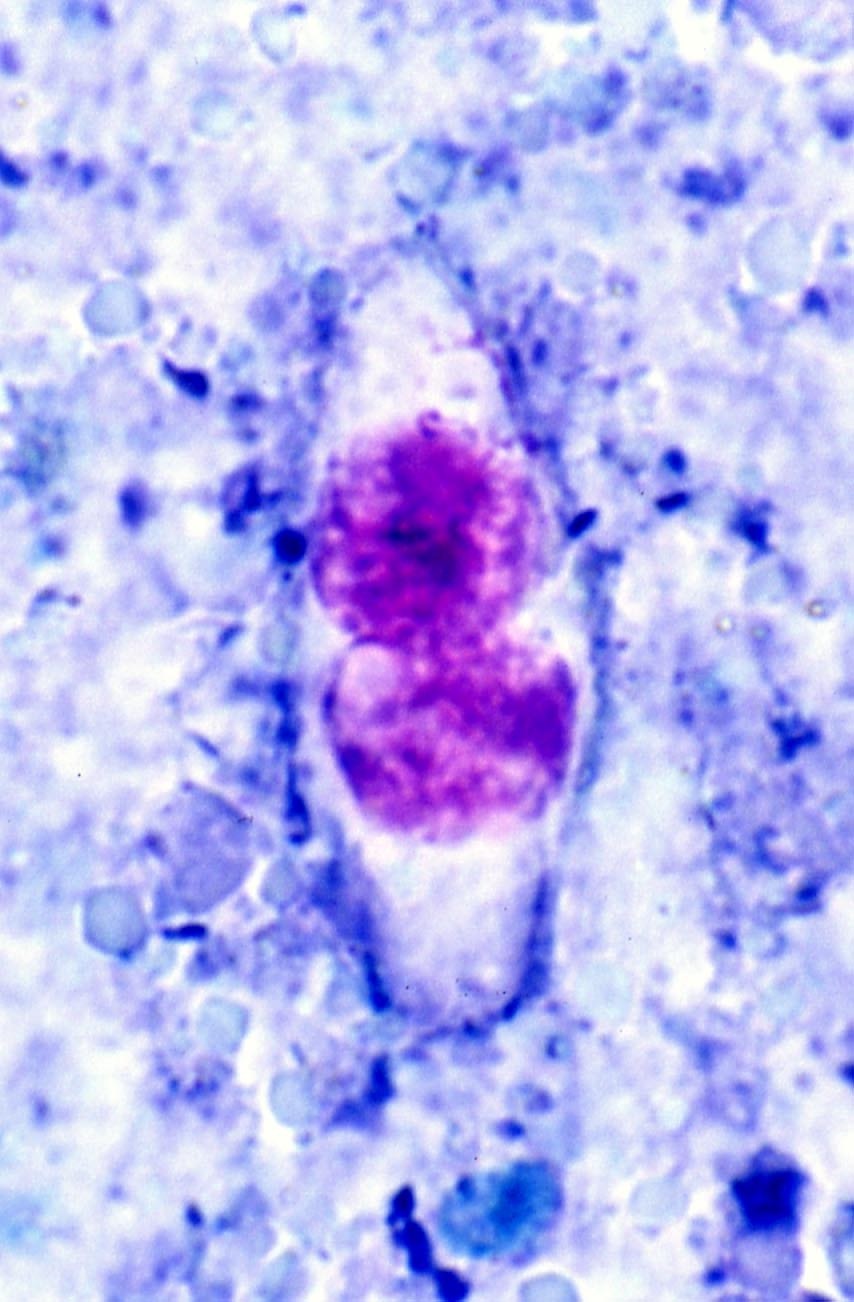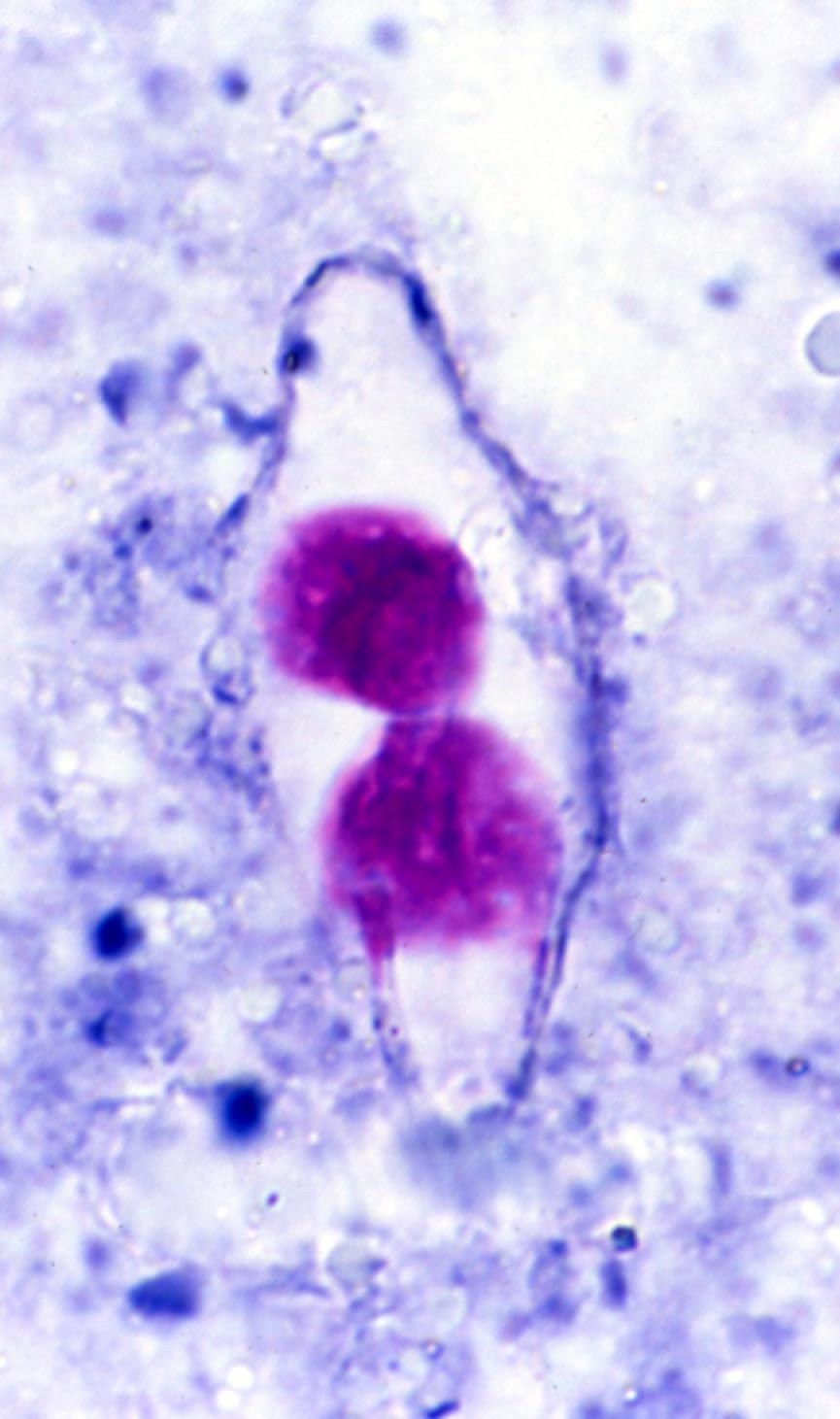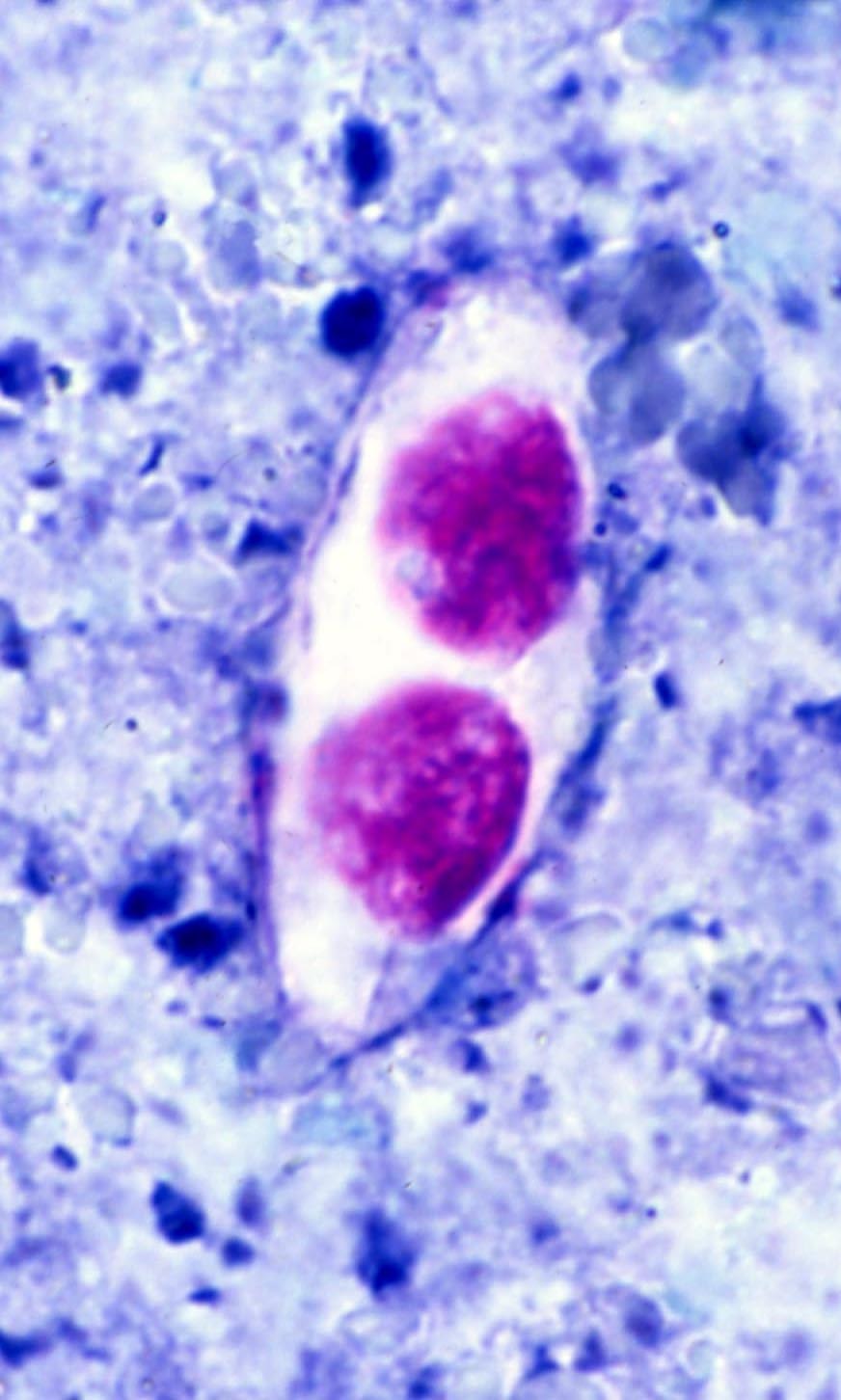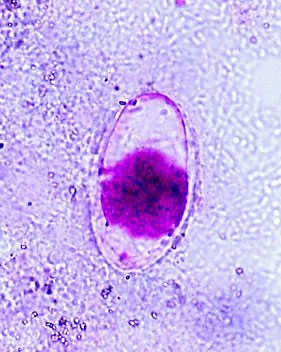
🔬 Cystoisospora (Isospora) belli Oocysts in Human Stool
✅ The coccidian parasite Cystoisospora belli infects the epithelial cells of the small intestine.
✅ A modified Ziehl-Neelsen stain, designed to detect acid-fast microorganisms (Kinyoun method), can help identify Cystoisospora oocysts. Cystoisospora oocysts autofluoresce under ultraviolet light. Cystoisospora oocysts are larger than Cyclospora and Cryptosporidium oocysts, are ellipsoidal in shape, and may contain 1–2 sporoblasts.
✅ The infection causes acute, non-bloody diarrhea with spasmodic abdominal pain, which can last for weeks and lead to malabsorption and weight loss. In immunocompromised patients, as well as in infants and children, diarrhea can be severe. Eosinophilia may be present (unlike other protozoan infections).
🐍 Find more useful parasitology materials in our LAB-TESTS library. The link to access the library is automatically sent to you via private message after purchasing a VK Donut Labformula subscription.
Photos