

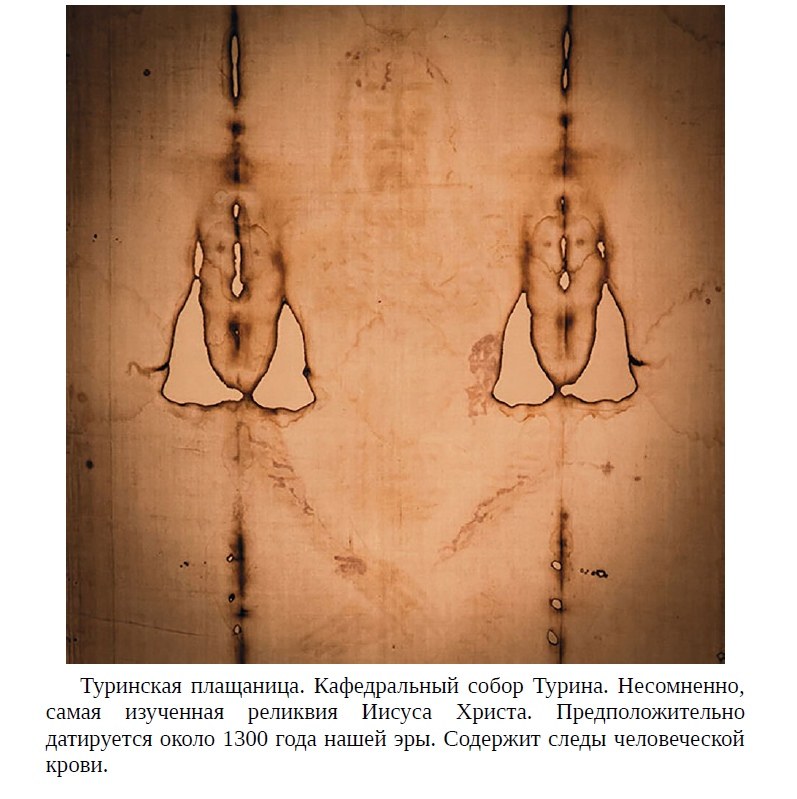
✝THE SHROUD OF TURIN. What was JESUS CHRIST’s blood group?
🩸Early analyses showed the presence of iron oxide residues, indicating iron content in hemoglobin (the protein that gives red blood cells their red color), as well as a pigment with which medieval artists mixed iron. Forensic experts joined the discussion and were able to quite quickly confirm that the stains on the fabric were blood, and even determine the group - IV (fourth) 🆎.
🧬DNA analysis showed that the blood was male, although the samples were very fragmented, and therefore the result is not entirely reliable.
✅This simple linen cloth, measuring 4 by 1 meter, is, without a doubt, the most studied relic of Jesus Christ. It even gave rise to a new scientific field – sindonology, from the Greek word “sindon,” meaning “shroud.”
✅On the Shroud, which is now in Turin behind bulletproof glass and under argon gas, we see in blurry sepia the image of a rather tall, muscular man with a beard, mustache, long hair, and hands folded over his loins.
✅The reddish-brown stains correspond to blood from wounds Jesus received during flagellation and crucifixion, abrasions on the nails, cuts from the crown of thorns, a deep spear wound in his side, and longitudinal stripes on his back and legs.
✅After many years of discussion, in 1988, the Church allowed a part of the Shroud to undergo radiocarbon dating. Giulio Fanti claimed that the Shroud appeared between 300 BC and 400 AD.
👉Source: Mark Bogaerts - The History of Blood. From Primitive Rituals to Scientific Discoveries, 2019


