

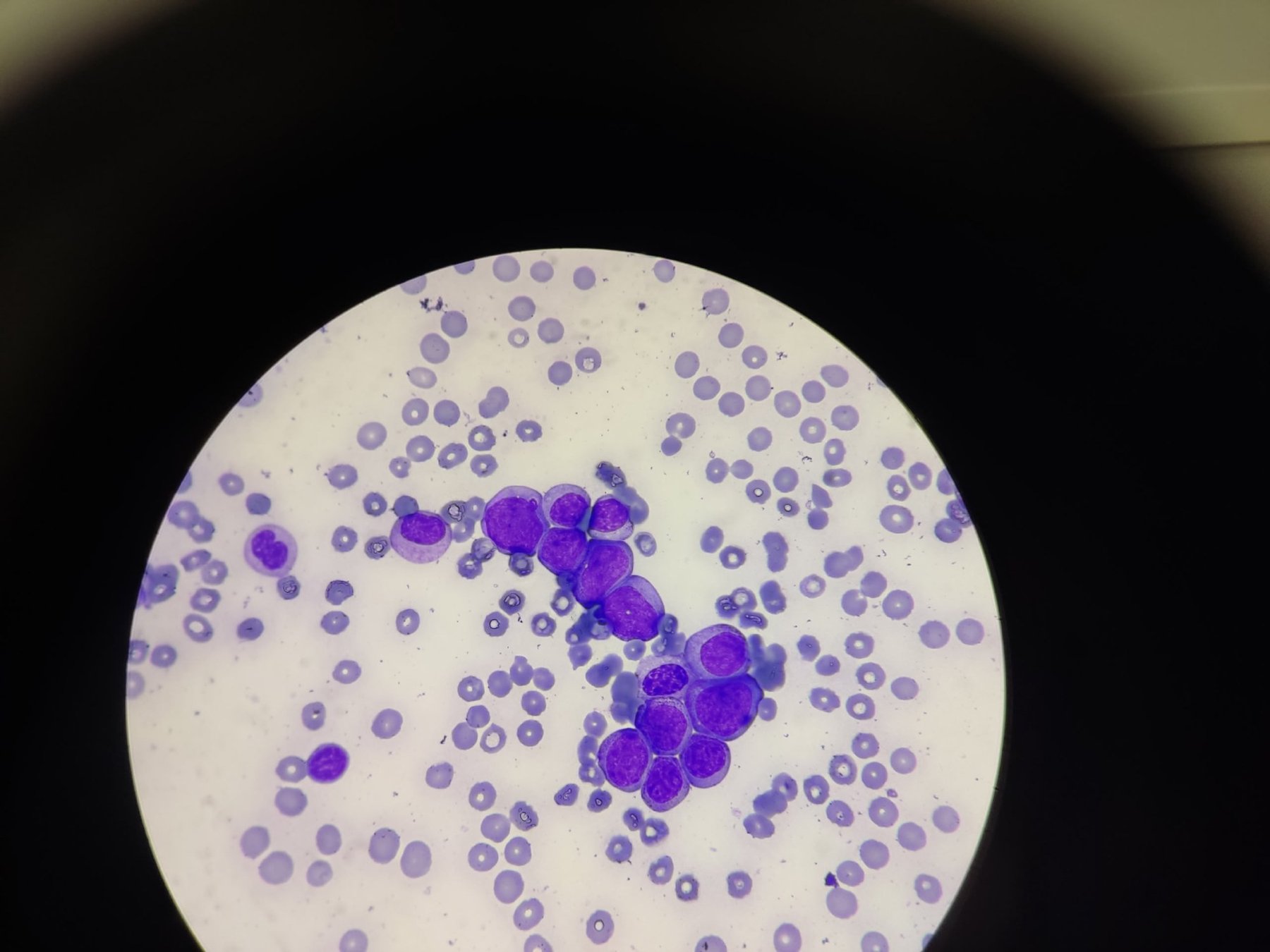
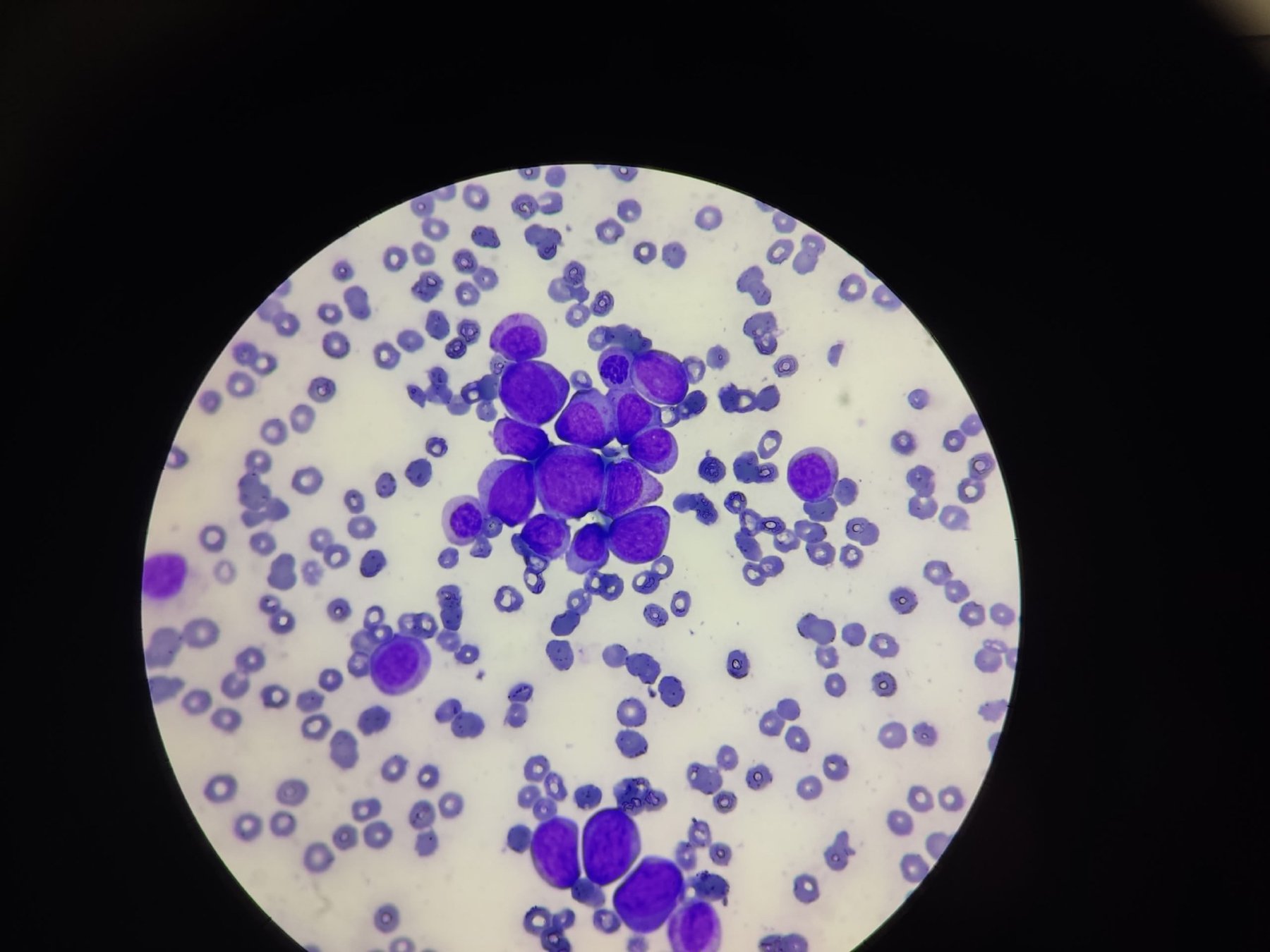
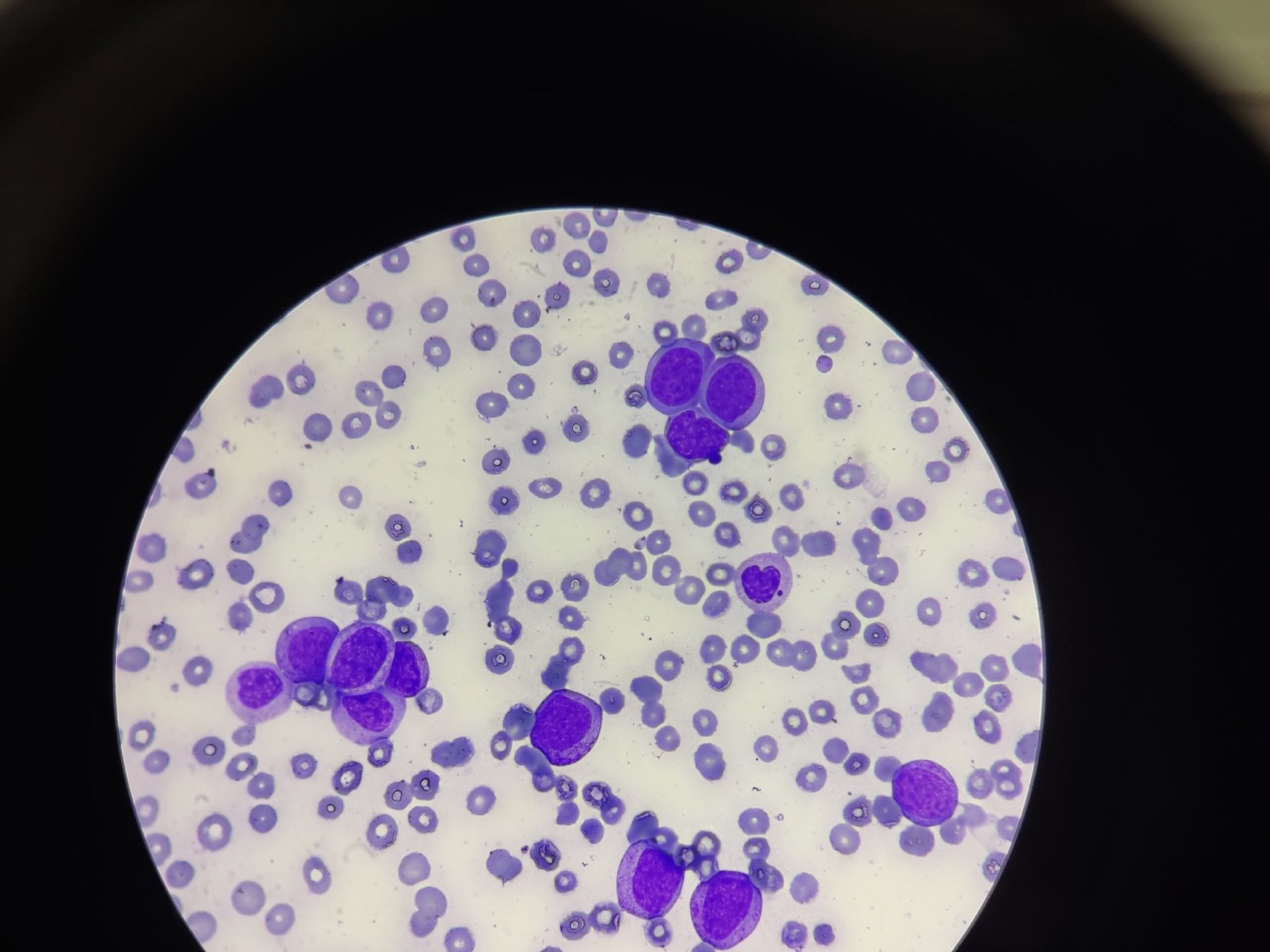
Acute leukemia in a 70-year-old patient with severe cytopenia and blastosis Patient: male, 70 years old. Clinical picture: severe anemia, thrombocytopenia, leukocytosis with blasts.
🩸 Laboratory data: WBC – 142 × 10⁹/L (pronounced leukocytosis, likely blast-related) HGB – 64 g/L (severe anemia) RBC – 1.94 × 10¹²/L PLT – 30 × 10⁹/L (severe thrombocytopenia)
🔬 Blood smear: blasts
🙏Publication kindly provided by laboratory assistant Vadim Jankulov Kazakhstan, Ust-Kamenogorsk.
📚 REFERENCE INFORMATION Differential diagnosis:
- Acute myeloid leukemia (AML) – most probable.
- Acute lymphoblastic leukemia (ALL) – less common at this age, but requires exclusion.
- Blast crisis of chronic myeloid leukemia (CML) – if CML is in the patient’s history.
👉 Recommendations:
- Urgent hospitalization to a hematology ward.
- Immunophenotyping of peripheral blood/bone marrow (CD34, CD117, MPO, lymphoid markers).
- Cytogenetics and molecular genetic studies (t(9;22), FLT3, NPM1, etc.). ❗Emergency cytoreduction (for hyperleukocytosis – hydroxyurea, leukapheresis is possible).
Prognosis: depends on the type of leukemia, cytogenetics, and response to therapy. In elderly patients with AML, the prognosis is often unfavorable.


