

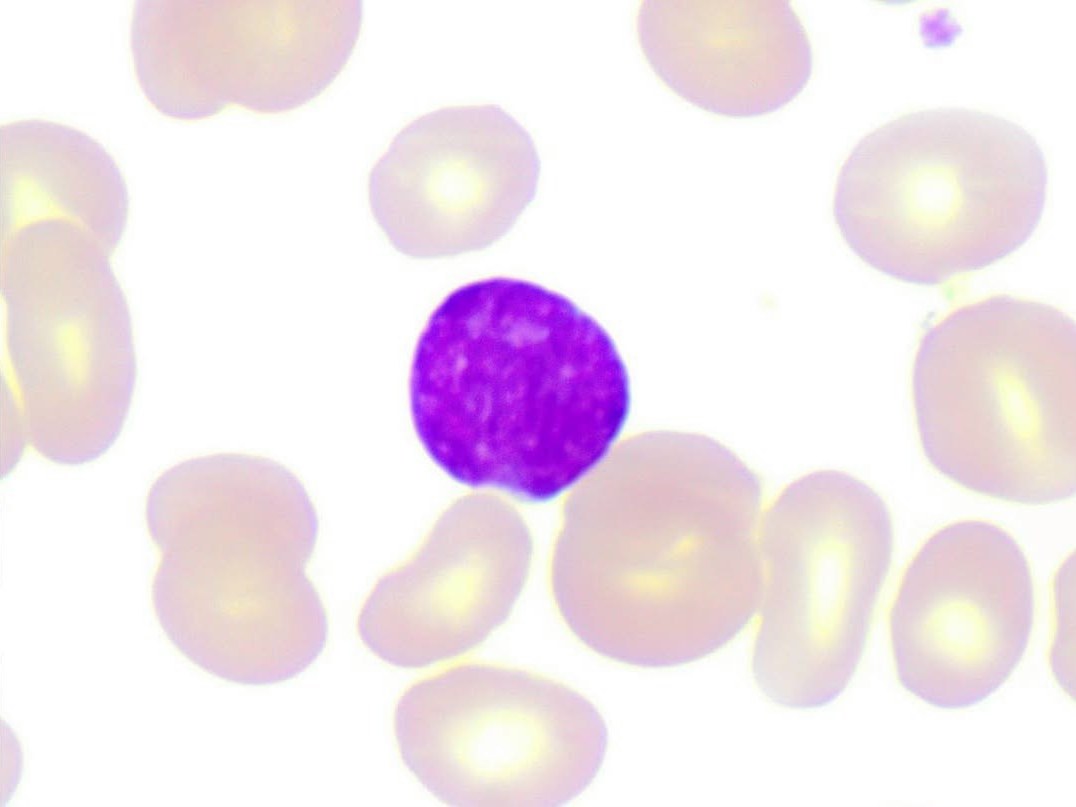
Is this a blast?
Male patient, 5 years old. A complete blood count was performed: parameters within normal limits. Hemoglobin 128 g/L, leukocyte count 6.5 thousand/µL, platelet count 165 thousand/µL.
Nevertheless, 2 percent lymphoblasts were detected, consistent with acute lymphoblastic leukemia, L1 variant. The diagnosis of leukemia was confirmed by bone marrow examination and immunological phenotyping.
Acute lymphoblastic leukemia, L1 variant, is more common in Caucasian patients, most frequently between 2 and 5 years of age; the incidence decreases in adolescence and adulthood and increases again in the age group around 60 years.
In children, approximately 85% of acute lymphoblastic leukemia cases are L1 variant, about 14 percent are L2 variant, and about 1 percent are L3 variant.
L1 variant lymphoblasts are usually small, with a small amount of cytoplasm, with a homogeneous chromatin pattern; the nucleolus is poorly distinguishable or absent.
The most common symptoms are pallor, petechiae, ecchymoses, hemorrhagic manifestations, including nosebleeds, and fever.
🔬 Source: from the archive of Brazilian hematology specialist Marcio Melo


