

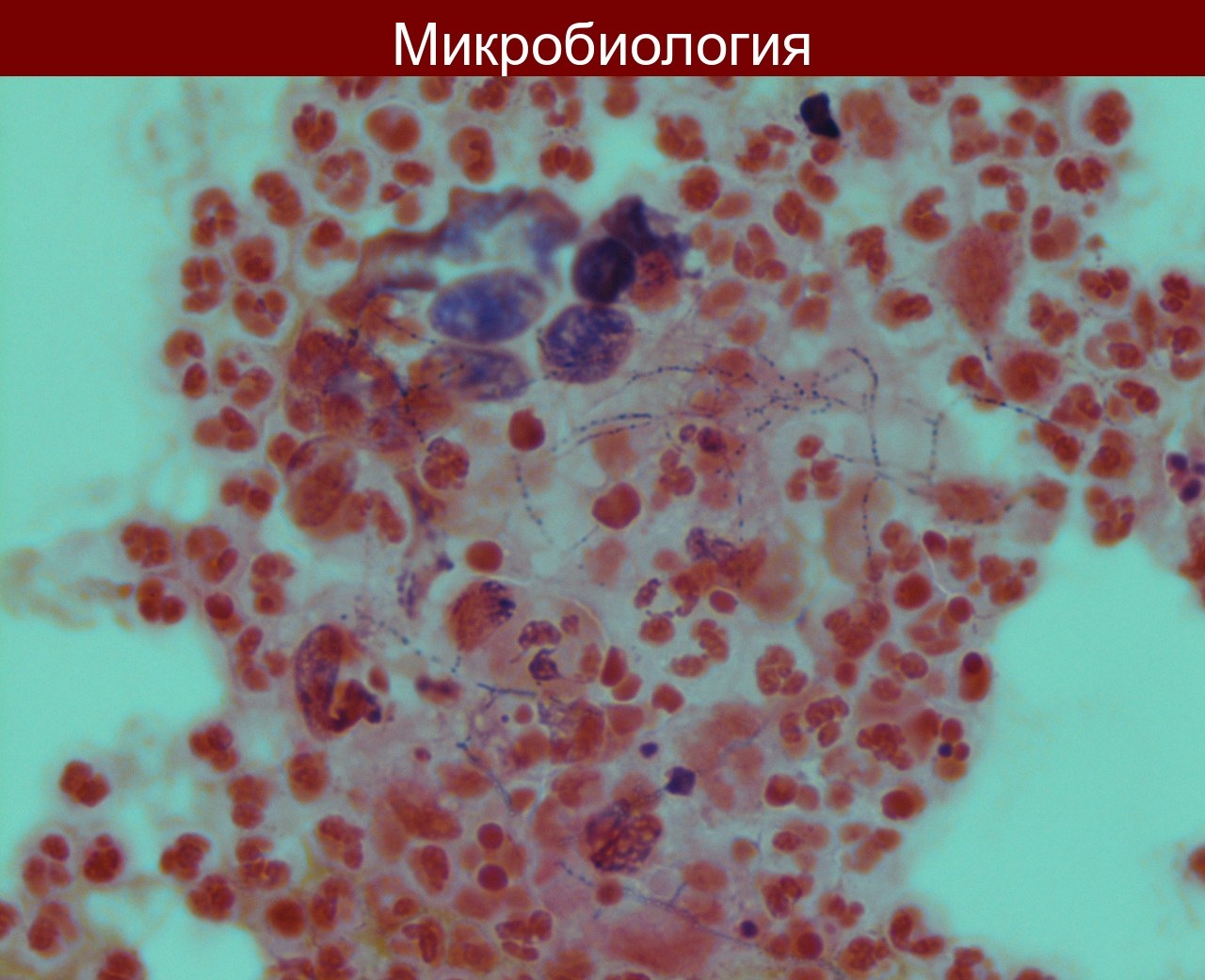
Clinical Case: Forehead Wound Infection Caused by Nocardia abscessus/asitica in an 89-Year-Old Patient
History of Present Illness An 89-year-old male with multiple comorbidities (hyperlipidemia, CAD, CHF, diabetes mellitus, Parkinson’s disease, CKD stage III) presented with complaints of cough, low-grade fever, and signs of a forehead wound infection. Two months prior to admission, the patient sustained a laceration from a fall, requiring surgical intervention. Five days before admission, an erythematous, edematous lesion with serous drainage appeared at the healing site. Incision and drainage were performed in the emergency department, and the material was sent for microbiological examination.
Laboratory Findings
- Gram stain: filamentous branching Gram-positive rods.
- Culture: chalky-white colonies grew on chocolate agar.
- Identification: MALDI-TOF MS and a reference laboratory confirmed Nocardia abscessus/asitica.
Discussion Nocardia spp. are aerobic, weakly Gram-positive, acid-fast bacteria that cause infections in immunocompromised individuals. In this patient, primary cutaneous nocardiosis developed after trauma. Clinically significant species (N. abscessus, N. asteroides) can lead to dissemination, but in this case, the infection was limited to the cutaneous form.
Treatment Long-term (2–3 months) therapy with trimethoprim-sulfamethoxazole (TMP-SMX) along with surgical debridement of the wound was recommended.
Conclusion The case highlights the importance of microbiological diagnosis of atypical pathogens in patients with chronic wounds, especially in the context of immunosuppression.
Authors
- Clayton LaValley, MD (Resident, Pathology, University of Vermont).
- Kristi Voevoda, MD (Director of Clinical Microbiology, University of Vermont).
💎 Find more useful microbiology materials in our LAB-TESTS library. The link to access the library is automatically sent to you via private message after paying for a VK donut Labformula subscription.


