

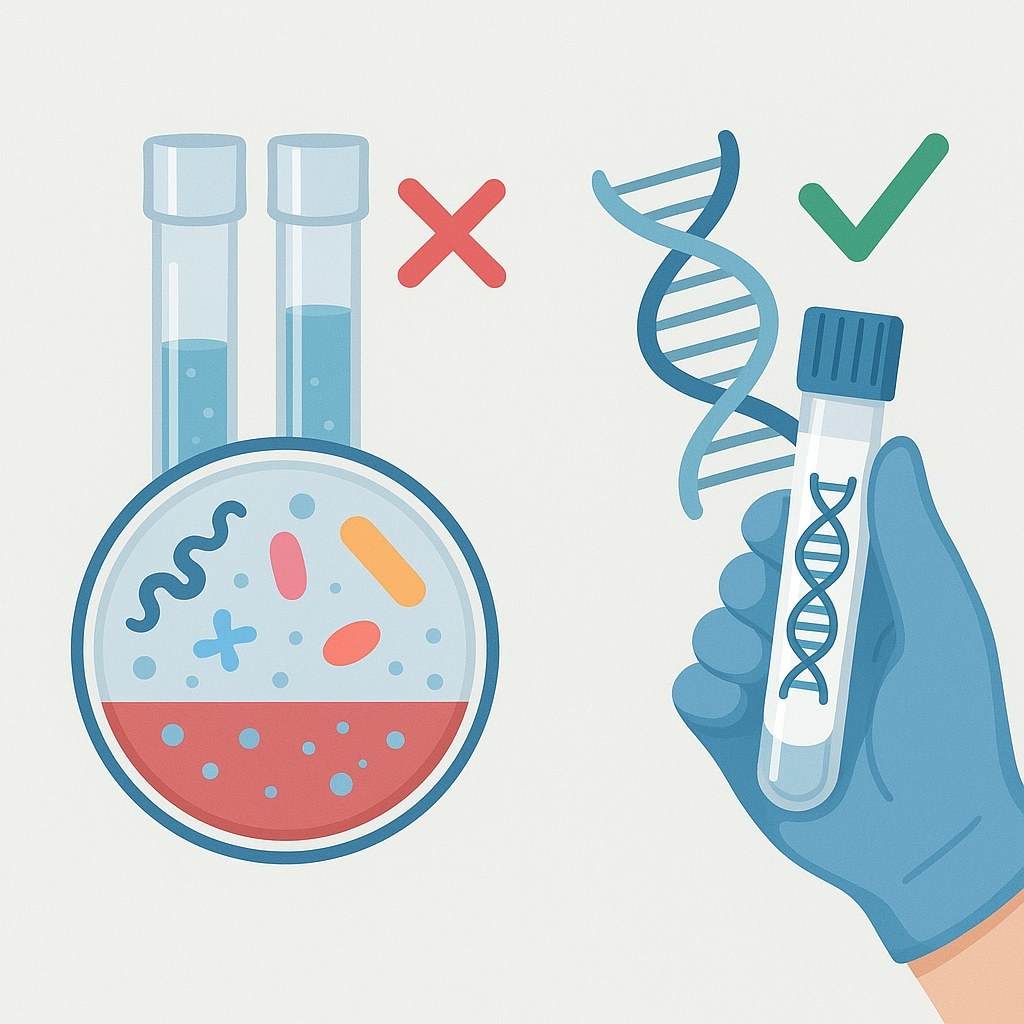
🔬 Why PCR and culture “don’t match”?
Quite often, we encounter discrepancies between the results of the culture method and PCR, especially when evaluating complex microbial systems, such as biocenoses 🦠.
📌 This is explained by the fact that:
- it is impossible to “synchronize” the growth of all microorganisms in a biosystem over time ⏳
- anaerobic bacteria, which play a key role in dysbiosis, simply do not grow under standard laboratory conditions 🧫
📉 Therefore, even with proper material collection, the results may differ, and this is normal.
💡 Studies show the sensitivity of methods:
- Rapid tests: 40–60%
- ELISA: 50–70%
- Immunofluorescence: 55–75%
- Culture: 60–80%
- PCR: 90–100% ✅
But! 📛 PCR requires especially strict working conditions – contamination (sample contamination with foreign DNA) remains the main problem of the method. Therefore, a good laboratory is not just equipment, but also a clear protocol and competent specialists 🧑🔬


