

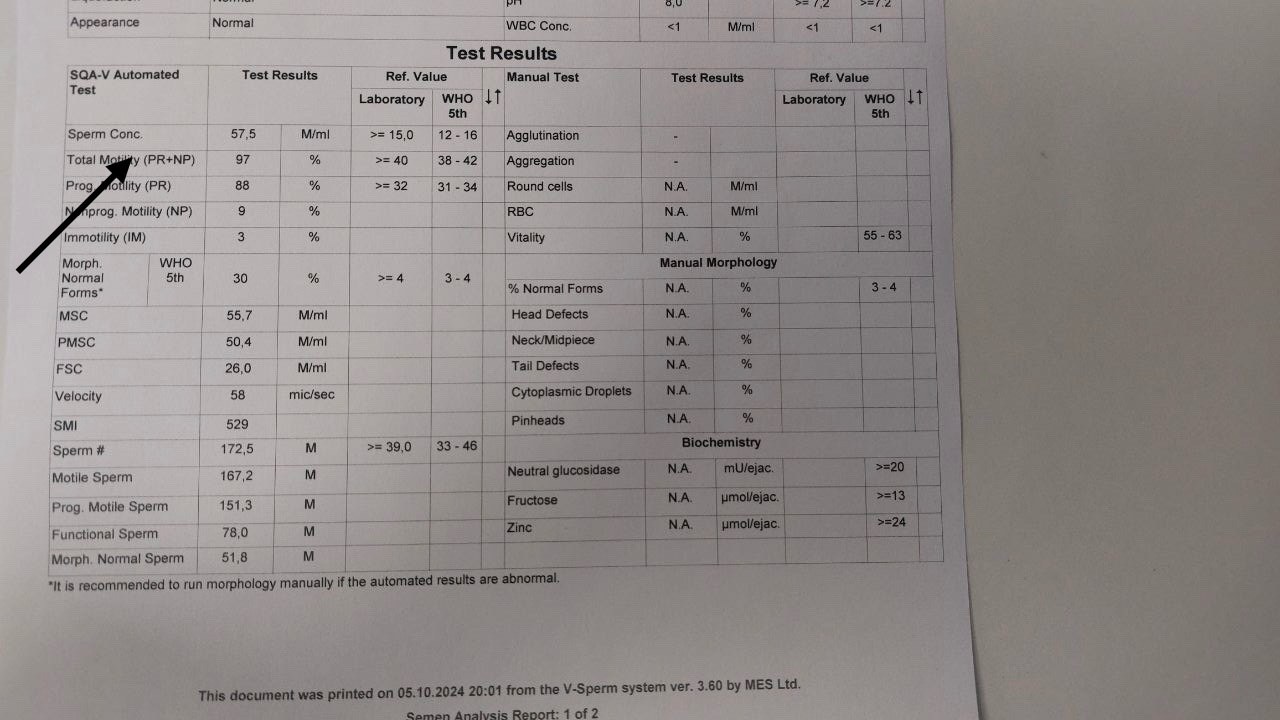
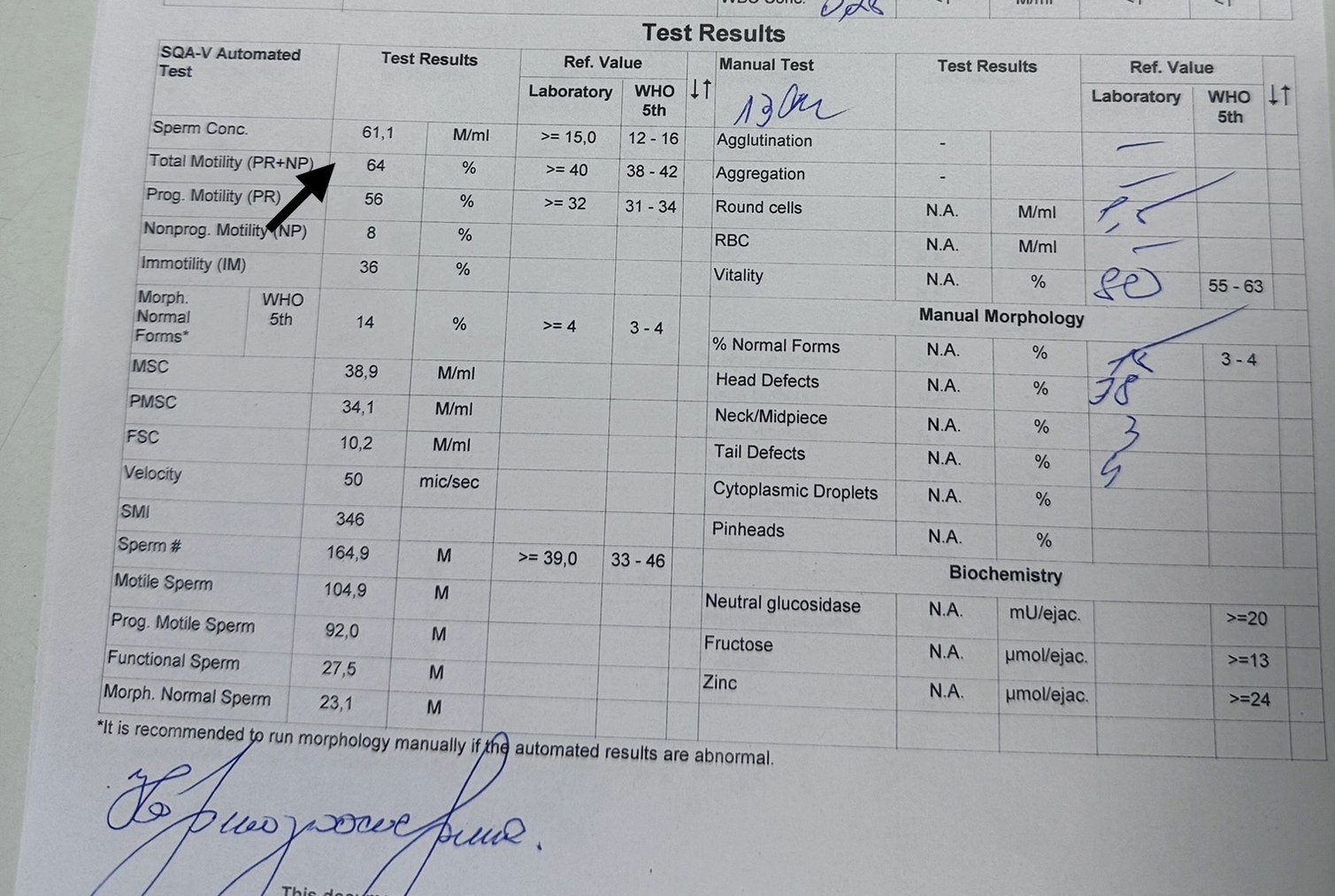
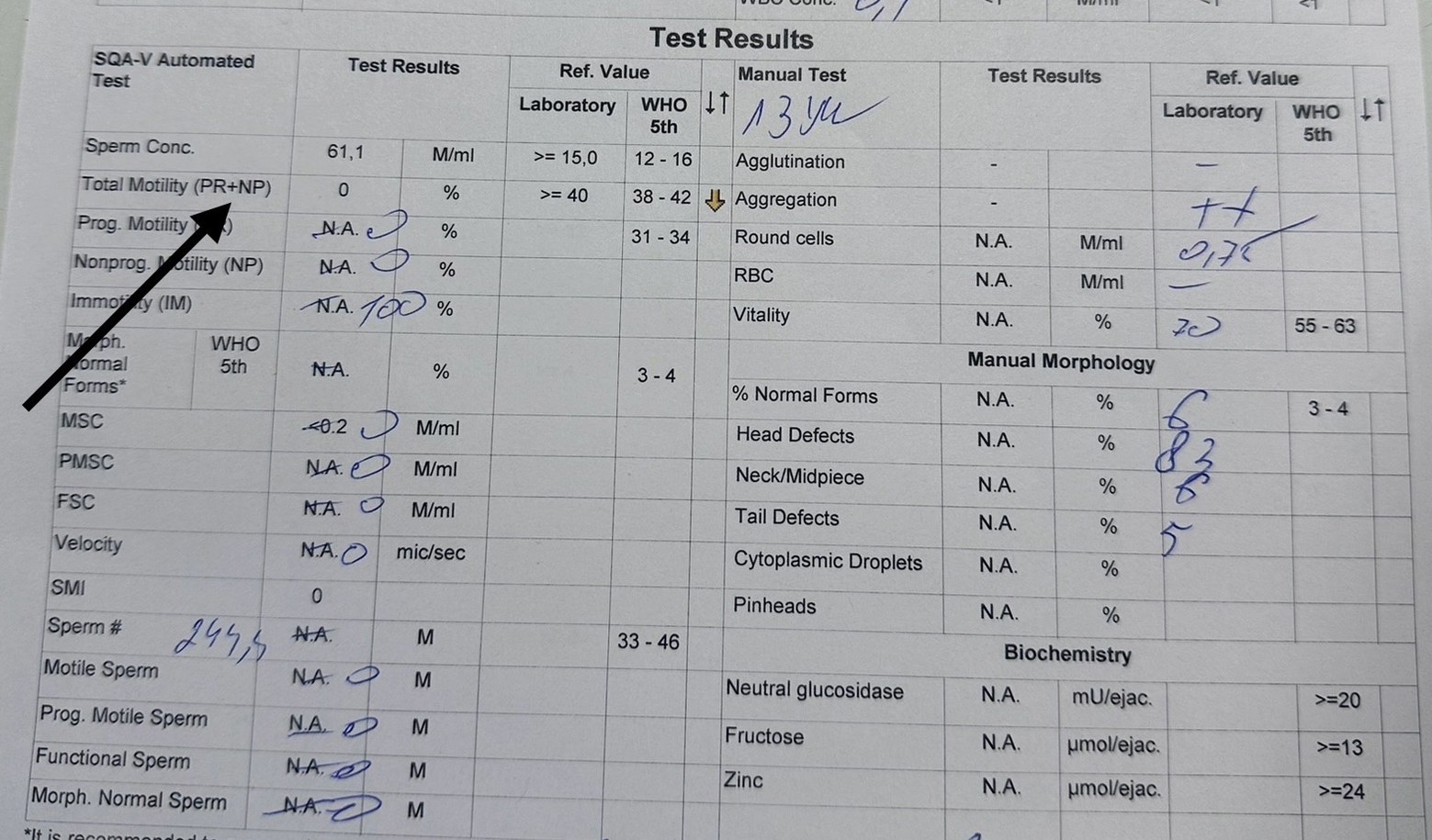
Spermiograms with various sperm motility. The next image after each video: the examination form, where the arrow indicates total motility.
- Video №1: 97% motility 😎
- Video №2: 64% motility 😊
- Video №3: 0% motility 😥 🙏 The forms and video materials were kindly provided by clinical laboratory diagnostics physician, Anna Ivanova, Moscow.
Sperm motility is one of the key indicators of a spermiogram, reflecting the ability of spermatozoa to move, which is directly related to their fertility and fertilization potential. Sperm motility is classified into categories based on the quality of their movement, and this indicator plays an important role in the diagnosis of male infertility.
Classification of sperm motility: Category A (rapid progressive): Spermatozoa with fast, linear movement, considered the most effective for fertilization. These spermatozoa are capable of traversing long distances through the female reproductive tract and have the highest probability of reaching the egg.
Category B (slow progressive): Spermatozoa that move, but slowly. Their movement is less effective, which reduces the chances of fertilization, although they are still capable of moving forward.
Category C (non-progressive): Spermatozoa that exhibit movement, but it is chaotic and unproductive. Such spermatozoa move in place or do not advance towards the target, making them largely unsuitable for fertilization.
Category D (immotile): Spermatozoa completely lacking movement and not involved in the fertilization process.
Motility reference values: Normally, rapid progressive spermatozoa (Category A) should constitute at least 32% of the total count, and total progressive motility (Categories A and B) should exceed 40%. A decrease in these indicators suggests possible fertility problems.
Preanalytical stage: proper delivery and preparation of biomaterial A very important aspect for the correct assessment of sperm motility is the preanalytical stage, which includes patient preparation and proper delivery of the biomaterial to the laboratory. Errors at this stage can significantly affect the reliability of the results, even if the analysis is performed with high quality.
Patient preparation: Abstinence from sexual activity: For 2–7 days before the spermiogram, the man should abstain from sexual activity. Failure to comply with this rule can distort the results — either by overestimating or underestimating motility. Avoiding factors affecting sperm quality: Before the analysis, it is important to exclude the influence of factors such as alcohol, smoking, excessive physical exertion, and stress. These factors can significantly impair sperm motility. Proper collection and delivery of semen: Sample collection: Semen should be collected into a clean, sterile container by masturbation. The use of condoms or other means for semen collection can distort the results, as they may contain substances that affect sperm motility. Biomaterial delivery: The collected sample should be delivered to the laboratory as quickly as possible, optimally within 30–60 minutes. During transport, the sample should be kept at room temperature (approximately +20–37°C) and avoid exposure to high or low temperatures. Unacceptable storage conditions: Freezing or overheating of semen can lead to complete immotility of spermatozoa and incorrect interpretation of analysis results. Causes of reduced motility (asthenozoospermia): Reduced sperm motility is called asthenozoospermia. The main causes can be both internal (endogenous) and external (exogenous):
Endogenous causes: Hormonal disorders: Testosterone deficiency or an imbalance of sex hormones can negatively affect spermatogenesis. Infections: Chronic inflammatory processes, such as prostatitis, can impair semen quality. Varicocele: Dilation of the spermatic cord veins disrupts thermoregulation and sperm production. Genetic factors: Some genetic disorders can affect sperm motility. Exogenous causes: Temperature factors: Constant exposure to high temperatures, visiting saunas or hot baths can reduce semen quality. Negative habits: Smoking, alcohol consumption, and drug use significantly impair semen quality. Stress and poor nutrition: Vitamin deficiencies, stress, and overwork can also cause reduced sperm motility. Conclusion: Sperm motility is an important factor for successful fertilization. Proper preparation for the analysis and delivery of biomaterial are critically important steps for obtaining accurate and reliable results.
💎 Find more useful materials on andrology in our LAB-TESTS library. The link with access to the library is automatically sent to you via private message after purchasing a VK donut Labformula subscription.


