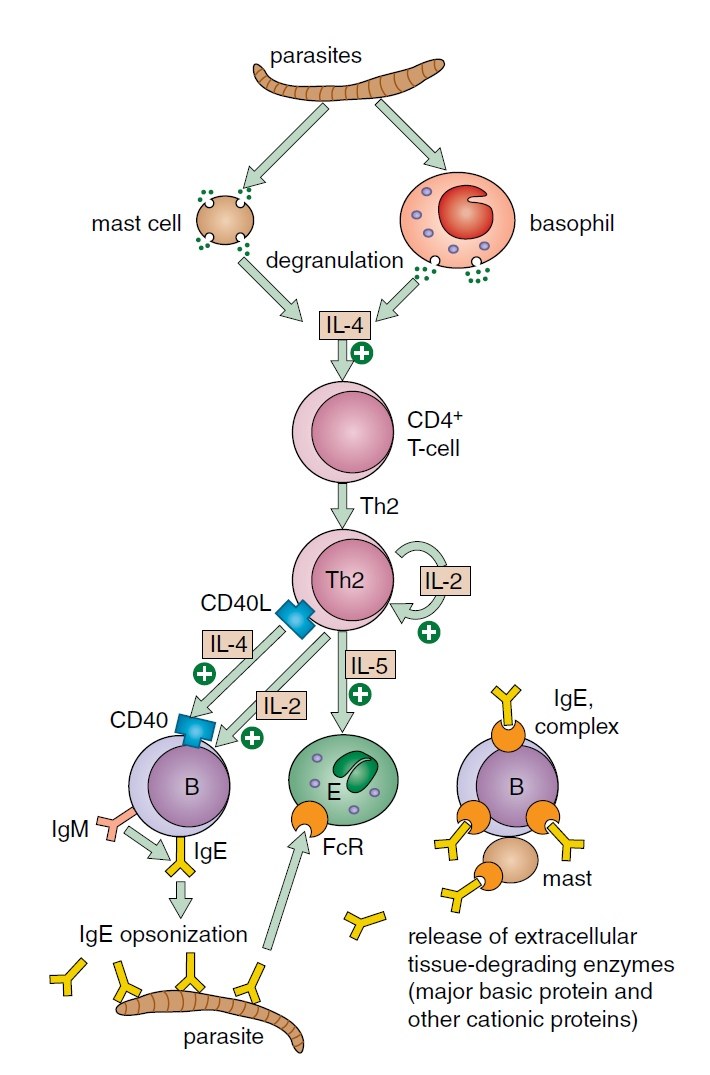
🐍How does immunity against parasites work? ✅T-cells interact with mast cells, basophils, and, most importantly, eosinophils to generate a protective immune response to parasites. ✅Parasites cause degranulation of basophils and mast cells, release of IL-4, and activation of CD4+ and Th2 cells. Activated T-cells stimulate a protective antibody response from B-lymphocytes - mainly IgE (❗), but also IgG and IgM. ✅IgE-opsonized parasites attract eosinophils, which degranulate and release toxic granule components, as shown in the figure.
Antiparasitic Immunity: Role of Eosinophils and IgE
Mechanisms of antiparasitic immune response: role of Th2 lymphocytes, IgE secretion, and activation of eosinophils with release of cytotoxic granule proteins.