

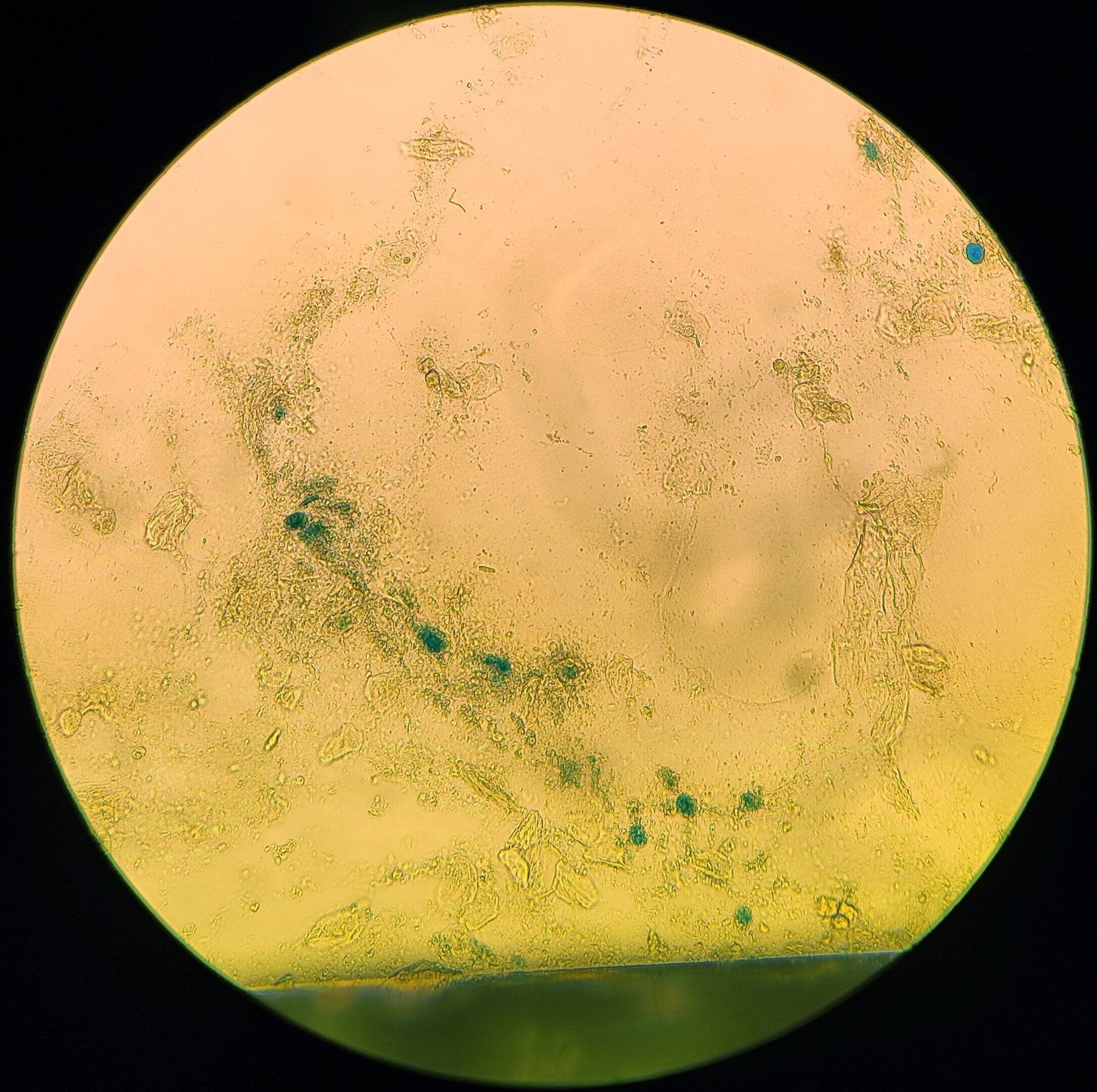
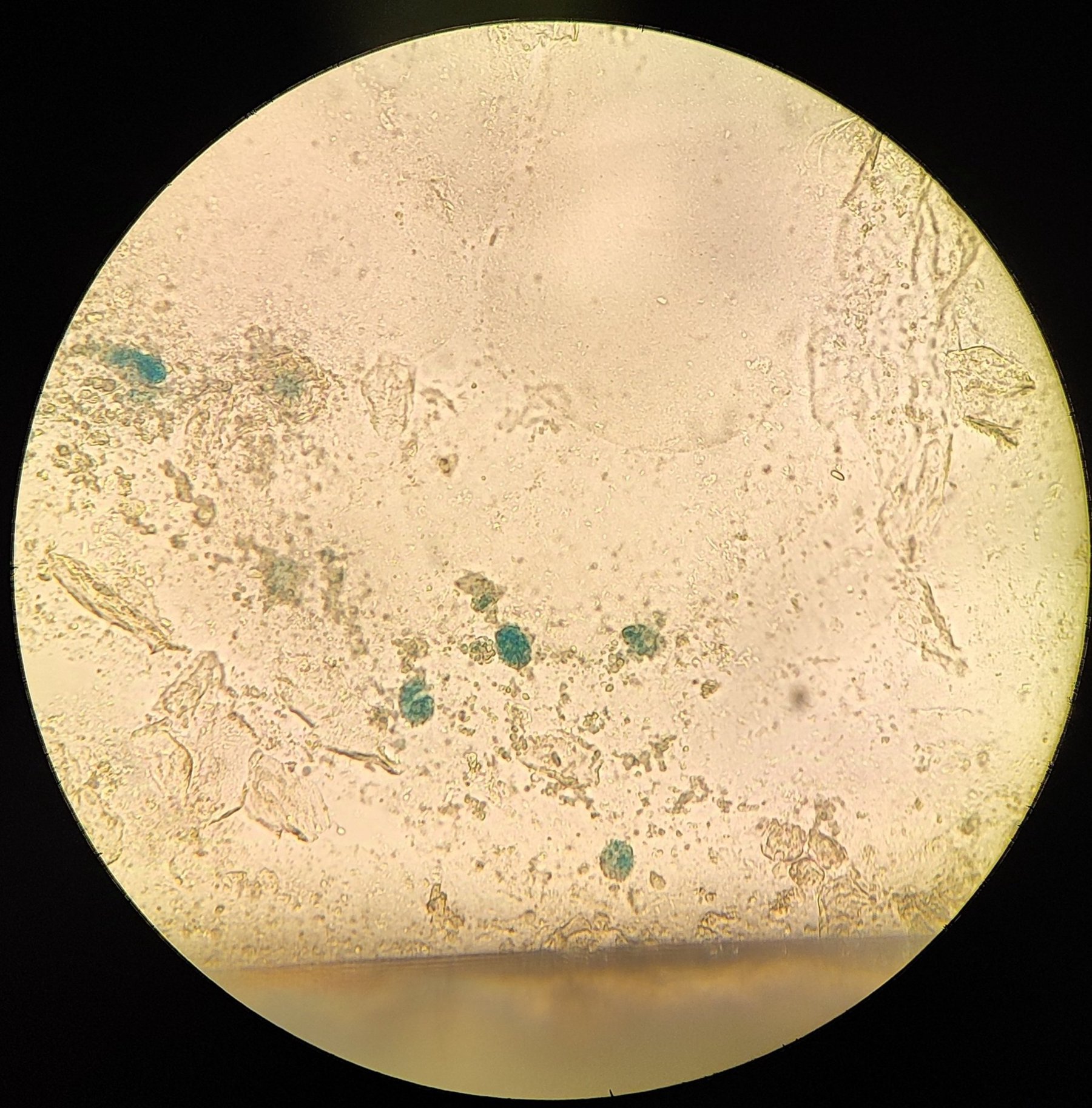
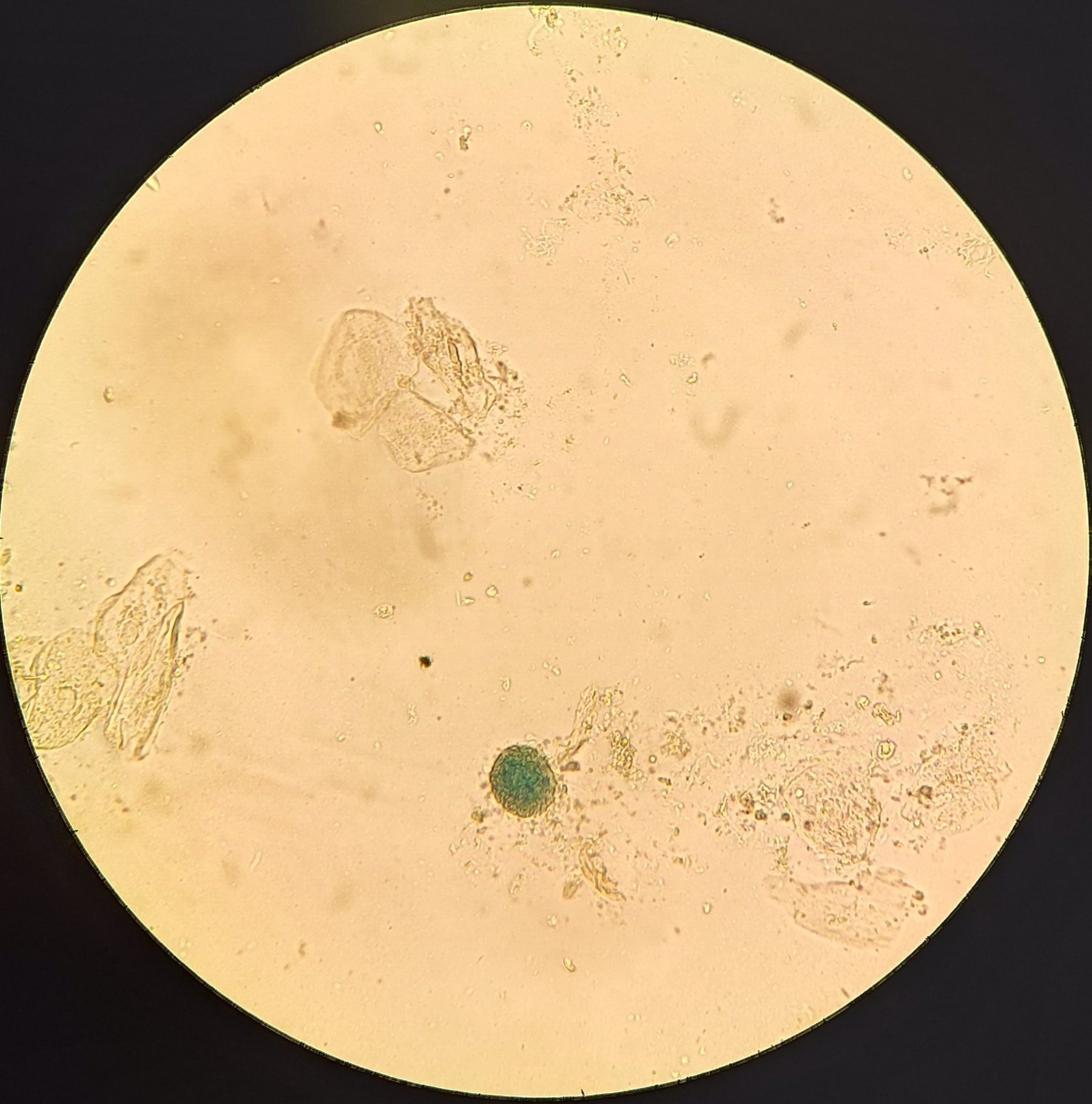
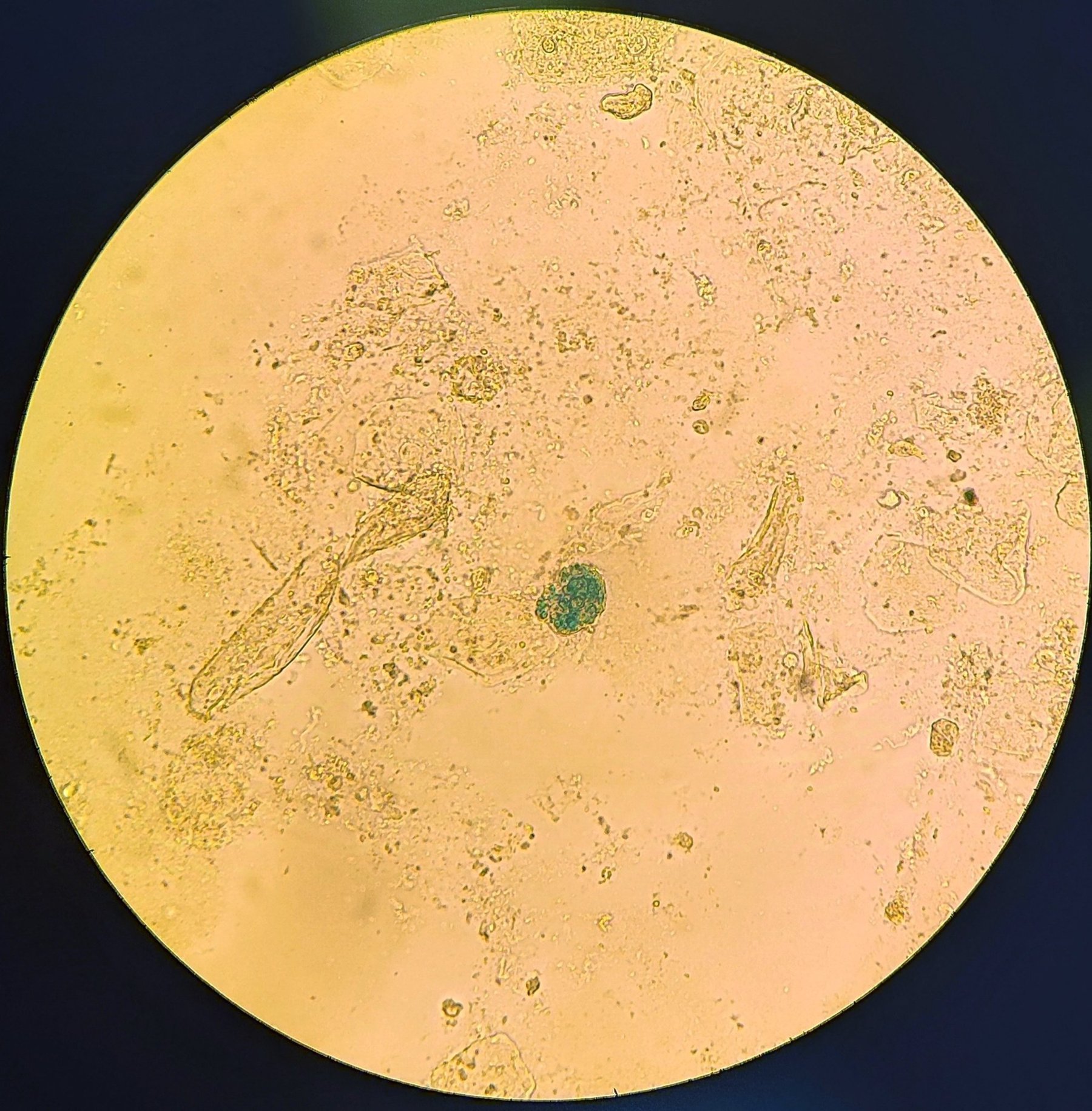
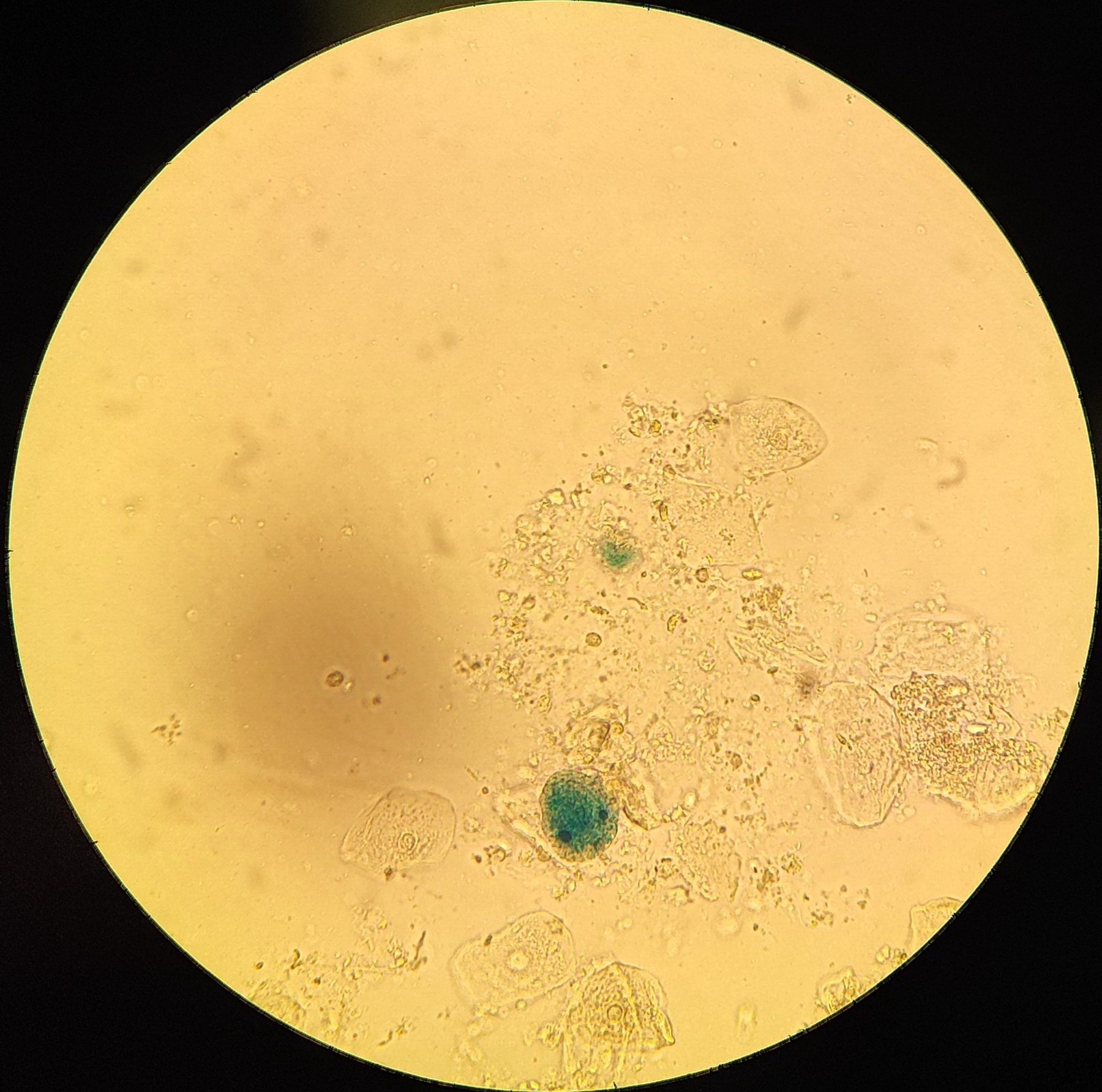
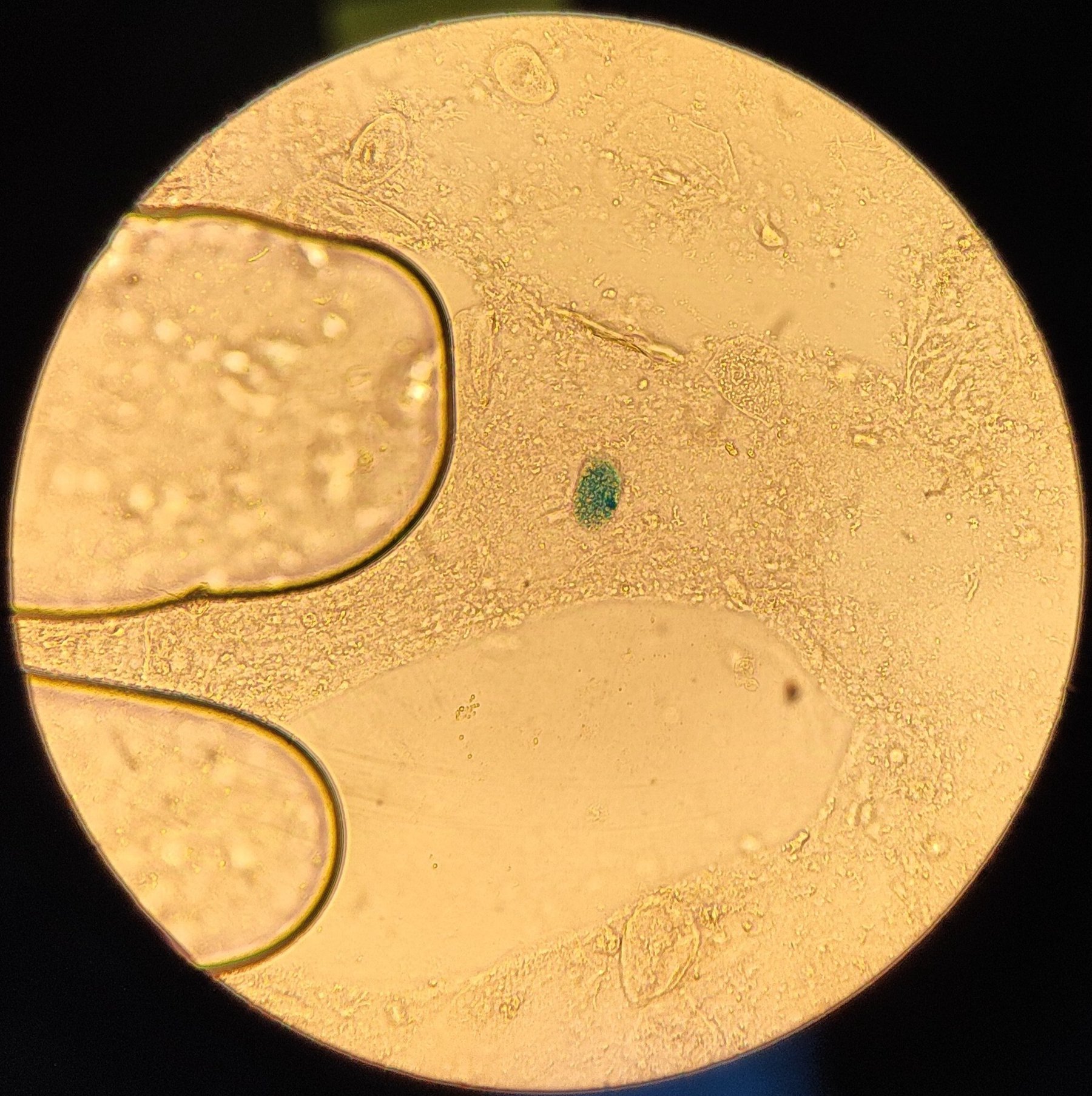
Positive Perls’ reaction in alveolar macrophages. Perls’ reaction is a method for detecting trivalent iron within hemosiderin and ferritin. The reagents used are potassium ferrocyanide and hydrochloric acid of equal concentration (5%) and equal volume. Hydrochloric acid ensures the availability of the iron cation by breaking down hemosiderin and forming iron(III) chloride. Iron chloride, in turn, reacts with the potassium ferrocyanide solution, forming a mixture of hexacyanoferrates(II) – pigments collectively known as Prussian blue. In laboratory diagnostics and histology, this reaction is used to detect hemosiderin in macrophages. Alveolar macrophages laden with hemosiderin are called “heart failure cells”. Such cells originate from alveolar septal macrophages that have engulfed erythrocyte debris, with hemoglobin being converted into hemosiderin. Heart failure cells accumulate in the alveolar lumen during pulmonary congestion. Sputum smear, stained with Perls’ reaction. Magnification x100, x200, x400
Material kindly provided by biochemist Daniil Adamov, Moscow


