

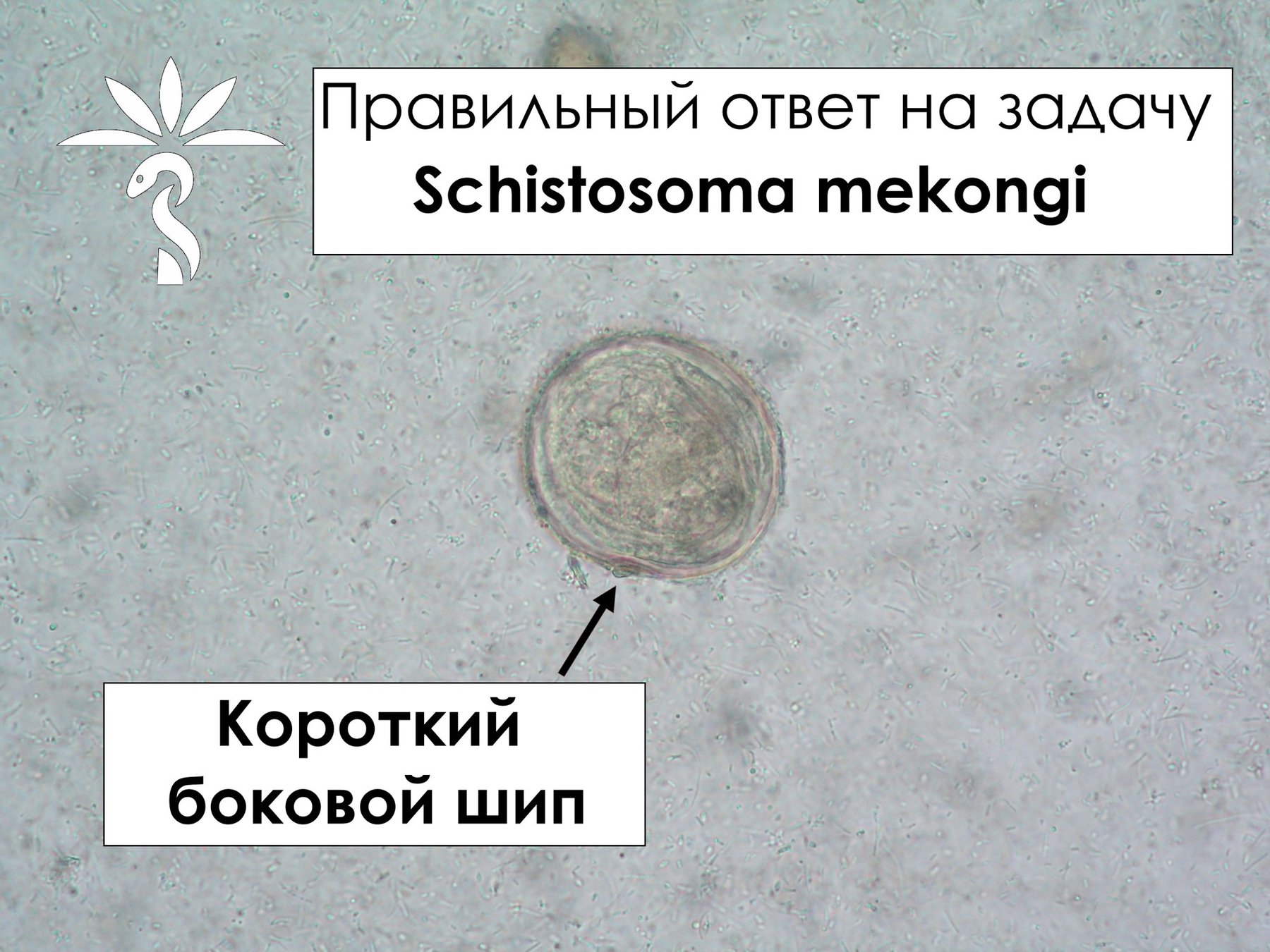
❗CORRECT ANSWER to the parasitology problem: Schistosoma mekongi
Schistosoma mekongi is a species of schistosome endemic to the lower Mekong River basin (Laos, Thailand, Cambodia). Clinical manifestations include chronic diarrhea, abdominal pain, weight loss, hepatosplenomegaly, and eosinophilia. Diagnosis is based on stool microscopy (detection of eggs with a lateral spine), as well as antigen (CCA, CAA) and antibody tests.
Differences between Schistosoma mekongi and Schistosoma japonicum
Egg size and shape: S. mekongi — eggs are smaller, subspherical, and have a tiny lateral spine. S. japonicum — eggs are larger, more rounded, with a less prominent lateral spine. Geographical distribution: S. mekongi — limited to the lower Mekong River basin (Laos, Thailand, Cambodia). S. japonicum — found in China, the Philippines, and Indonesia. Intermediate host (snail): S. mekongi — Neotricula aperta snail. S. japonicum — Oncomelania snail. Definitive host: S. mekongi — humans and dogs. S. japonicum — humans, cattle, and other mammals. Clinical manifestations: S. mekongi — predominantly intestinal symptoms (diarrhea, abdominal pain) with liver and spleen involvement. S. japonicum — more pronounced hepatosplenomegaly and liver fibrosis due to the larger number of eggs laid by the parasite. Severity of infection:
S. mekongi is less pathogenic due to a smaller parasite burden and limited range. S. japonicum causes more severe forms of schistosomiasis due to high egg production.
Treatment: praziquantel. Prevention: avoidance of contact with fresh water in endemic areas, mass chemotherapy, improved sanitation. WHO recommends the elimination of Schistosoma mekongi as part of the fight against neglected tropical diseases.


