

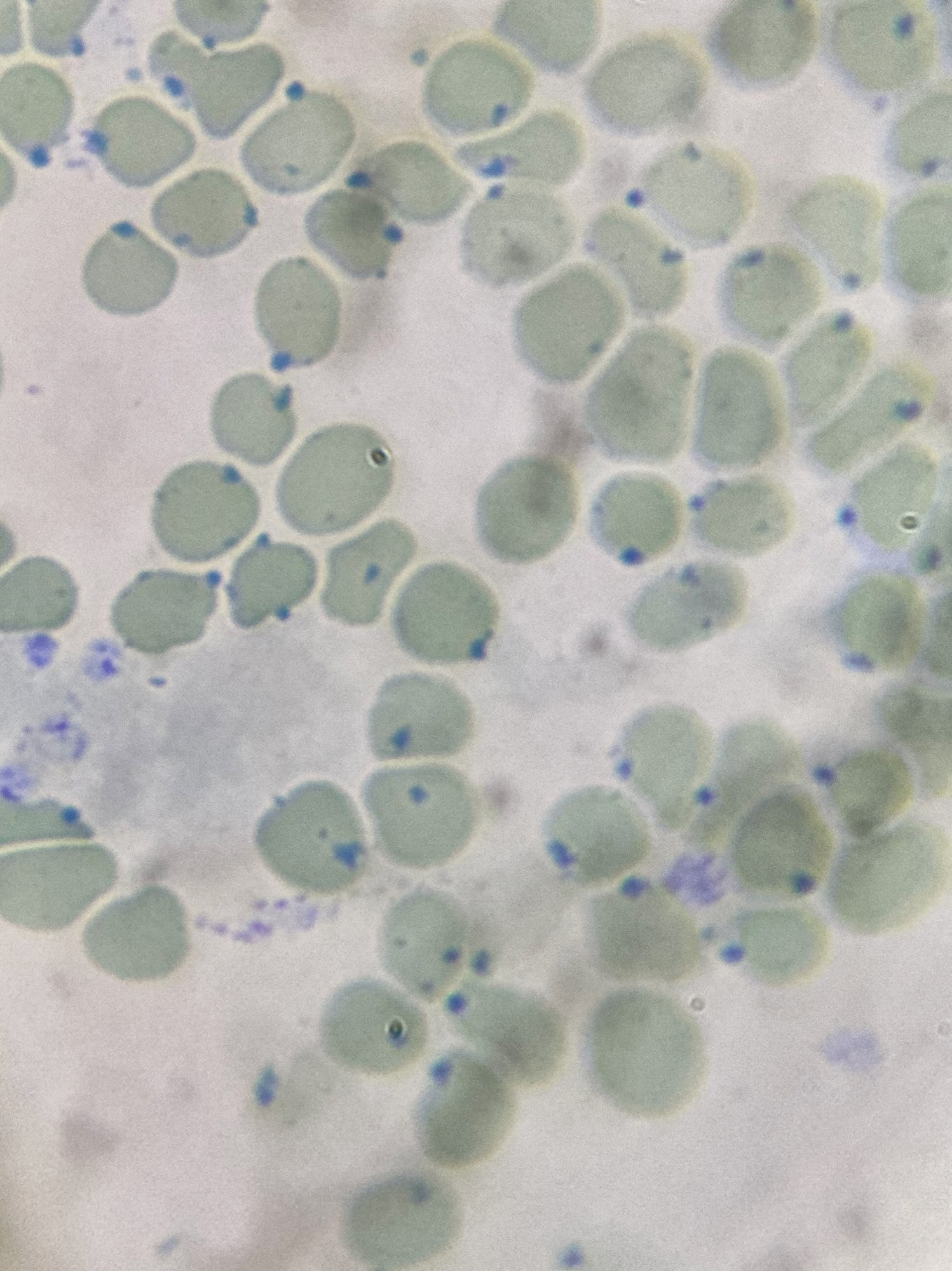
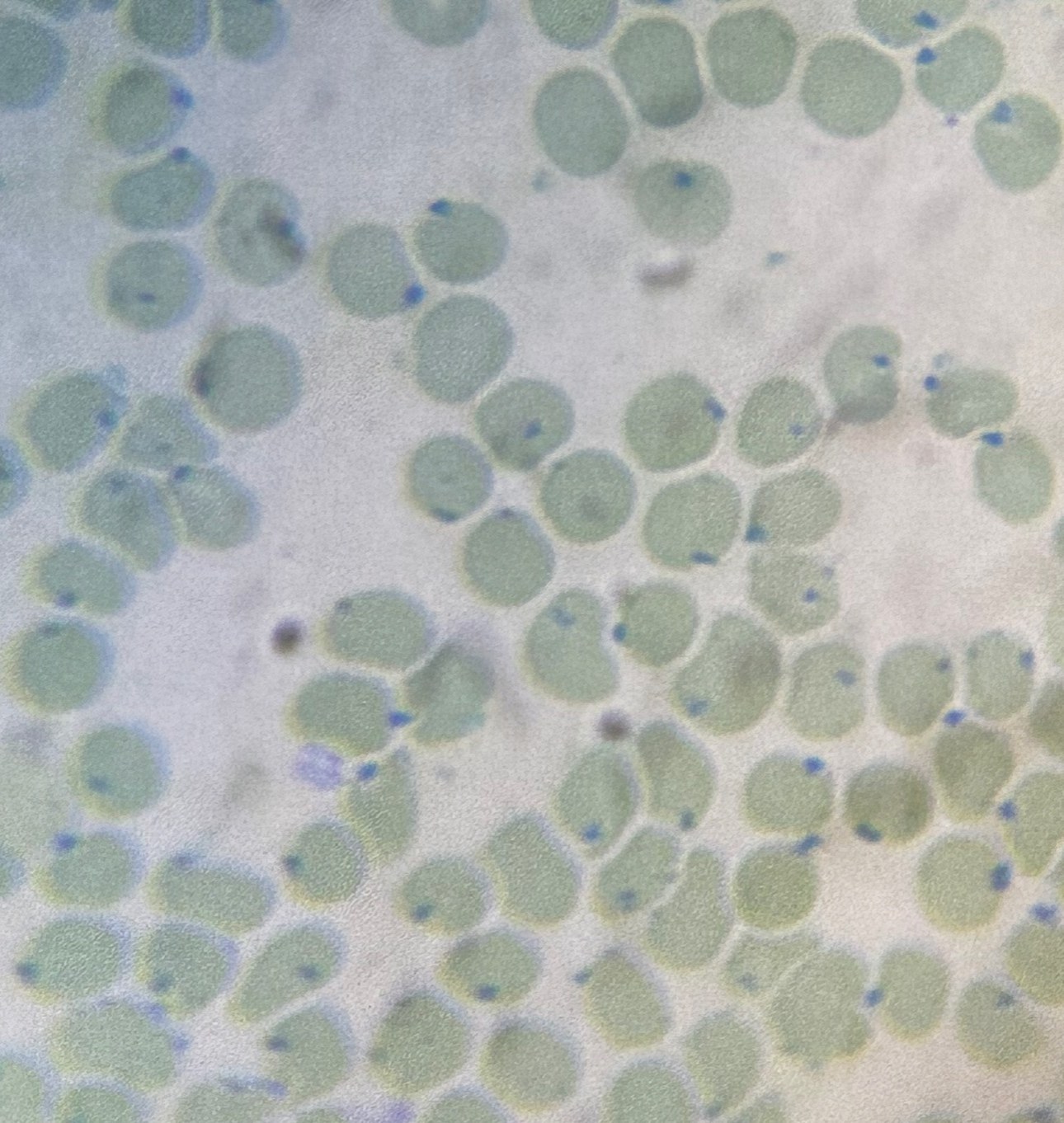
🔬 Microscopic examination of a feline peripheral blood smear, stained with brilliant cresyl blue, revealed erythrocytes with Heinz bodies, indicating oxidative damage and hemoglobin denaturation.
Microscope magnification ×1000. Staining with brilliant cresyl blue.
🙏 Photos kindly provided by the hematologist of the VETLAB veterinary laboratory network Amira Kuznetsova, Moscow.
📖 Reference information: In cats, oxidative stress and the formation of Heinz bodies can be caused by the consumption of certain foods or substances with oxidative properties. The main ones are:
Onions and garlic (in any form: raw, cooked, dried, powder): Contain compounds (e.g., disulfides and thiosulfates) that damage erythrocyte membranes and cause oxidative stress. Even small amounts can be dangerous for cats.
Paracetamol (acetaminophen): Extremely toxic to cats even in minimal doses. Causes hemoglobin oxidation and Heinz body formation, which can lead to severe anemia.
Methylene blue: Used in some medications, but in high doses can cause oxidative damage to erythrocytes.
Vitamin K3 (menadione): A synthetic form of vitamin K that can provoke oxidative stress in cats.
Certain plants: For example, zinnia, red cabbage, and other plants containing substances with oxidative properties.
Propylene glycol: Previously used in cat food as a humectant, but can cause oxidative damage to erythrocytes. Its use in cat food is currently restricted.
Certain medications and chemicals: For example, phenazopyridine (used to treat urinary tract infections in humans, but toxic to cats).
Cats are particularly sensitive to oxidative stress due to their metabolic peculiarities, so it is important to avoid exposure to these substances. If you suspect that your cat has ingested any of the above, you should immediately contact a veterinarian.


