

🧪How did urine lead to the beginning of laboratory medicine?!
✅From approximately 4000 BC, Sumerian physicians recorded their urine analyses on clay tablets. Sanskrit medical texts, dating to about 100 BC, describe no fewer than 20 different types of urine.
✅In ancient India, doctors knew that people suffering from what we now call diabetes excreted sweet-tasting urine that attracted ants.
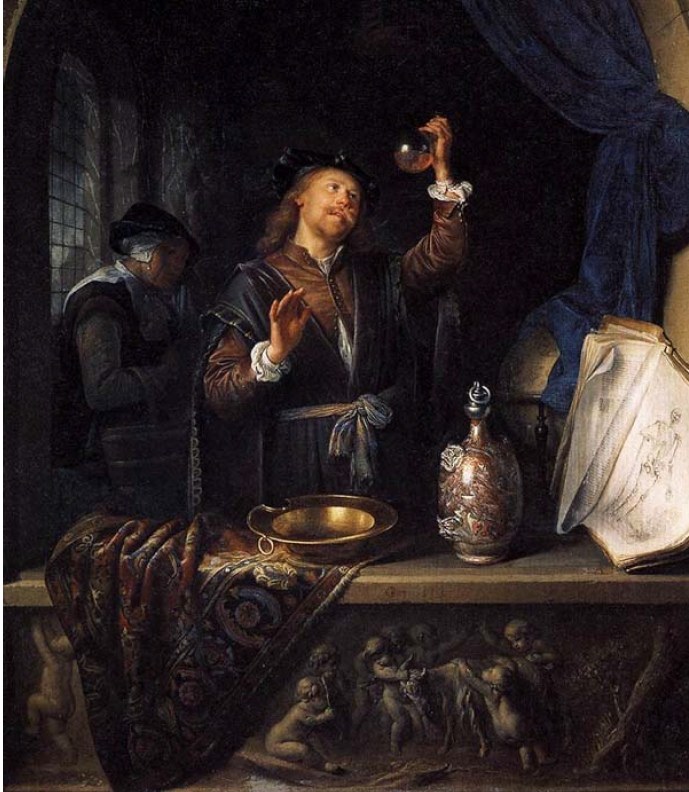
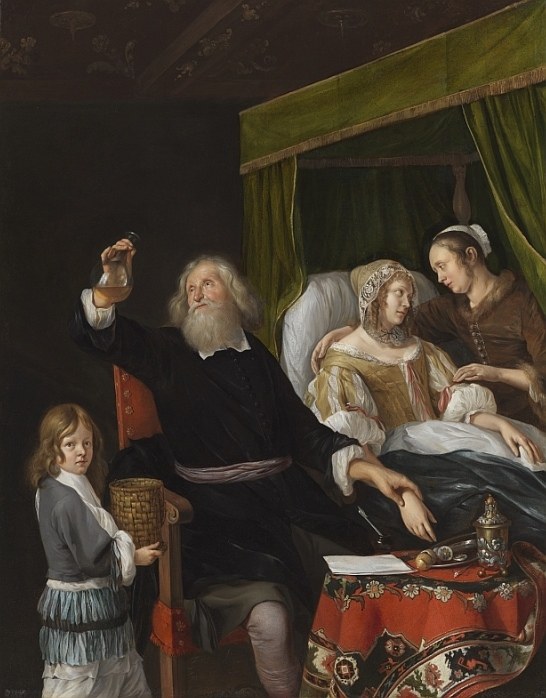
✅Before modern medicine, the visual examination of urine was called uroscopy. Medieval doctors elevated uroscopy to an almost magical art: some physicians, dressed in long robes, held and twirled a matula (a glass vessel resembling a bladder) before the patient’s eyes before making a prognosis.
✅Some doctors began to make a diagnosis without even seeing the patient. During the Renaissance, uroscopy was even used for divination and fortune-telling.
IN THE PICTURES BELOW. 1st PAINTING: ✅A doctor looking into a urine flask. 👉Painting by the Dutch artist Gerrit Dou. 1653.
2nd PAINTING: ✅A Doctor’s Visit. 👉Jacob Toorenvliet. 1666.
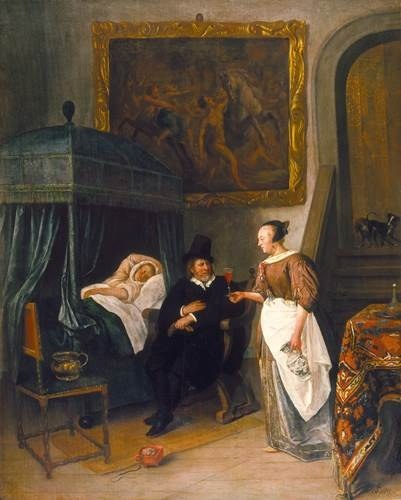
3rd PAINTING: ✅The Doctor’s Visit. 👉Jan Steen. 1661.


