
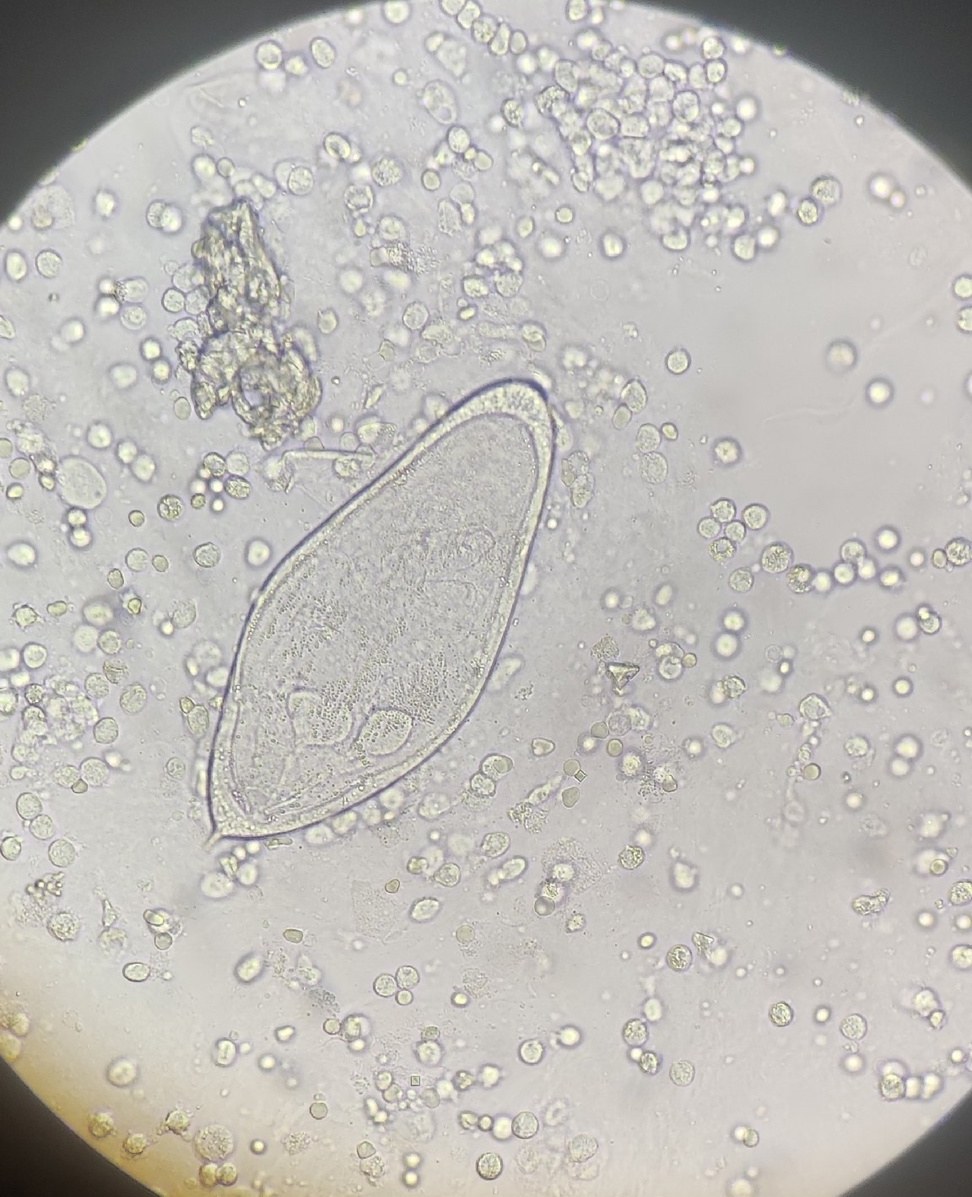
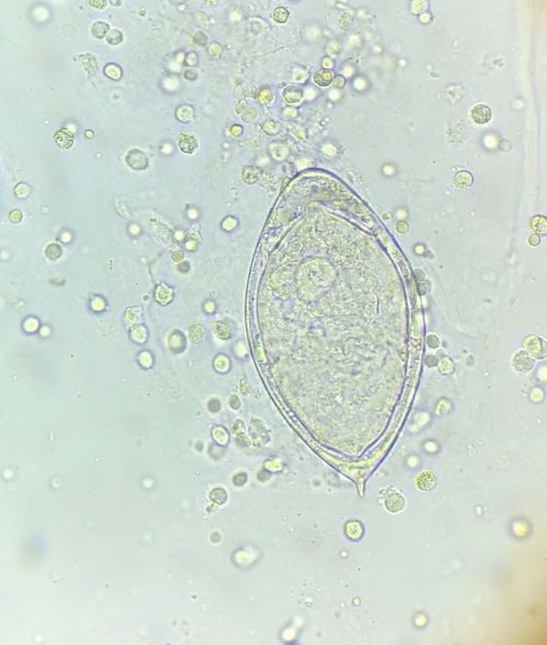
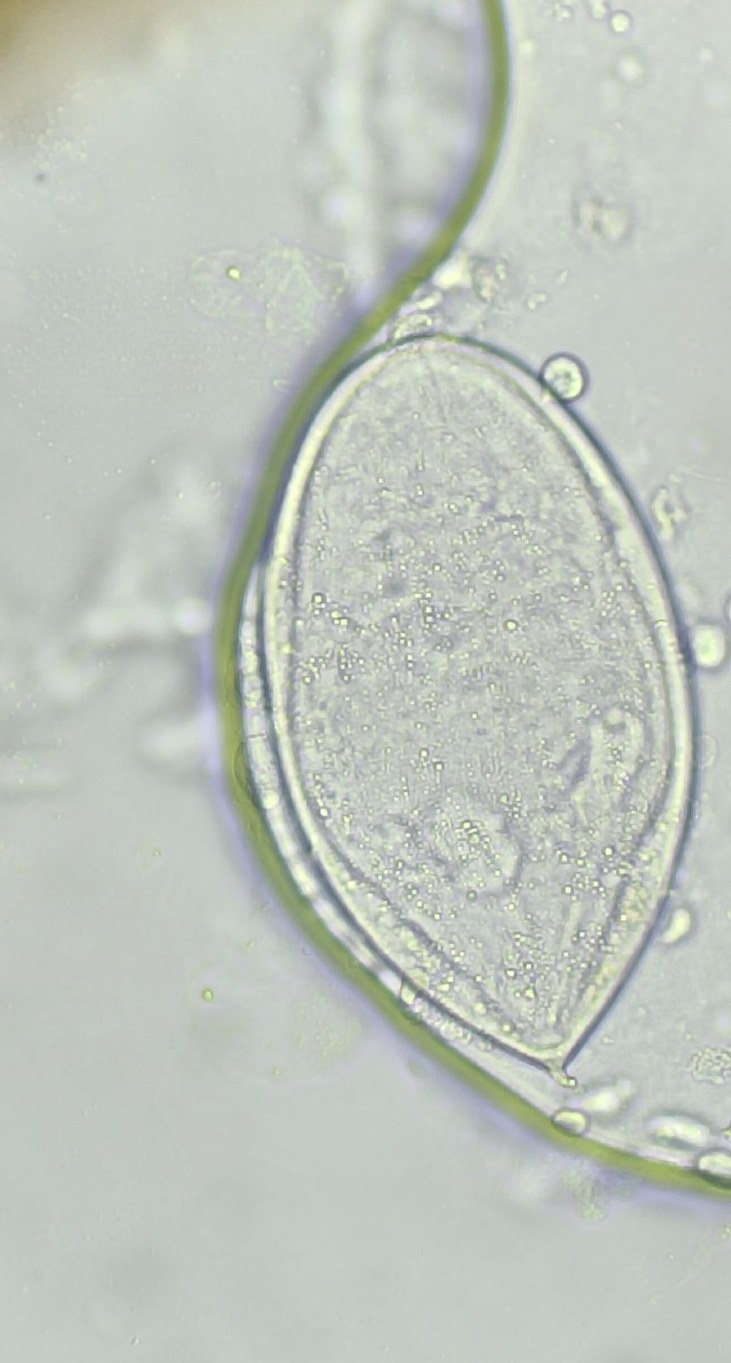
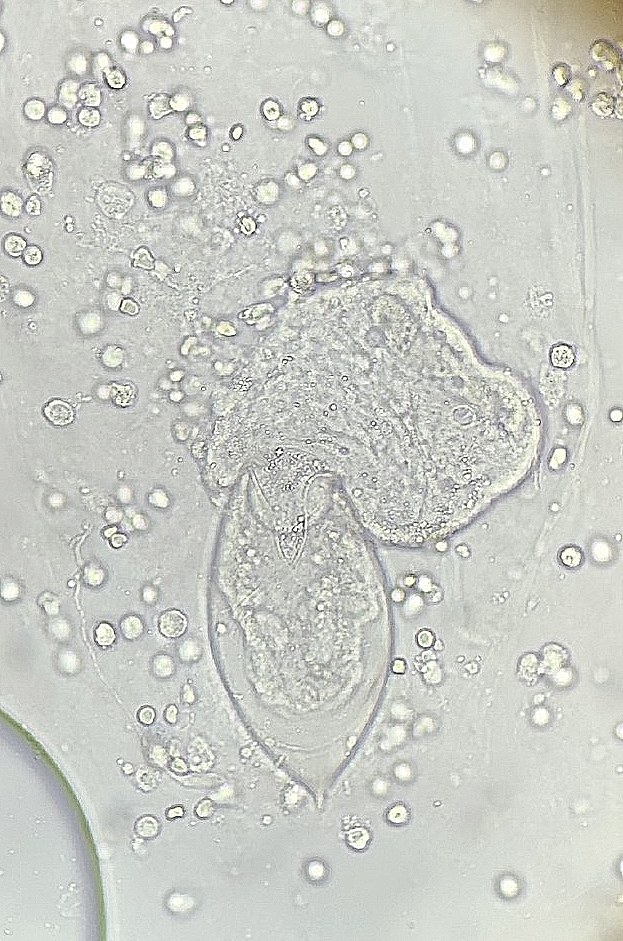
🔬 Schistosoma haematobium in prostatic secretion in a 40-year-old man.
🙏 The case was kindly shared by laboratory diagnostics physician Victoria Gerbutova, Krasnodar.
✅ Schistosoma haematobium, a blood fluke, is a parasitic flatworm that causes urogenital schistosomiasis in humans. This helminth inhabits the venous system of the genitourinary organs, and its eggs are excreted in urine, causing inflammatory reactions and tissue damage. The disease is prevalent in Africa and the Middle East, where contact with contaminated fresh water leads to the penetration of larvae through the skin. Key symptoms include hematuria (blood in urine), painful urination, and complications such as bladder fibrosis or even cancer. Diagnosis is based on the detection of eggs in urine, and treatment is carried out with praziquantel.


